




























The Phone Habit That’s Secretly Wrecking Your Sleep (And the 60-Second Fix)

If you find yourself lying awake at night, staring at the ceiling, or waking up groggy no matter how early you go to bed, your phone may be the real culprit. Not because you use it too much—but because of the specific way you're using it right before bedtime. Most people have no idea that this small habit triggers a powerful combination of blue light and dopamine loops that hijack the brain’s sleep system.
And even worse? It takes only a few minutes of the wrong type of scrolling to keep your brain wired for hours.
1. The Hidden Problem: You’re Triggering a Blue-Light Blast Before Bed
Every time you unlock your phone in a dark room, your eyes get hit with a direct burst of blue light. This light tells your brain that it’s still daytime, shutting down melatonin—the hormone that signals your body to fall asleep.
This means that even if you feel tired, your brain thinks it needs to stay alert. Blue light doesn’t just delay sleep; it disrupts your circadian rhythm, making it harder to fall into deep, restorative sleep. Over time, this can cause a constant cycle of fatigue, irritability, and trouble concentrating the next day.
The worst part? Many people expose themselves to the strongest blast right when they’re seconds away from sleep: grabbing the phone “one last time.”
2. The Scroll Keeps You Awake Longer Than You Think
Blue light is only half the problem. The real sleep wrecker is the dopamine loop your phone activates each time you scroll social media, check notifications, or tap through videos.
Dopamine is a reward chemical that spikes whenever you see something new or surprising. Nighttime scrolling—especially fast-paced content—tricks your brain into hunting for novelty. Once the loop begins, your brain won’t settle down quickly, even after you put your phone away.
This overstimulation keeps the mind in “wake” mode, making it nearly impossible to drift off naturally. You may think you’re unwinding, but you’re actually priming your brain to stay awake.
3. The One Habit That Does the Most Damage
Research shows that the last thing you do before bed has the biggest impact on your sleep quality. If your final action is opening your phone, checking messages, or scrolling—even for a minute—you’re creating the perfect storm of blue light exposure and dopamine activation.
This single habit can delay sleep by up to an hour, increase nighttime restlessness, and worsen morning fatigue. It’s not the total phone use that matters most—it’s the timing.
4. The 60-Second Fix That Resets Your Brain for Sleep
The good news? You can break this cycle with a simple 60-second routine that signals your brain to shut down the wakefulness loop. Here’s what to do:
Step 1 (10 seconds): Turn on a warm lamp or dim overhead light
This prevents the shock of blue light in total darkness and reduces melatonin disruption.
Step 2 (20 seconds): Plug your phone in across the room
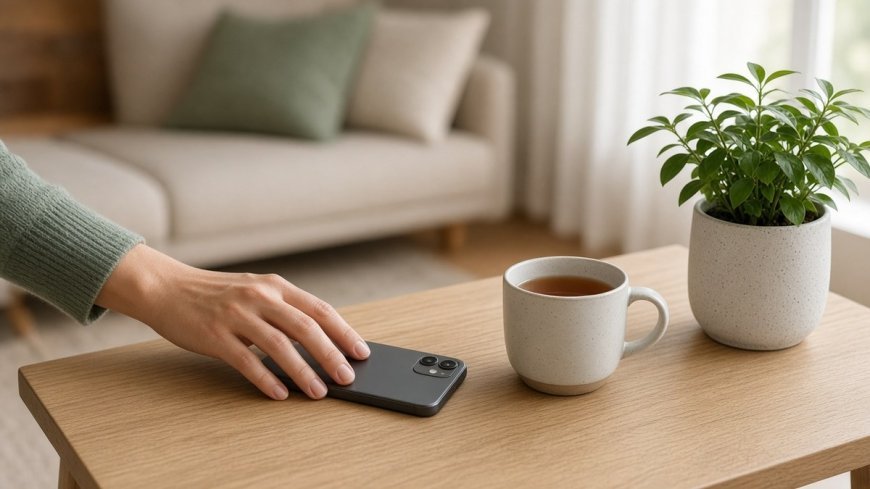
Not beside your bed. Not within arm’s reach. Placing it far away instantly removes the temptation for “just one more check.”
Step 3 (30 seconds): Take six slow, deep breaths
This reduces dopamine-driven stimulation and triggers your parasympathetic nervous system—the part responsible for sleep and relaxation.
This tiny ritual shifts your brain out of alert mode and helps melatonin rise naturally. Most people notice improved sleep within a few nights.
5. Why This Works So Quickly
Breaking the link between your bed and your phone resets your brain’s nighttime associations. It trains your mind to see the bedroom as a place for rest, not stimulation.
Lower dopamine levels make your thoughts slow down instead of racing. Reduced blue light allows melatonin to rise. Together, these two changes help you fall asleep faster, stay asleep longer, and wake up feeling more refreshed.
Even if you don’t want to ditch your phone entirely, moving it away for the last few minutes of the night makes a powerful difference.
6. What to Expect Within a Week
Most people who implement this 60-second fix report noticeable changes within the first week:
-
falling asleep faster
-
fewer nighttime awakenings
-
deeper, more restorative sleep
-
less grogginess in the morning
-
reduced urge to scroll at night
Your brain adapts quickly once the dopamine loop is broken.
The Bottom Line
Your phone isn’t the enemy—but the way you use it right before bed can quietly destroy your sleep. The combination of blue light and dopamine spikes keeps your mind alert long after you think you’re done scrolling.
By replacing your final phone check with a simple 60-second reset ritual, you can protect your sleep, restore natural melatonin levels, and wake up feeling significantly more rested. Small habit, big change.
What's Your Reaction?
 Like
0
Like
0
 Dislike
0
Dislike
0
 Love
0
Love
0
 Funny
0
Funny
0
 Angry
0
Angry
0
 Sad
0
Sad
0
 Wow
0
Wow
0