







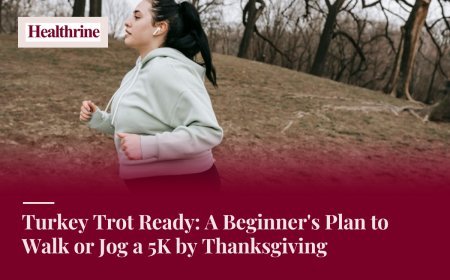

















Turkey Trot Ready: A Beginner's Plan to Walk or Jog a 5K by Thanksgiving
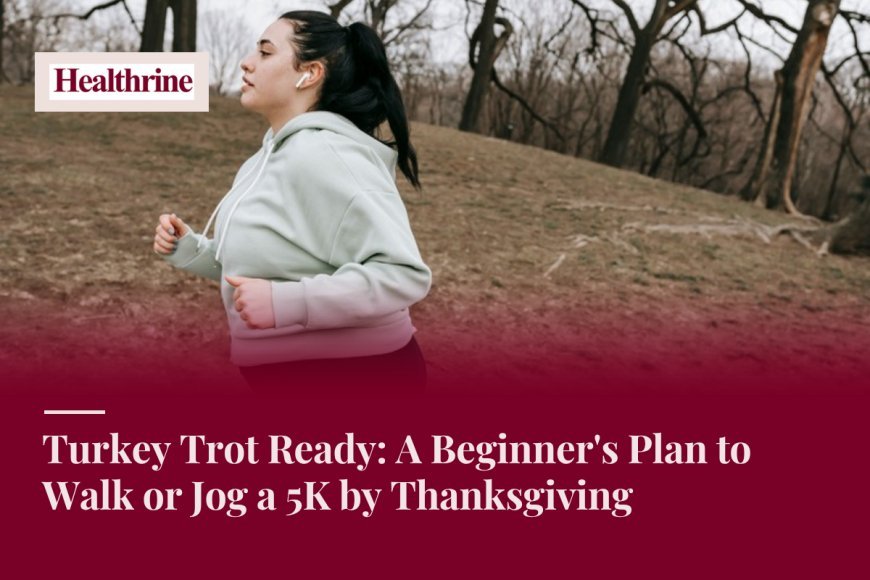
Thanksgiving morning has its own kind of energy. In towns across the country, people pull on long sleeves and goofy turkey hats, gather in a parking lot or along a closed-off street, and walk or jog 3.1 miles before the oven gets busy. A Turkey Trot is one of the friendliest races there is. Plenty of people walk the whole thing, families push strollers, and nobody minds if you finish near the back.
If you have been thinking about signing up, there are about seven weeks between now and Thursday, November 26, 2026. That is enough time to go from a regular walking habit to finishing a 5K comfortably, whether you walk all of it or mix in some jogging. The plan below starts gently and builds a little each week.
Before Week One
If you have a health condition or an injury, or you haven't been active in a while, check with your doctor or another health care provider before you start. Throughout the plan, start gently, build gradually, and stop if something hurts.
Then cover the basics. Find your local race and register early, since popular Turkey Trots can sell out and many offer a lower early price. Wear shoes you already walk comfortably in, and if they are worn flat, a new pair now gives you weeks to break them in. Choose one or two routes near home: a flat neighborhood loop, a school track, or a park path. A treadmill works on dark or rainy days.
Dress for sessions the way you would for a brisk errand: breathable clothes and socks that don't slip. Bring water if you will be out longer than half an hour.
You also need a simple way to judge effort. Easy means you could hold a full conversation. Brisk means you can still talk, but in shorter sentences. If you add jogging, keep it at a pace where you could still say a few words. A clock or a phone timer is the only gadget required.
The Seven-Week Plan
Each week has three sessions. Space them out, such as Monday, Wednesday, and Saturday, with a rest day between. Every session begins and ends with five minutes of easy walking, and those minutes are included in the times below. Walkers follow the first part of each week. If you want to jog, use the walk-jog option instead.
- Week 1 (October 12 to 18): Walk 20 minutes at an easy-to-brisk effort, three times. Walk-jog option: in the middle of each walk, add four rounds of 30 seconds of gentle jogging and two minutes of walking.
- Week 2 (October 19 to 25): Walk 25 minutes, three times. Walk-jog option: six rounds of 30 seconds jogging and two minutes walking.
- Week 3 (October 26 to November 1): Walk 25 minutes twice and 30 minutes once. Walk-jog option: six rounds of one minute jogging and two minutes walking.
- Week 4 (November 2 to 8): Walk 30 minutes twice and 35 minutes once. Walk-jog option: six rounds of 90 seconds jogging and 90 seconds walking.
- Week 5 (November 9 to 15): Walk 30 minutes twice and 40 minutes once, using your race route for the longer walk if you can. Walk-jog option: five rounds of two minutes jogging and one minute walking.
- Week 6 (November 16 to 22): Walk 35 minutes twice, then walk about 3 miles once, close to the race distance. Walk-jog option: repeat the Week 5 rounds on two days, and do one longer walk-jog of about 3 miles.
- Race week (November 23 to 26): Walk 20 easy minutes on Monday, rest or take a short stroll on Tuesday and Wednesday, and do your Turkey Trot on Thursday.
The walk-jog option tops out at two-minute jogging stretches on purpose. Most beginners find that walk breaks make the whole distance feel manageable, and plenty of experienced runners use them on race day too.
In practice, a walk-jog round looks like this: walk briskly, then ease into a gentle jog when the timer says so, slow enough to talk in short phrases, and drop back to a walk when it beeps. If a jogging stretch feels like too much on a given day, walk it briskly instead. The minutes still count.
Fitting the Plan Into a Real Fall
Life will interrupt. If you miss a session, pick up where you left off. If you miss most of a week, or a week felt hard, repeat it instead of moving ahead. Doing Week 5 twice still gets you to the start line ready.
The calendar has one built-in curveball: clocks fall back on Sunday, November 1. After that, evenings get dark early, so Week 4 is a good time to move walks to the morning or lunch hour, or to plan for visibility. A reflective vest or a clip-on light is inexpensive. Stick to well-lit, familiar routes and let someone know where you are going.
Some days you will simply feel tired. On those days, swap the planned session for an easy 20-minute walk, or take the day off and pick up the plan tomorrow. Consistency over seven weeks matters more than any single session.
Cold mornings call for layers you can peel off. A light jacket tied around your waist by minute fifteen is normal, and gloves and a hat often make more difference than a heavy coat.
It also helps to make the walks something you look forward to. Save a podcast for training days only, recruit a friend or relative who is signing up too, or put your three sessions on the calendar like appointments. A checkmark on a paper calendar after each session is surprisingly satisfying by Week 6.
Thanksgiving Morning
Most Turkey Trots start early, often between 7:00 and 9:00 a.m., so plan the night before. Lay out your clothes, pin your bib to your shirt if you picked it up in advance, and decide when you need to leave. Parking near the start can be tight, and arriving 30 to 45 minutes early leaves time for the restroom line.
Dress as if it were about ten degrees warmer than the forecast, since you will warm up once you are moving. An old sweatshirt you don't mind parting with can keep you comfortable at the start; many races collect discarded layers for donation. Eat a familiar breakfast, nothing new.
Line up toward the back if you are walking or walk-jogging, and start slower than you think you need to. The first half mile is crowded, and that is fine. Use your walk breaks exactly as you practiced. Look around, wave at the kids holding handmade signs, and enjoy the odd fun of moving through town while most of it is still in pajamas.
Many Turkey Trots welcome strollers and leashed dogs, but some ask them to start at the back or in a separate wave. Check the race website, and if your family is walking together, agree on a meeting spot near the finish in case you get separated in the crowd.
After the Finish Line
Grab the water, take the photo, and walk around for a few minutes before you get in the car. Then go enjoy the day. There is nothing to earn at the table, but it is nice to arrive with a race shirt and a story about the person in the full turkey costume who passed you at mile two.
If you liked the routine, keep one or two walks a week going into December. The habit is already in place, and a walk on a cold, clear winter morning feels very different from starting from scratch in January.
What's Your Reaction?
 Like
0
Like
0
 Dislike
0
Dislike
0
 Love
0
Love
0
 Funny
0
Funny
0
 Angry
0
Angry
0
 Sad
0
Sad
0
 Wow
0
Wow
0