

























How to Turn Fall Yard Work Into a Feel-Good Workout
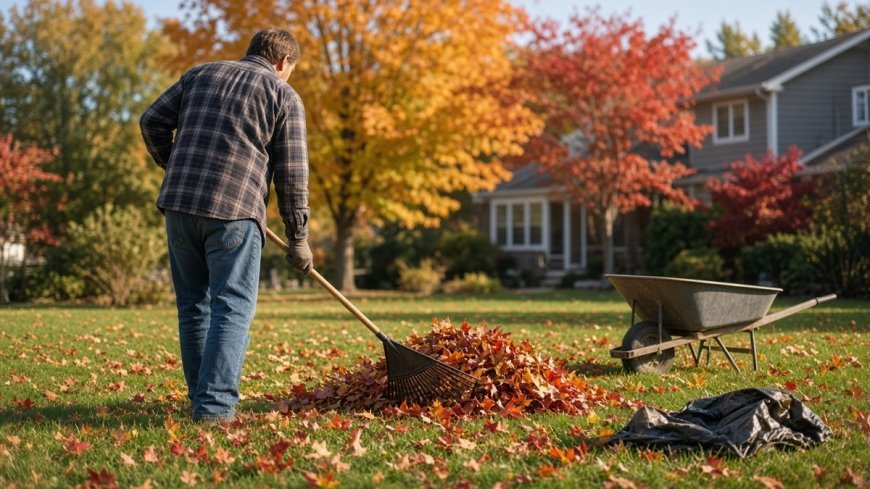
It is a crisp Saturday in October. The maple out front has dropped half its leaves overnight, the porch planters are full of faded summer flowers, and the garden hose is still lying in the grass. You had planned to squeeze in a workout today, but the yard is clearly calling. Here is the good news: for many people, an hour of fall yard work can be a perfectly satisfying way to move.
Raking, carrying, bending, and stretching all ask something of your body. With a little attention to how you warm up, how you move, and how you pace yourself, those chores can feel less like a sore-back obligation and more like an outdoor workout with a tidy yard as the bonus.
What This Is and Is Not
This is a practical guide to approaching seasonal yard tasks as gentle, whole-body movement: raking leaves, bagging, carrying pots, clearing garden beds, and coiling hoses. It is about rhythm, posture, and pacing, so the work feels good during and after.
It is not a training program, and it is not a reason to push through pain. If you have back, joint, heart, or balance concerns, or if you are returning to activity after time off, check with a doctor or physical therapist about what is right for you. Heavy lifting, ladders, and power tools deserve extra care, and it is always fine to ask for help or hire it out.
Why Yard Work Counts as Real Movement
Yard work uses your body in ways a gym session sometimes does not. You reach, twist gently, squat, lift, carry, and walk across uneven ground, often for an hour or more. Your legs, arms, shoulders, and core all take turns. You are outside in the fresh fall air, and at the end you can see exactly what you accomplished.
For people who find formal workouts hard to start, that visible purpose can make a big difference. It is easier to keep moving when there is a pile of leaves to finish rather than a timer counting down.
Warm Up Before the First Rake Stroke
Cool October mornings can make muscles feel stiff, so a few minutes of easy movement before you start helps the work feel smoother. Think of it the same way you would before a walk or a bike ride.
- Walk a lap or two around the yard at an easy pace
- Roll your shoulders forward and back a few times
- Do a few gentle side bends with your hands on your hips
- Practice a handful of slow, shallow squats while holding the rake for balance
- Swing your arms loosely across your body
Dress in layers. You will likely warm up fast once you get going, and it is easier to shed a jacket than to work stiff and cold.
Raking With Better Form
Raking is the classic fall chore, and a few small adjustments make it kinder to your back and shoulders. Stand with your feet about hip-width apart and one foot slightly ahead of the other, like a gentle lunge stance. Keep the rake close to your body and pull with your arms and legs together rather than reaching far out and yanking with your lower back.
Switch sides often. Most people rake with the same hand forward the whole time, which can leave one side feeling tired. Every few minutes, swap your hand position and your front foot. It may feel awkward at first, but it spreads the work more evenly. A rake with a comfortable handle length, roughly up to your chin or shoulder, also helps you stay upright.
Bending, Lifting, and Carrying Smarter
Bagging leaves, lifting pots, and hauling mulch involve a lot of bending and carrying. These are the moments when people most often overdo it, usually by lifting too much at once or bending with straight legs and a rounded back.
- Bend at your hips and knees, keeping your chest lifted
- Hold the load close to your body before you stand
- Stand up using your legs, not by jerking your back upright
- Turn with your feet instead of twisting at the waist
- Make more trips with lighter loads rather than one heavy one
A wheelbarrow, a tarp you can drag, or a garden cart can save a lot of lifting. For leaf piles, raking onto a tarp and pulling it to the curb or compost area is often easier than bending to stuff bags over and over.
Turn Chores Into a Simple Circuit
If you like a little structure, you can think of your yard tasks as stations in a loose circuit. Spend ten to fifteen minutes on one task, then switch to something that uses your body differently. Rotating like this keeps any one set of muscles from doing all the work.
- Raking a section of lawn (arms, shoulders, legs)
- Pulling spent annuals and clearing beds (squatting, kneeling, reaching)
- Carrying pots or bags to the shed or curb (carrying, walking)
- Sweeping the porch or driveway (steady rhythm, light effort)
- Coiling hoses and putting away summer furniture (lighter tasks to wind down)
Finishing with the lightest tasks works like a natural cool-down, easing your effort before you head inside.
Make It a Shared Fall Ritual
Yard work often feels lighter with company. Invite a partner, a teenager, or a neighbor to split the tasks: one person rakes while another holds the bag or drags the tarp. Kids can gather sticks, sweep steps, or jump in a leaf pile before it gets bagged, which is its own kind of movement.
Put on a playlist or a podcast, set out a thermos of cider or tea, and think of the afternoon as a seasonal event rather than a chore to rush through. When the work feels social and familiar, it becomes something you look forward to each October instead of something you put off until the leaves are soggy.
Pace Yourself and Take Breaks
It is tempting to tackle the whole yard in one go, especially on a beautiful day. But spreading the work out usually feels much better. Take a short break every twenty to thirty minutes: drink some water, stretch your back gently, and look at the progress you have made.
If the yard is big, split it across two or three sessions over a weekend or a week. Your body will likely thank you, and the job will still get done before the snow arrives.
Cool Down and Notice How You Feel
When you finish, take five minutes for gentle stretches: a slow forward fold with soft knees, a standing quad stretch while holding a fence or railing, and a few shoulder and chest stretches. Take a slow walk around the yard and enjoy the tidier space.
Notice how your body feels later that day and the next morning. Some mild tiredness in your arms or legs is common after a lot of yard work. Sharp or lingering pain is a sign to ease off and check in with a professional rather than pushing through next weekend.
Bottom Line
Fall yard work can be a satisfying way to move outdoors when you approach it with a little care. Warm up first, rake with a split stance and switch sides, bend and lift with your legs, rotate tasks, and take regular breaks. You end up with a tidier yard and a body that feels used in a good way, not worn out.
Tomorrow, before you pick up the rake, take five minutes to walk the yard and loosen your shoulders, then switch your hands every few minutes as you work.
What's Your Reaction?
 Like
0
Like
0
 Dislike
0
Dislike
0
 Love
0
Love
0
 Funny
0
Funny
0
 Angry
0
Angry
0
 Sad
0
Sad
0
 Wow
0
Wow
0