





























A Sunday Evening Ritual That Helps Monday Feel Less Abrupt

Sunday evening can feel like a cliff. The weekend still has a little air in it, and Monday already leans into the room with bags, calendars, and unfinished thoughts. Some people respond by ignoring Monday until it arrives like a siren. Others respond by turning Sunday night into a second workday. A gentler middle path is a Sunday evening ritual that helps Monday feel less abrupt: a short, repeatable close of the weekend and soft open of the week.
This Wellness piece is seasonal self-care and rhythm design for ordinary households. It is not a productivity boot camp, not a claim that rituals fix burnout by themselves, and not clinical advice. It is about giving the week a doorway so Monday does not have to kick the door in.
Why Monday Feels Abrupt
Abrupt Mondays often come from a weekend with no landing. Late Sunday screens, scattered clothes, an empty fridge, and a vague sense that something should have been prepared all stack into Monday morning friction. The nervous system goes from open time to full demand with no bridge. A ritual builds that bridge in advance.
The goal is not to make Sunday serious. The goal is to keep Sunday pleasant while giving Monday fewer surprises. Fifteen to forty minutes of intentional closing can spare an hour of Monday scrambling.
What a Sunday Evening Ritual Is and Is Not
A Sunday evening ritual is a short, repeatable sequence that closes the weekend and stages the first stretch of the week: a look at the calendar, a simple prep for clothes or lunches, a reset of one living space, and a wind-down that still feels like weekend. It is not a full meal-prep Olympics unless you enjoy that. It is not mandatory family togetherness for people who need quiet. It is not a moral test of how organized you are.
If Sundays are for shift work, caregiving, or religious practice, place the ritual where it fits, even if that is Saturday night or Monday lunch. The spirit is a weekly doorway, not a fixed hour on a clock.
Keep the Ritual Short Enough to Survive
Ambitious Sunday systems die by week three. Design for a tired Sunday. Choose a time box: twenty minutes, thirty minutes, or one short playlist's length. When the time ends, stop. A completed small ritual beats an abandoned large one.
Write the steps once and reuse them. Decision fatigue on Sunday night is real, especially after a social weekend. The ritual should reduce choices, not invent twelve new standards.
- Glance at the week calendar for the first two days
- Set out or note Monday clothes and bag items
- Stage breakfast or lunch pieces you will actually use
- Reset one surface that Monday-you will thank you for
- Choose a wind-down that still feels like weekend, not homework
The Calendar Glance Without the Spiral
Open the calendar with a boundary. You are looking for collisions, early starts, and must-not-forget items for Monday and Tuesday, not rewriting your entire life plan. Note one prep action if needed: print a form, charge a device, confirm a ride. Then close the calendar.
If looking ahead spikes anxiety, pair it with a comforting cue: tea already poured, soft light on, phone on Do Not Disturb for the ritual window. You are collecting logistics, not inviting every worry to a meeting.
Stage the Morning, Do Not Perform It
Monday feels less abrupt when the first thirty minutes are already half-built. Keys in one place. Bag packed. Clothes chosen. Coffee setup ready. Kids' items by the door if that is your life. None of this requires perfection. It requires removing the scavenger hunt from a sleepy morning.
- Pick a consistent Sunday evening start time that still leaves room for rest
- Do the calendar glance for Monday and Tuesday only
- Stage clothes, bag, and one breakfast or lunch piece
- Reset one high-traffic surface or the entryway
- End with a soft leisure cue: show, book, bath, or early lights-down
If cooking is part of your calm, a simple soup or tray bake can be seasonal self-care and Monday help at once. If cooking is stress, skip it and use grocery shortcuts. The ritual should feel like kindness.
Reset Space Softly
A full clean is optional. A soft reset is powerful: clear the kitchen island, start the dishwasher, gather living-room clutter into one basket, put work items in their weekday home. Monday-you walking into visual calm meets the week differently than Monday-you walking into Saturday's residue.
Involve household members with tiny jobs when that works. A five-minute family reset can be lighter than one person silently resenting the mess. Keep jobs age-appropriate and short. The point is shared landing, not a chore war.
Protect Weekend Feeling at the End
End the ritual with something that still belongs to Sunday: a favorite show, a chapter of a book, a warm shower, cards at the table, music while stretching. If the ritual ends in spreadsheet mode, Monday has already begun emotionally. Close the prep chapter on purpose.
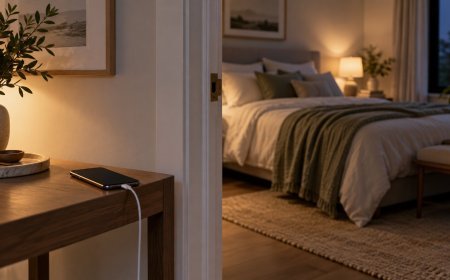
Softer lighting helps here. After the staging is done, switch the house toward evening lamps. Let the rooms look like rest again. Seasonal months especially reward that visual shift.
For People Who Hate Sunday Scaries
Sunday scaries are common and not a personal failure. A ritual reduces some of the fear by shrinking unknowns. It will not erase every anxious feeling, and it does not need to. If dread stays loud, keep the ritual tiny and add connection: a call with a friend, a walk, or an early bedtime rather than late rumination.
Avoid using Sunday night to process every dissatisfaction with your job or life unless you have energy and support for that conversation. Logistics tonight. Bigger reflections can have their own appointment.
Adapt for Real Calendars
Parents may run the ritual after bedtime. Students may run it after homework. People with Monday offs may shift it to another eve. Travel weeks may reduce the ritual to a bag check and alarm set. Continuity matters more than identical steps every week.
Couples and roommates can divide lanes: one handles lunches, one handles entryway and clothes, both share the calendar glance. Collaboration works when it shortens the list.
A Sample Twenty-Minute Sunday Arc
Minutes one to five: calendar glance and note any Monday must-dos. Minutes six to twelve: stage bag, clothes, and breakfast pieces. Minutes thirteen to eighteen: clear one surface and start a load of dishes if needed. Minutes nineteen to twenty: switch to lamp light and begin a leisure cue. Stop when the timer ends even if the house is not magazine-ready.
Repeat the same arc next week with only tiny edits. Familiarity is what makes Monday feel expected instead of sudden. If a week is unusually full, run a ten-minute miniature: calendar, bag, one surface, lights soft. Smaller still counts.
Bottom Line
A Sunday evening ritual helps Monday feel less abrupt by closing the weekend with a short, repeatable sequence: calendar glance, light staging, soft space reset, and a wind-down that still feels like weekend. It is wellness rhythm and seasonal self-care, not a productivity religion. Keep it short enough to survive tired Sundays.
This evening, set a twenty-minute timer, stage tomorrow's first hour, reset one surface, then do something that still feels like Sunday. Let Monday arrive through a door you already opened.
What's Your Reaction?
 Like
0
Like
0
 Dislike
0
Dislike
0
 Love
0
Love
0
 Funny
0
Funny
0
 Angry
0
Angry
0
 Sad
0
Sad
0
 Wow
0
Wow
0