



























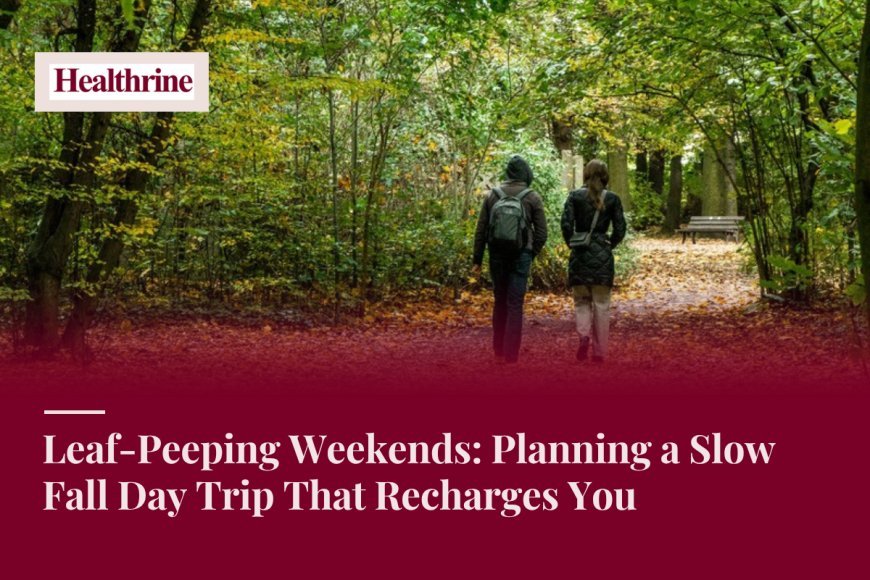
Leaf-Peeping Weekends: Planning a Slow Fall Day Trip That Recharges You
Every October there is a weekend when someone in your group chat posts a photo of a hillside lit up in orange and red, and you think, we should go. Then Saturday arrives, the laundry is waiting, nobody has picked a place, and by the time you look it up, the reports say the color has already peaked. A good leaf-peeping day rarely happens on impulse. It happens because someone spent fifteen minutes planning on Wednesday night.
The goal is not a packed itinerary with six overlooks and a corn maze. It is a slow day: a reasonable drive, a few beautiful stops, a long lunch, and getting home before everyone is tired of the car. Here is how to plan one, from choosing the route to walking back through your front door.
Choose a Route, Then Chase the Timing
Start with distance. For a day trip that still feels relaxed, many people find that 90 minutes to two hours of driving each way is the upper limit. Anything longer turns the day into a road trip with a few scenic glimpses. Pull up a map, draw a rough circle around home at that distance, and look for state parks, lakes, river valleys, ridgelines, and small towns inside it.
A loop usually beats an out-and-back. Driving out on one road and returning on another means twice the scenery, and you are not retracing the same miles when you are ready to be home. Pick one anchor stop, such as a park with a short lakeside trail or a town with a good main street, and let everything else on the route be optional.
Timing is the tricky part. Fall color generally moves from north to south and from higher elevations down into the valleys over several weeks. A mountain road two hours north can be at its best while the trees on your own street are still mostly green. Many states and some regional parks post free foliage reports or color maps that update weekly through October. Check them midweek, then again Friday morning, because one windy rainstorm can strip a ridge in a day.
If the reports look uncertain, aim slightly early rather than late. A hillside with patches of green mixed into the gold is still lovely, while a route past peak can look brown and bare. A route that covers a range of elevations also gives you a buffer, since one stretch is likely to be near its best even if another is not.
Pack the Car the Night Before
A slow day unravels quickly when the first hour goes to hunting for a clean restroom and a snack that isn't from a gas station. Pack on Friday evening so Saturday morning is just coffee and keys.
- Layers: a fleece or sweater, a light rain jacket, and a hat, since overlooks are often windier and cooler than home
- Comfortable shoes that can handle a muddy trail
- A full water bottle for everyone, plus a thermos of coffee, tea, or hot cider
- Easy food: sandwiches, fruit, cheese, crackers, and something sweet for the drive home
- A blanket or two folding chairs for a long sit at a pull-off
- Offline maps downloaded ahead of time, because cell service often drops on back roads
- Cash for farm stands, parking fees, and small-town bakeries
- A phone charger, tissues, hand wipes, and a small trash bag
Settle the pace before you leave, too. Agree on a rough turnaround time and how many stops everyone wants, so no one spends the afternoon quietly wishing the day were faster or slower. One person can be in charge of the map and another of the snacks, which keeps the driver free to drive.
If kids are coming, add one small activity per child and a list of things to spot: a red maple, a covered bridge, a barn with a painted quilt square, a hawk on a fence post. It gives them a reason to look out the window.
The Slow Day, Hour by Hour
Leave earlier than feels necessary. On a mid-October Saturday, popular scenic roads can fill by late morning. On the road by 7:30, you reach your first overlook around 9:00, when the light is soft, the lot has open spaces, and you can stand at the railing without someone's elbow in your view. Pour the coffee from the thermos and take your time.
Between stops, let the drive itself be part of the outing. Roll the windows down for a few minutes, put on a playlist everyone can live with, and only pull over at marked overlooks and lots, never on a narrow shoulder around a blind curve, no matter how good the view.
By 10:00, head to your anchor stop. This is the part of the day to get out of the car for real. Walk a short, flat trail around a lake or along a river, or wander a historic main street and duck into the hardware store that still sells penny candy. Keep it easy. The point is to be outside under the color, not to log miles, so stop whenever someone wants to stop.
Around noon, eat somewhere a little off the main route. A diner two streets back from the scenic byway, or a picnic table in a small town park, is usually calmer than the restaurant beside the famous overlook. Order the soup. Linger over a second cup of coffee. This is the hour that often turns a drive into an actual day off.
Early afternoon is for the optional stops: a farm stand, an orchard, an antique shop, a covered bridge you spotted on the map. Pick one or two, not all of them. Leave room for one unplanned pull-off when something catches your eye, like a meadow of yellow birches or a pond holding a perfect reflection of the trees.
By 3:30 or 4:00, start home on your second road. Late sun turns the leaves warm and glowing, so the drive back looks different from the morning. Aim to be home around sunset so the last stretch is not on unfamiliar curves in the dark, and so there is time to unpack, heat up something simple, and enjoy the evening.
Skipping the Crowds Without Skipping the Color
The most photographed roads in any region get crowded on peak weekends. A few adjustments still get you the color with a fraction of the traffic.
- Go on a Sunday morning, or take a Friday off if you can, since Saturdays draw the biggest crowds
- Skip the single most famous byway and choose a parallel county road or state route nearby
- Look for smaller state parks and forest roads instead of the headline destination
- Visit a week before or after the reported peak, when the color is still good and the lots are emptier
- Keep a backup stop in mind in case your anchor parking lot is full
It also helps to let go of the perfect photo. The overlook on every postcard is one view. A quiet side road lined with sugar maples can be just as memorable, especially when you are not idling in a line of cars to see it.
If the Weather or the Leaves Don't Cooperate
Sometimes the forecast turns, or the report says peak but the hills look muted. Keep the day anyway. Gray, misty mornings make reds and yellows look richer, and a drizzly afternoon is a fine excuse to stay longer in the bakery or the used bookstore. If the trees are past their best, shift the focus to the town, the orchard, or the long lunch.
Before this week ends, open a foliage report, draw your circle on the map, and choose one anchor stop. Then text the people you want to bring. Planning a slow day takes less time than scrolling through everyone else's photos of theirs.
What's Your Reaction?
 Like
0
Like
0
 Dislike
0
Dislike
0
 Love
0
Love
0
 Funny
0
Funny
0
 Angry
0
Angry
0
 Sad
0
Sad
0
 Wow
0
Wow
0