





















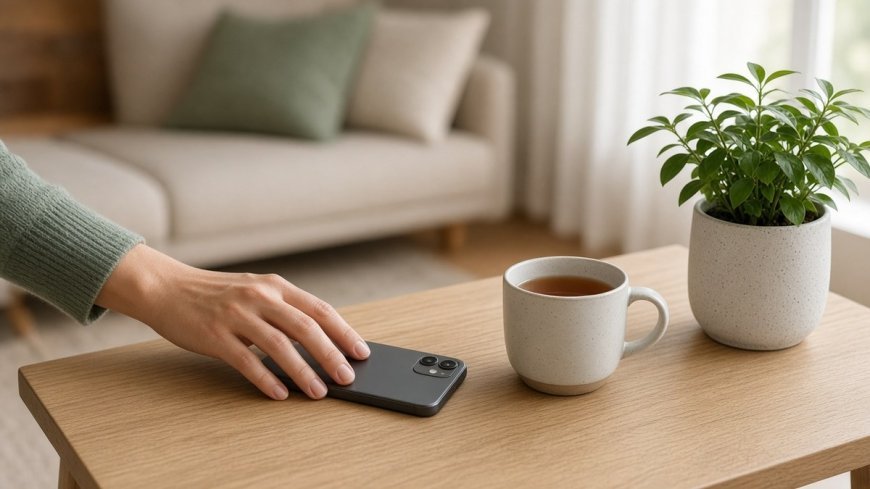





What Happens When You Protect One Quiet Evening Every Week?

You open your calendar on Sunday night and every weekday evening already has something in it. A school meeting on Monday, a friend's birthday dinner on Tuesday, a late work call on Wednesday, errands and a practice pickup on Thursday. None of it is bad. Some of it is even fun. But by Friday you feel like you have been out of the house, or at least "on," for five nights in a row, and the weekend arrives already tired.
One quiet evening a week can change how that rhythm feels. Not a vacation, not a total retreat, just one ordinary weeknight that stays deliberately calm: no plans, no hosting, no catching up on work, and as little noise as your household allows. It sounds almost too simple. That is part of why it works.
What a Protected Quiet Evening Is and Is Not
A protected quiet evening is one weeknight that you mark off in advance and keep free of social plans, extra errands, and work. You spend it at home, at an easy pace, doing low-key things you enjoy. The protecting part matters most. It is planned, guarded, and repeated each week.
It is not your nightly wind-down routine, which happens every evening and usually lasts under an hour. It is not a block of unplanned weekend time either. It is a whole weeknight with a clear purpose: less input, fewer obligations, and a softer pace. It is also not a rule that you can never answer the phone. Real responsibilities still come first.
Why One Evening Makes a Difference
When every evening is spoken for, there is no place in the week to land. Small tasks pile up, conversations happen in a rush, and rest gets squeezed into the last half-hour before bed. A single quiet evening creates a midweek pause, something to look forward to that breaks the week into smaller, more manageable pieces.
Many people find that knowing the quiet night is coming makes the busier nights easier to handle. Tuesday's late meeting feels lighter when Wednesday is already protected. The evening becomes an anchor, a recurring reminder that your week has some breathing room built in.
Choosing Your Night
Look at your typical week and find the evening that is easiest to protect. For many people that is midweek, when social plans are less common and the weekend still feels far away. Others prefer Monday, to ease into the week, or Thursday, to recover before Friday.
Pick the same night each week if you can. Consistency turns the quiet evening from a nice idea into a habit, and it makes it easier for people around you to remember. If your schedule changes week to week, choose your night each Sunday and keep it fixed once it is on the calendar.
How to Actually Protect It
The quiet evening only works if it stays quiet. That means handling it like any other commitment rather than as free time that anything can claim. A few practical guardrails help:
- Put it on your calendar as a recurring event with a clear name
- When an invitation lands on that night, suggest another evening
- Leave work messages unanswered until the next morning when possible
- Run errands on other days so the evening stays home-based
- Let the people you live with know which night it is
You do not need to explain much. "I have something that night" is usually enough. The something is simply your quiet evening, and it counts.
What to Do With a Quiet Evening
The goal is calm, not productivity. Choose activities that feel easy and restorative rather than ones that fill time or produce something. You might cook a simple meal you enjoy, read a book that has been sitting on your nightstand, take a slow walk around the block, call one person you love, work on a puzzle, or just sit with a cup of tea.
It helps to lower the input. Keep the television and phone in the background or off for part of the evening if that feels good. Choose quieter music over a busy playlist. Make dinner something that does not require a trip to the store. The fewer demands the evening makes, the more rested it tends to feel.
A Simple Quiet-Evening Flow
If an open evening feels a little shapeless, a loose outline can help. Adjust it freely, and skip any step that feels like a chore.
- Come home and change into comfortable clothes
- Make an easy dinner you have made many times before
- Spend an hour on one low-key activity you enjoy
- Take a short walk or step outside for some fresh air
- Wind down early and head to bed without rushing
Making It Work in a Busy Household
If you live with a partner, roommates, or kids, a fully silent evening may not be realistic, and that is fine. The quiet evening can be a shared one, with everyone at home, no activities scheduled, and simpler routines. Many families enjoy a weekly "home night" with an easy dinner and no rushing out the door.
If others need a different pace, you can carve out your own quiet corner of the evening. Take turns covering bedtime duties, or set aside an hour where you step away to read or walk while someone else handles the house. Quiet does not have to mean empty. It just means calmer than the other nights.
What You May Notice After a Few Weeks
The first quiet evening can feel a little odd. You may catch yourself reaching for a task or checking whether anyone needs you. By the third or fourth week, though, many people describe it differently. The evening starts to feel like something they look forward to rather than something they have to defend.
You may also notice that you say yes to plans more thoughtfully on the other nights, because you know where your breathing room is. Conversations at home on the quiet night can feel less hurried. And the weekend may arrive with a bit more energy left in the tank, simply because one weeknight was spent at a gentler pace.
When the Week Pushes Back
Some weeks the quiet evening will get interrupted. A sick child, an unavoidable work deadline, or an important event can take over. When that happens, try moving the quiet evening to another night rather than skipping it entirely. If that is not possible, a shorter version still helps: even two quiet hours can keep the habit alive.
The habit is valuable because it repeats. Missing one week does not undo it. Simply return to your usual night the following week.
What This Is Not
A quiet evening is not a way of pulling back from people you care about, and it is not a test of discipline. If a friend needs you or something meaningful comes up, showing up is a perfectly good choice. The habit is there to support your week, not to become one more rule to follow.
Bottom Line
Protecting one quiet evening each week creates a reliable midweek pause in a crowded schedule. Choose a night, put it on the calendar, guard it from plans and errands, and fill it with calm, low-effort activities. Over time, that single evening can make the whole week feel less rushed.
Tomorrow, open your calendar, choose one evening next week, and name it your quiet night before anything else claims it.
What's Your Reaction?
 Like
0
Like
0
 Dislike
0
Dislike
0
 Love
0
Love
0
 Funny
0
Funny
0
 Angry
0
Angry
0
 Sad
0
Sad
0
 Wow
0
Wow
0