



















Foam Rolling for Beginners: How to Use One Without Overdoing It
The foam roller has been leaning in the corner of the bedroom since spring. A friend from your walking group swore by hers, so you ordered one, tried it once with a video that moved too fast, winced through the whole thing, and decided it was not for you. Since then it has mostly served as a place to hang a cardigan.
That experience is common, and it usually comes from doing too much, too hard, too soon. Foam rolling is simply lying on a firm cylinder and moving slowly over it, using your body weight to control the pressure. Many people use one after a walk, a workout, or a long day at a desk because they like how it feels. Used gently, it can become a pleasant ten minutes in the evening rather than something to grit your teeth through.
Five Ground Rules Before You Start
Most beginner mistakes come down to the same few habits. Keep these in mind and the rest gets easier.
- Go slowly. Roll at about the speed of a slow exhale, an inch or two at a time. Fast back-and-forth rolling feels frantic and makes it harder to control the pressure.
- Keep the pressure moderate. You should be able to breathe normally and keep your face relaxed. If you are holding your breath, clenching your jaw, or wincing, ease off by shifting more weight onto your hands or feet.
- Keep it short. Thirty seconds to a minute on each area is plenty for a beginner. Staying on one spot for a long time is a common way to overdo it.
- Stick to the fleshy areas. Roll the backs of the calves, the fronts and backs of the thighs, the seat, and the upper back. Avoid rolling directly over joints like knees and elbows, and over bony spots.
- Stop if it hurts. Pressure and a "good stretch" feeling are one thing. Sharp pain, pinching, numbness, or tingling are signals to stop and move on.
More pressure is not better. A lot of people assume the roller only "works" if it hurts, and that idea is exactly what sends rollers back into the corner. Comfortable pressure that you would happily repeat tomorrow is a much better goal.
It also helps to move around a little first. A few minutes of walking through the house, marching in place, or folding laundry means you are not going straight from the couch to the floor. Many people find rolling more comfortable once they have been up and moving for a bit.
Picking a Roller That Suits You
Rollers come in different firmness levels, surfaces, and lengths, and the choice makes a real difference to how your first sessions feel.
- Soft or medium foam with a smooth surface is the most forgiving starting point. These are often white, gray, or lighter-colored in stores, but check the description rather than going by color.
- Firm, textured, or knobby rollers feel much more intense. They are popular, but they are better saved for later, if you want them at all.
- Full-length rollers, around 36 inches, are steadier to balance on and easier to use for the upper back.
- Shorter rollers, 12 to 18 inches, are handy for small spaces and travel.
Price varies widely, and a basic medium-density roller is usually inexpensive. For the soles of your feet, a tennis ball or a small massage ball rolled under the foot while you sit is often easier than the roller itself, and it fits neatly under a desk.
Think about where it will live, too. A roller that slides under the bed or behind the couch is more likely to get used than one that has to be dug out of a closet. Some people keep a short one in the car or gym bag for after walks.
Your First Ten-Minute Session
Pick a time when you are not rushed and the floor space is clear. Lay the roller on a mat or carpet, not a slippery floor. Then work through these areas, about a minute each, and do both sides.
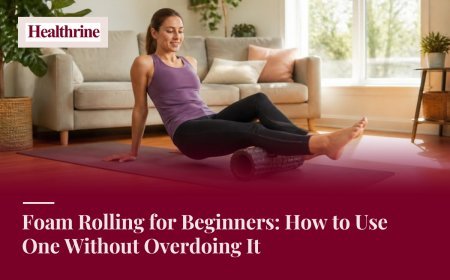
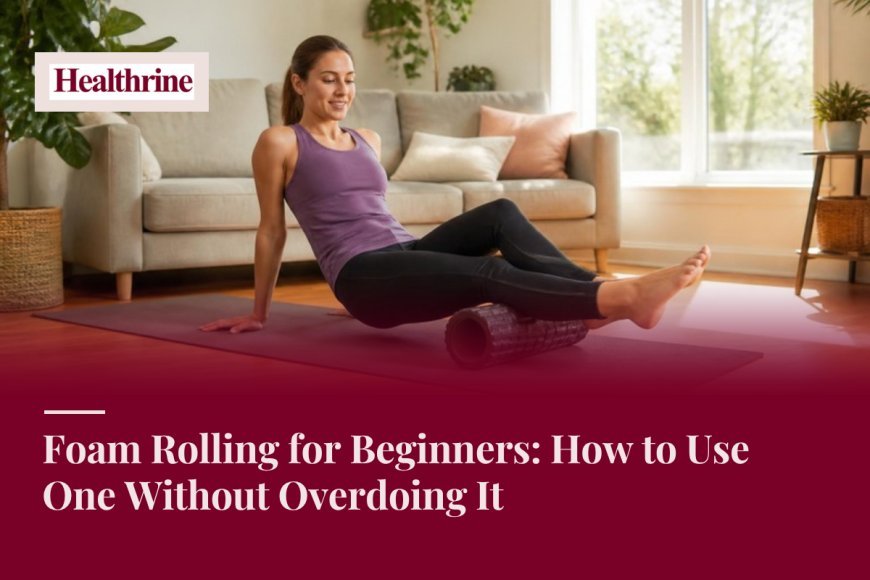
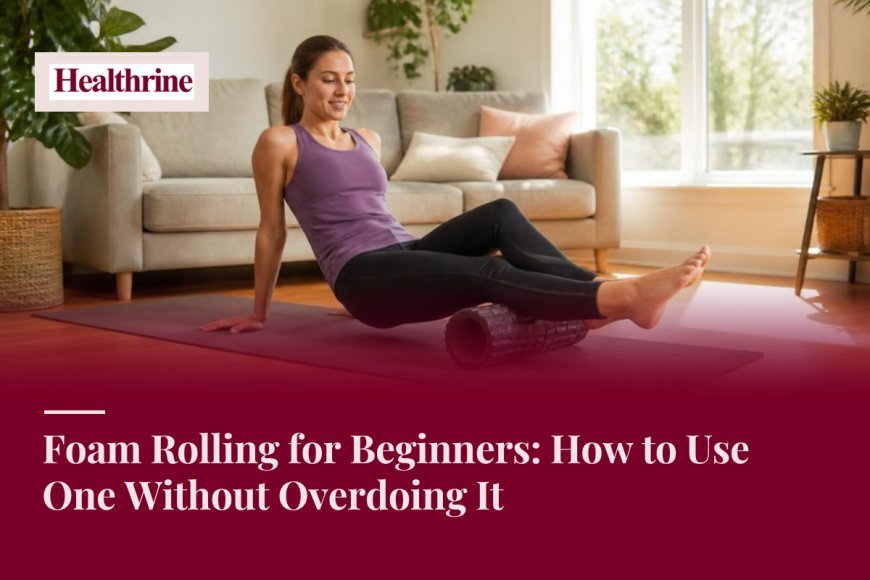
Calves. Sit on the floor with the roller under one calf and your hands behind you. Lift your hips slightly and roll from just above the ankle to just below the knee. For less pressure, keep your hips down or rest the other foot on the floor.
Backs of the thighs. Move the roller under your thighs and roll slowly from just above the back of the knee toward your seat. Turning your legs slightly inward or outward lets you explore different areas.
Fronts of the thighs. Turn over onto your forearms, as if in a low plank, with the roller under the front of your thighs. Roll from just above the knee toward the hip. Bending one knee to the side and taking more weight on it gives the other leg a lighter version.
Seat. Sit on the roller with your hands behind you. Cross one ankle over the opposite knee and lean gently toward that side. Small movements are enough here.
Upper back. Lie back with the roller under your shoulder blades, knees bent and feet flat. Support your head with your hands, elbows pointing forward, and lift your hips a little. Roll slowly between the bottom of your shoulder blades and the top of your shoulders. Keep the roller off your lower back and your neck.
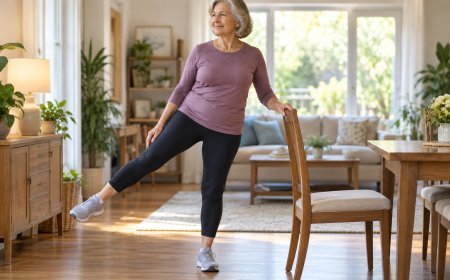
Getting up and down from the floor is part of the session. If that is hard right now, start with the seated calf position only, or use a handheld roller stick on your calves and thighs while sitting on the edge of a sturdy chair. Lying on the floor is not required to try this.
Many beginners find the outer thigh very intense. It is fine to skip that area entirely or to touch it lightly, with most of your weight on your hands and the top foot. Breathe slowly the whole time. When you finish, sit or lie quietly for a moment before standing up.
When to Skip It or Check First
Foam rolling is a comfort habit, not a fix for pain that keeps coming back. Skip any area that is bruised, swollen, or recently injured. Avoid rolling over varicose veins or anywhere you have been told to be careful with pressure.
If you have an injury, a joint or bone condition, a circulation concern, or any other health condition, or if you are pregnant, check with your provider or a physical therapist before you start. The same goes for any ache that has hung around for weeks. A roller is not a substitute for having it looked at.
Easing It Into Your Week
The people who stick with foam rolling usually keep it simple. Pair it with something you already do, such as rolling during the first ten minutes of a show, or right after you take off your walking shoes. Two or three short sessions a week is a reasonable rhythm to try.
Expect it to feel different from day to day. An area that feels fine on Monday might feel more tender after a long Saturday on your feet. Adjust the pressure to how you feel that day instead of trying to match the last session.
Pay attention to what you like and drop what you do not. Some people love the upper back and skip the thighs. Others mostly roll their calves after a day of errands. There is no required routine, and nobody is grading you.
Tonight, take the cardigan off the roller. Spend one gentle minute on each calf, breathing slowly, and stop there.
What's Your Reaction?
 Like
0
Like
0
 Dislike
0
Dislike
0
 Love
0
Love
0
 Funny
0
Funny
0
 Angry
0
Angry
0
 Sad
0
Sad
0
 Wow
0
Wow
0