






















Wall Push-Ups for Beginners: A Gentle Way to Build Upper-Body Strength
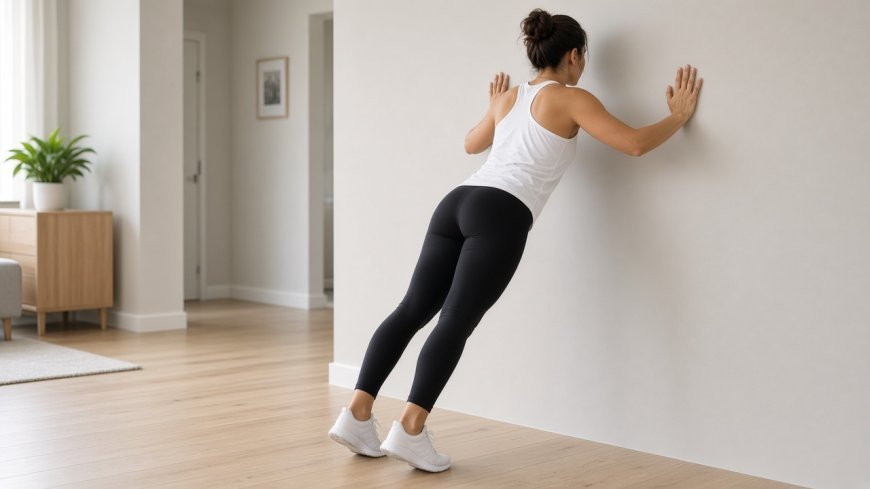
You want stronger arms and a steadier chest without jumping into floor push-ups on day one. Fair. Floor versions can feel far away when your shoulders are new to the idea, your wrists complain, or you simply prefer starting where your body already feels willing. A wall gives you that starting place. Same basic pattern as a classic push-up, just upright, supported, and easy to adjust by how close you stand.
This piece is a gentle lifestyle guide to wall push-ups as an everyday strength habit. It is not a bodybuilding program, not physical therapy, and not a rehab protocol. It is an accessible wall placement you can fold into mornings, lunch breaks, or the quiet stretch before dinner. Think coach friend, not clinic. If something feels sharp or wrong for you, ease off and choose comfort over ambition.
What a Wall Push-Up Actually Is
A wall push-up is a standing press where your hands rest on a sturdy wall and you bend and straighten your elbows to move your chest toward and away from that surface. Your feet stay planted. Your core stays lightly awake. Gravity is kinder than it is on the floor because you are nearly upright, so the load on your arms and chest is smaller and more controllable.
That kindness is the point. Beginners often quit floor push-ups not from laziness but from a gap between desire and current capacity. The wall closes that gap. You still practice pressing, breathing, and keeping a long line from head to heels. You just practice it at a height that invites repetition instead of dread.
Form Basics You Can Feel
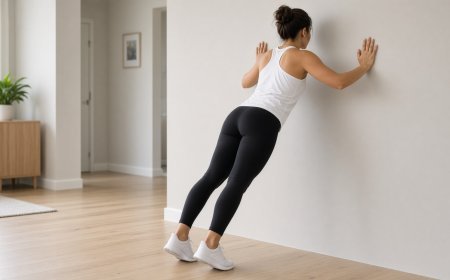
Stand facing a clear wall. Place your palms roughly at shoulder height and a little wider than your shoulders. Walk your feet back until your body forms a gentle diagonal. The farther your feet travel, the harder the move becomes. For true beginners, start close enough that the effort feels honest but unfinished after eight to twelve slow reps.
Keep your spine long, as if a soft string lifts the crown of your head. Soften your ribs so they do not flare. Squeeze your glutes lightly so your hips do not sag or pike. Bend your elbows to bring your chest toward the wall, then press away until your arms straighten without locking hard. Breathe out on the press. Breathe in as you lower. Move with intention, not like you are bouncing.
- Hands at about shoulder height, fingers pointing up
- Elbows tracking back and slightly out, not flaring wildly
- Neck neutral: look at the wall, not at the ceiling or your toes
- Heels stay down; avoid rising onto your tiptoes mid-rep
- Whole body moves as one piece, not chest first then hips later
How Many Is Enough for a Beginner Habit
Skip the urge to chase huge numbers. For a lifestyle habit, two or three short sets of six to twelve smooth reps on days you feel ready is a strong start. Quality beats quantity. If your form collapses at rep seven, stop at six and celebrate that you stopped wisely.
Rest thirty to sixty seconds between sets, or simply shake out your arms and take a few easy breaths. You can do this before a walk, after brushing your teeth, or while the kettle boils. Consistency that feels kind beats a personal best that leaves you sore for a week. If twelve reps feel easy and your form stays tidy, take a small step back from the wall next session. If six reps feel shaky, step closer. Distance is your dial.
Where Wall Push-Ups Fit in a Normal Week
Think of wall push-ups as a small upper-body check-in, not a full workout that needs a calendar block. Three to five short sessions a week is plenty for most beginners building a habit. Leave at least one lighter day between harder days if your chest or the fronts of your shoulders feel worked.
Pair them with something you already do. After morning coffee. Before you open email. While dinner is in the oven. Habit stacking keeps the practice from competing with your schedule. On busy weeks, even one honest set counts.
- Pick two or three anchor moments you already have (coffee, commute home, bedtime stretch)
- Do one to three short sets at those moments on non-consecutive days at first
- Add a fourth day only when the first three feel automatic
- Keep one fully restful day each week with zero push-up pressure
Progressions Toward the Floor When You Feel Ready
You do not owe the floor anything. Some people stay with the wall forever and still build useful strength for daily life: carrying bags, pushing doors, holding better posture at a desk. If you do want a bridge toward floor push-ups, change one variable at a time.
First, stand farther from the wall until twelve clean reps feel challenging again. Next, try a kitchen counter or sturdy table edge at a lower angle. Then a couch arm or low bench. Each step increases the share of your body weight your arms support. Only move down when the current height feels controlled, not heroic. If a lower version falls apart after two reps, return to the higher surface without drama. Progress is a ladder you can climb and descend as needed.
Common Form Slips (And Easy Fixes)
Most beginners share the same handful of slips. Naming them helps you catch them early without turning practice into self-criticism.
- Hips that sag: lightly squeeze your glutes and think "long diagonal," not "banana shape"
- Shoulders shrugged to the ears: slide your shoulder blades down your back before you start
- Elbows winged out too far: aim for a comfortable arrow shape, not a T shape
- Chin poking forward: keep your gaze soft on the wall and lengthen the back of your neck
- Rushing the lowering phase: take two slow counts down, one steady count up
- Standing so far away that form breaks: step closer and rebuild clean reps first
Film one set on your phone from the side if you are curious. Watching yourself once often teaches more than ten verbal cues. Then put the phone away and return to feel.
Busy-Week Versions That Still Count
Life will get loud. Travel, deadlines, kids, late nights. Keep a minimum version so the habit does not vanish. One set of five smooth wall push-ups while you wait for the microwave is enough on those days. Or do "push-up snacks": three reps now, three reps an hour later, three reps before bed.
You can also slow the tempo instead of adding reps. Three very slow wall push-ups with a two-second pause near the wall can feel surprisingly strong. On energy-low days, stand closer and focus on perfect lines. The habit is the win. Intensity can wait for a calmer week. If your wrists feel cranky, place your hands a touch higher or skip the session. Gentle fitness includes knowing when to rest.
Making It Feel Like Lifestyle, Not Homework
Music helps some people. Silence helps others. Choose what makes the minute feel like care rather than punishment. Keep a clear patch of wall free of clutter so you never have to set up. Friction kills habits faster than lack of motivation. Track only what motivates you: a sticky-note tally, a calendar X, or nothing at all. If tracking turns into pressure, drop it. Strength for daily life grows from repeated friendly contact with the movement, not from perfect spreadsheets.
What This Is Not
This is not a bodybuilding program, not a challenge with shame-based streaks, and not physical therapy. It will not diagnose, treat, or cure anything. It is not a promise that wall push-ups alone will transform your physique or replace a full movement life that also includes walking, stretching, sleep, and food that supports you.
It is simply an accessible wall placement: a beginner-friendly way to practice upper-body pressing strength at home, on your terms, at a pace that respects how you feel today. If you have personal health questions about starting any new activity, talk with a qualified professional who knows your situation. This article stays in the lifestyle lane on purpose.
Bottom Line
Wall push-ups give beginners a kind doorway into upper-body strength. Stand at a comfortable distance, keep a long body line, breathe with the press, and favor clean reps over big numbers. Place a few short sets in your week where they fit. Progress by stepping back from the wall or lowering the surface only when ready. Protect the habit with busy-week minimums instead of all-or-nothing thinking.
Tomorrow, pick one clear wall and try a single set of six slow wall push-ups with attention on your breath and your long diagonal. That one set is enough to begin. Come back when it feels good, and let the habit grow at the speed of kindness.
What's Your Reaction?
 Like
0
Like
0
 Dislike
0
Dislike
0
 Love
0
Love
0
 Funny
0
Funny
0
 Angry
0
Angry
0
 Sad
0
Sad
0
 Wow
0
Wow
0