





























Listening Better: Small Habits That Make People Feel Heard

You are halfway through a sentence when you notice the other person's eyes drift toward your phone. They are not being rude. They are checking whether this is going to take long. And just like that, the conversation shrinks a little.
Most of us have been on both sides of that moment. We know what it is like to talk to someone who is clearly elsewhere, and we know how easy it is to be that person ourselves when a day is full. The good news is that listening is less about talent than about a handful of small habits. Here are some, written as simple contrasts, so you can pick the ones that suit you.
Small Swaps in the Moment
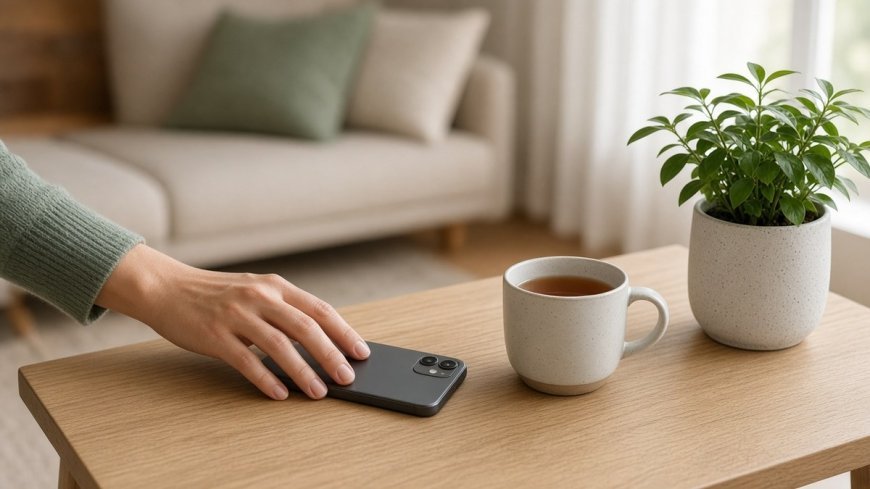
Instead of keeping your phone nearby, try putting it out of sight. Face-down on the table still counts as present, because it buzzes and glows and pulls at your attention. Slipping it into a bag or pocket tells the other person, without a word, that they have the floor.
Instead of planning your reply while they talk, try following their last sentence. When you are rehearsing what you will say, you are listening to yourself. It can help to let your reply be a little rough and arrive a beat late. Most people would rather get a slightly unpolished answer to what they actually said than a polished one to something they did not.
Instead of finishing their sentences, try waiting. People often pause mid-thought because they are choosing a word or deciding how much to share. Giving that pause room, even for a few seconds longer than feels comfortable, often leads to the more honest half of what they were going to say.
Instead of jumping to fix it, try asking what would help. Many of us hear a problem and reach for a solution out of kindness. Sometimes that is exactly right. Other times the person only wanted a witness. A simple "Do you want ideas, or do you want me to listen?" saves a lot of guessing, and most people appreciate being asked.
Instead of matching their story with your own, try staying with theirs for one more question. It is natural to say "that happened to me too" as a way of connecting. But a story that turns the spotlight to you can make the first speaker feel cut off. A follow-up question, such as "What was that like?", keeps the light where they put it. You can still share your own story afterward, once theirs has landed.
Instead of nodding along when your mind has wandered, try admitting it. Everyone drifts now and then, especially at the end of a long day. Saying "Sorry, I lost you for a second, could you say that last part again?" is far more reassuring than a distracted "uh-huh," and people tend to respond to the honesty with a warmer retelling. It also quietly shows that you care about getting it right.
Things You Can Notice
Good listening often comes down to noticing, which is a gentler way of saying paying attention. A few things worth noticing, none of which need to be announced out loud.
Notice where your own eyes go. Looking at the person, not at the room behind them, is a simple signal that they have your attention. If direct eye contact feels like too much, looking in their general direction, or at their hands as they talk, works too. Eye contact customs vary a lot between people and cultures, so consider this a guide rather than a rule.
Notice your body. Turning your chair or shoulders toward the speaker, uncrossing your arms and putting down whatever is in your hands all help, and they also help you. It is hard to keep half a mind elsewhere when your whole body is facing the conversation.
Notice the pace. People who are choosing their words carefully tend to speak slowly, and matching that pace gives them room. People who are excited tend to speak quickly, and matching that energy tells them you are with them.
Notice the small words. A quiet "mm" or "I see" or "go on" tells someone you are following without interrupting their flow. Overdoing it can feel mechanical, so let those words come naturally rather than as a technique.
Notice what is not said. If someone says "I'm fine" with a sigh, you do not need to push. A soft "You sure?" with a little space after it leaves the door open without pulling them through it. Some people will walk through right away. Others will say thanks and come back to it later.
On Silence
Silence is where many conversations are won or lost. A quiet moment can feel awkward, so we rush to fill it with advice, a joke or a change of subject. But a pause after someone shares something real is often a sign that they are still thinking, or that the thing they said mattered to them.
Try letting a silence go for a slow breath or two before you speak. You may find that the other person fills it with the next part of the story. If they do not, you can say something simple like "Take your time" or "I'm listening," and then actually do that.
Silence does not mean you must stay quiet forever. It is simply a way of making room, and a pause is not the same as a gap in the conversation. Some of the warmest conversations are made of sentences with space in between.
Listening Over Text and on Calls
Not every conversation happens face to face, and the same habits carry over with small changes.
On a phone call, stepping away from your screen helps more than you might think. Walking while you talk, or sitting somewhere without a laptop open, makes it easier to give the call your attention, and the person on the other end can often hear the difference.
On a video call, looking at the camera now and then, rather than at your own tile, gives the other person the closest thing to eye contact the format allows. Closing extra tabs helps, too.
Over text, listening looks like reading the whole message before replying, answering the question that was actually asked and not just the first line, and checking in if the tone is hard to read. A message like "That sounds like a lot, do you want to talk it through?" does more than a quick thumbs-up.
When You Are the One Who Needs to Be Heard
Listening is a two-way street, and it can help to say what you need. If you want a listener rather than an adviser, you can say so at the start: "I just want to talk this through, no fixing needed." Many people find this a relief, since it removes the pressure to solve things.
It is also fair to notice when a conversation is not the right moment. If someone is tired, rushed or distracted, asking "Is now a good time, or should we talk later?" is a kind way to protect both of you. A conversation held a few hours later, with full attention, is often better than one squeezed in at the wrong time.
None of these habits ask you to be a different person. They are small adjustments to attention, and attention is something most of us can offer a little more of on any given day. Pick one swap, try it in your next conversation, and notice what changes.
What's Your Reaction?
 Like
0
Like
0
 Dislike
0
Dislike
0
 Love
0
Love
0
 Funny
0
Funny
0
 Angry
0
Angry
0
 Sad
0
Sad
0
 Wow
0
Wow
0