
























Strength Training Myths That Keep Women From Lifting
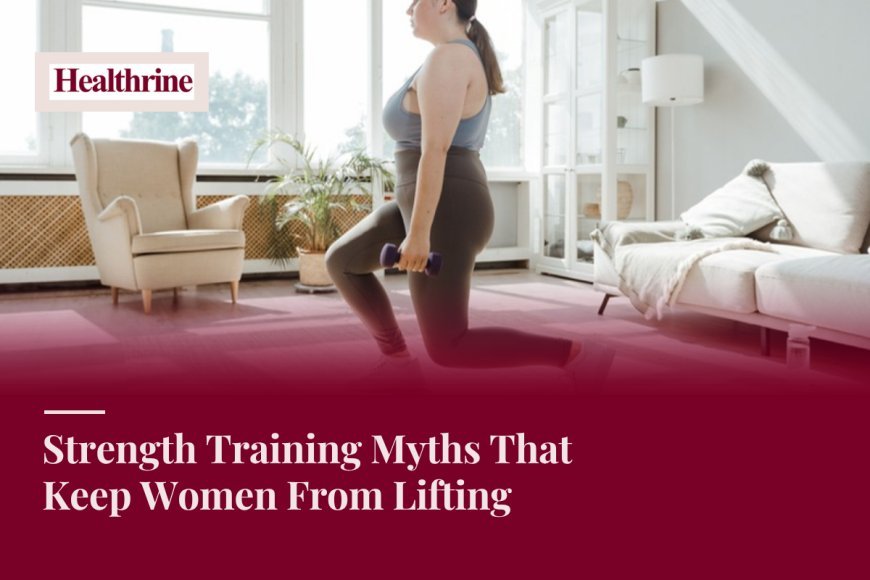
"I would lift, but I don't want to look like a bodybuilder." "I'll start once I have lost a bit of weight." "Isn't the gym kind of intimidating?" If any of these sound familiar, you are in good company. Many women have heard some version of them for years, from friends, magazines, and their own inner voice.
Plenty of this advice is well meant, but it can leave strength training feeling like a club with a secret handshake. In reality, it is a set of simple movements you can start at home with very little. Here are the most common things women say about lifting, what tends to be true instead, and a gentle place to begin.
The Worry: "I'll Bulk Up"
This is the big one, so let's start there. Building a large amount of muscle usually takes years of focused training, plenty of food, and a good dose of genetics. A beginner doing two or three simple sessions a week is not going to wake up looking dramatically different. What many women notice first has little to do with appearance. Groceries feel lighter. Stairs feel easier. A suitcase goes into the overhead bin without a fuss.
If you do eventually enjoy getting stronger and want to build more muscle, you can choose that on purpose. If you don't, you can keep a steady, moderate routine as long as you like. Either way, you are in charge of the dial.
The Order: "Cardio First, Weights Later"
Some women feel they need to earn their way into strength work with months of cardio first. The national guidelines do not set it up that way. The Physical Activity Guidelines for Americans recommend aerobic activity and muscle-strengthening activity as two parts of the same weekly picture, and the CDC notes that adults need muscle-strengthening on at least two days a week, alongside about 150 minutes of moderate activity.
You do not have to master one before starting the other. A walk on Tuesday and a short strength session on Wednesday can sit side by side. Think of them as teammates rather than rivals.
The Weight: "Light Is Safe, Heavy Is Risky"
It is true that you should start light and learn the movement first. Slow, controlled reps with good form matter more than the number on the weight. But light does not mean forever. The guidelines describe muscle-strengthening at a moderate or greater intensity, which in plain terms means working until the last couple of reps feel challenging, not effortless.
A helpful way to find the right load is to pick a weight you can lift with good form around 8 to 12 times, with the last few reps taking real effort. Once 12 reps feel comfortable, you can add a little weight or another set. Progress should be gradual. If something hurts in a sharp or joint-y way, stop and adjust; mild muscle tiredness is a different feeling from pain.
If you are pregnant, recently had a baby, or have a health condition, check with your doctor about what suits you. A certified trainer can also show you how to set up your form safely, even for a session or two.
The Room: "The Weight Area Isn't for Me"
Walking into a crowded weight area can feel like walking into a party where everyone already knows each other. A few things can make it easier:
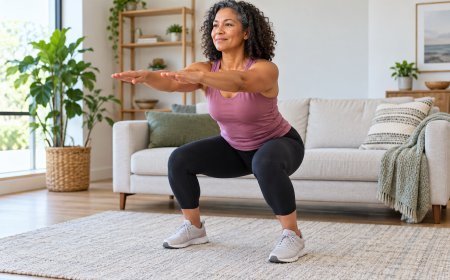
- Start at home. Bodyweight squats to a chair, wall or counter push-ups, and bag-carry walks all count as strength work. A pair of dumbbells or a resistance band adds options later without needing a membership.
- Try a first visit at a quiet hour. Mid-morning or early afternoon is often calmer, and many gyms offer a free orientation session with a staff member.
- Bring a plan. Walking in with a short list of four or five moves removes most of the awkward wandering around.
- Classes count. Beginner strength classes give you structure, a friendly instructor, and company.
Nobody is paying as much attention to your form as you imagine. Most people are thinking about their own sets.
The Timeline: "It's Too Late" and "I Don't Have Time"
Two final worries tend to travel together. One is that strength training is for younger people. The other is that it takes hours. Neither holds up well.
On age: the National Institute of Arthritis and Musculoskeletal and Skin Diseases (NIAMS), part of the NIH, notes that muscle-strengthening exercise supports both muscles and bones in adults and can help with balance and coordination. Those are things that matter at many stages of life. If you have a bone-health concern such as osteoporosis, ask your doctor or a physical therapist which movements suit you before starting.
On time: the guideline is two days a week, not seven, and sessions can be short. Twenty to thirty minutes is plenty for a full-body routine, and shorter sessions still count. Some weeks will be messy. Doing a ten-minute version when a full session is not possible is a good option.
A Simple Starting Point
If you would like something concrete, here is a six-move routine that works with a chair, a wall, and a pair of light dumbbells or water bottles. Do two sets of 8 to 10 reps, resting about a minute between sets:
- Chair squat: sit down slowly, stand up, and repeat.
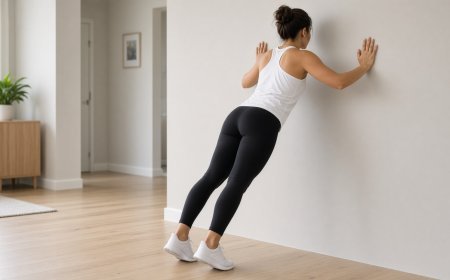
- Wall push-up: hands on the wall, step back, bend your elbows, and press away.
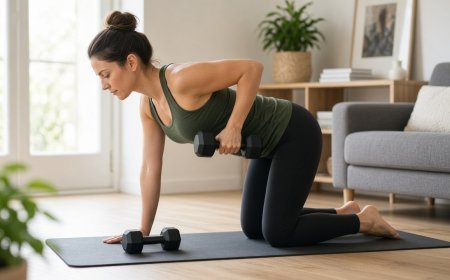
- Bent-over row: hinge slightly at the hips and pull the weights toward your ribs.
- Glute bridge: lie on your back with your knees bent and lift your hips.
- Overhead press: press the weights from shoulder height to above your head, seated or standing.
- Farmer's carry: walk slowly while holding a weight in each hand.
Try this twice in your first week, with a day or two between sessions. Notice what feels good and what is awkward. After two or three weeks, add a few reps or a little weight. Keep a note on your phone of what you did so progress becomes visible.
Between sessions, rest matters as much as the lifting. A day off between strength days gives your muscles time to settle, and you can still walk, stretch, or dance on those days. If the same muscles still feel very sore two days later, you probably did a little too much, so go lighter next time.
How will you know it is going well? Skip the mirror for a few weeks and look for quieter signs instead:
- A weight that felt hard on day one now feels manageable, so you add a few reps.
- Everyday jobs, such as carrying laundry or lifting a pot, take less effort.
- You can get up from a low chair or the floor with a little more ease.
- You look forward to the session, or at least do not dread it.
If you like structure, a resistance band is a handy alternative to dumbbells. It costs little, folds into a drawer, and works for rows, presses, and squats. If you prefer company, ask a friend to join you for the first few weeks. Trading a quick text after each session ("done, 2 sets") keeps things light and gives you a small win to celebrate.
None of this requires a transformation or a new identity. It is a few simple moves, practiced regularly, with the aim of feeling capable in your own body. You get to decide how far you take it.
What's Your Reaction?
 Like
0
Like
0
 Dislike
0
Dislike
0
 Love
0
Love
0
 Funny
0
Funny
0
 Angry
0
Angry
0
 Sad
0
Sad
0
 Wow
0
Wow
0