



























Resilience and Rising from Failure: Building Mental Strength to Adapt to Adversity
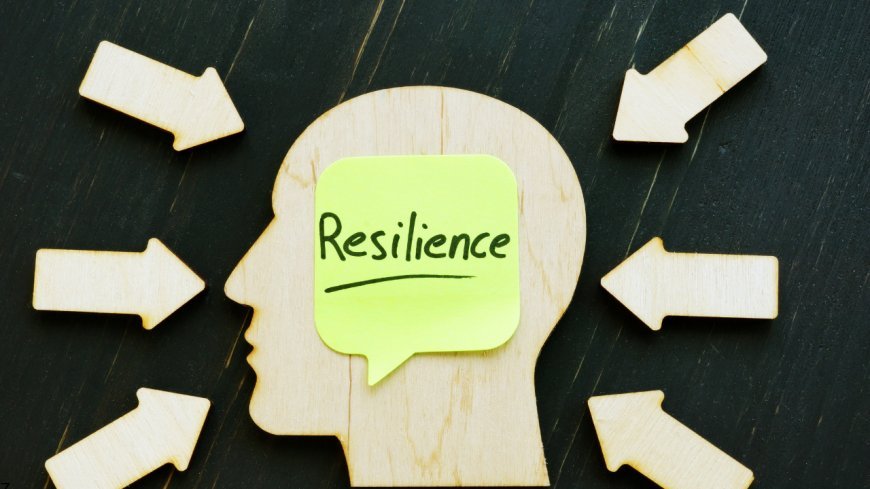
Failure stings. Whether it's a rejected job application, a broken relationship, a business that didn't take off, or simply a day where everything went wrong, setbacks can make you question your worth, your decisions, and your future. But here's the truth most successful people know: resilience isn't about avoiding failure—it's about what you do with it. The difference between people who crumble under adversity and those who eventually thrive is rarely talent or luck. It's mental strength—the ability to adapt, learn, and rise stronger.
Resilience is a skill, not a personality trait. You can build it deliberately through mindset shifts and daily practices. When you treat failures as essential feedback rather than final verdicts, every stumble becomes data that moves you closer to your goals. Below are four powerful, practical ways to cultivate that unbreakable mental strength and turn setbacks into stepping stones.
1. Reframe Failure as Feedback (The Mindset Shift)
The moment something goes wrong, your brain defaults to one of two stories: “I failed, therefore I am a failure” or “This didn't work— what can I learn from it?” The first story paralyzes; the second empowers.
How to practice the reframe daily:
- After any setback (big or small), pause and ask three specific questions out loud or in writing:
- What actually happened? (Stick to facts, no drama.)
- What did I learn? (Even one small insight counts.)
- What will I do differently next time? (Turn insight into action.)
- Example: You bomb a presentation.
- Fact: I spoke too fast, lost the audience, and forgot key points.
- Learned: I need to rehearse with a timer and prepare cue cards.
- Next time: I'll practice in front of a friend and record myself.
- Do this within 24 hours of the event while emotions are still fresh but not overwhelming. Over time, this habit short-circuits shame and trains your brain to see failure as information, not identity.
2. Build a “Bounce-Back” Ritual (Emotional Regulation Tool)
Resilience requires recovering faster from emotional hits. A short, repeatable ritual helps you process disappointment without getting stuck in it.
Simple 10-minute bounce-back ritual:
- Feel it fully (2–3 minutes): Name the emotion (“I'm disappointed/frustrated/embarrassed”) and let yourself sit with it. No bypassing.
- Physical reset (2 minutes): Take 10 deep belly breaths, go for a brisk 5-minute walk, splash cold water on your face, or do 20 jumping jacks. Movement discharges stress hormones.
- Perspective statement (1 minute): Say or write one of these:
- “This feels heavy now, but it is temporary.”
- “One outcome does not define my entire story.”
- “I have survived 100% of my bad days so far.”
- One small forward action (2 minutes): Do something tiny that moves you forward—send one email, read one page, stretch for 60 seconds. Momentum kills rumination.
Repeat this ritual every time you feel derailed. Consistency turns it into an automatic response, shrinking recovery time from days to hours.
3. Keep a “Proof of Resilience” Journal (Evidence Bank)
Your brain is excellent at remembering failures and terrible at recalling wins. A dedicated journal counters that bias by collecting proof that you are capable of rising.
How to maintain it:
- At the end of each week (or after any meaningful setback), write down:
- 3 things that went wrong recently.
- How you responded or what you learned.
- The evidence it gave you that you're stronger than you think.
- Example entry: “Missed a deadline → Felt panicked → Asked for a 24-hour extension and delivered quality work anyway → Proved I can recover under pressure.”
- Review the journal monthly. Reading your own history of bouncing back builds unshakeable self-trust.
This isn't toxic positivity—it's factual evidence that you have already overcome adversity before and can do it again.
4. Adopt the “Yet” Philosophy + Controlled Exposure to Discomfort
Growth mindset pioneer Carol Dweck showed that adding one word—“yet”—changes everything: “I'm not good at this… yet.” It keeps the door open to progress.
Combine it with small, intentional doses of discomfort to desensitize yourself to failure:
- Try something you're bad at once a week (new sport, public speaking, cooking a complex recipe).
- Set micro-risks daily: Ask a question in a meeting, pitch an idea, reach out to someone intimidating.
- When it doesn't go perfectly, say: “I failed at this… yet. And now I have new information.”
Each small failure you survive proves to your nervous system that setbacks are survivable—and even useful.
Final Thoughts: The Long Game of Resilience
Resilience isn't feeling unbreakable; it's knowing you'll bend, maybe crack a little, but you'll keep reforming into a stronger version of yourself. The most resilient people aren't those who never fall—they're the ones who fall, get curious instead of critical, take one small step forward, and repeat.
Start tonight: Pick one setback from the past week. Run it through the three feedback questions. Then do your bounce-back ritual. That's it. One tiny practice at a time, you're building the mental muscle that turns adversity from enemy to teacher.
You've already survived every hard day so far. The next one won't be any different—you'll rise again. Keep going.
What's Your Reaction?
 Like
0
Like
0
 Dislike
0
Dislike
0
 Love
0
Love
0
 Funny
0
Funny
0
 Angry
0
Angry
0
 Sad
0
Sad
0
 Wow
0
Wow
0