






















Body Confidence Isn't About Weight: 7 Shifts That Change How You Feel in Your Skin
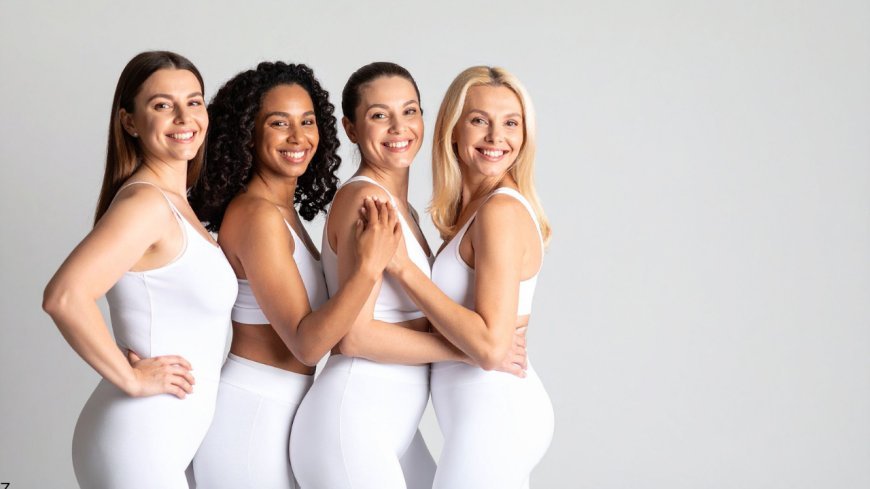
Most content about body confidence is secretly about weight loss. The underlying message: feel better about your body by changing it. We're not doing that here.
Body confidence — the comfortable, unselfconscious relationship with your physical self — is a psychological state, not a physical one. It can be cultivated at any body size, and it does not require waiting until some future version of yourself arrives. Here are seven evidence-supported shifts that genuinely change how you feel in your skin.
1. Move Your Body for How It Feels, Not How It Looks
The relationship between movement and body confidence becomes positive when movement is chosen for how it makes you feel — energy, strength, mood, stress relief — rather than for calorie burn or appearance change.
Exercise driven by 'I should' and body dissatisfaction tends to be unsustainable and keeps the focus on perceived inadequacy. Movement chosen for pleasure — a dance class you enjoy, a sport you're interested in, a walk that clears your head — builds a different relationship with your body over time. One of capability and appreciation rather than correction.
The practical shift: for the next 30 days, choose movement based only on what sounds enjoyable or interesting. Notice what happens to how you feel about your body.
2. Dress for Fit and Comfort, Not for the Number on the Tag
An enormous amount of daily body dissatisfaction is generated by clothing that doesn't fit well — too tight, too loose, uncomfortable in ways that create constant physical self-consciousness throughout the day.
Clothing that fits your actual body today — not the body you're planning to have, not the size you 'should' be — produces an immediate and consistent improvement in how you feel throughout the day. This is not a consolation prize. It's a straightforward physical comfort issue that most people don't address.
Sizing varies wildly across brands and has changed significantly over decades. The number on the tag communicates nothing about your body — it's a measurement artifact. Wear what fits.
3. Audit Your Social Media Feed
The research on social media and body image is substantial and consistent: exposure to idealized bodies — filtered, posed, and often digitally altered — increases body dissatisfaction, particularly in women and adolescents, but across all demographics.
This isn't an opinion. It's documented in dozens of peer-reviewed studies. The mechanism is social comparison, and it operates below the level of conscious thought.
A practical audit:
• Unfollow accounts that consistently leave you feeling worse about yourself physically, even slightly
• Follow accounts that feature body diversity, genuine people, or content unrelated to appearance
• Notice which accounts you feel lighter after scrolling and which you feel heavier after — the pattern is usually clear
This is one of the highest-leverage changes available and takes 15 minutes.
4. Develop Posture Awareness
Posture has a bidirectional relationship with confidence — confident people tend to hold themselves differently, but deliberately shifting your posture also affects your internal state. Research on 'power posing' has been contested, but the basic finding that expansive, upright posture produces different psychological states than collapsed, contracted posture is well-supported.
More practically: slouching and forward head posture create physical discomfort throughout the day that compounds into a kind of background self-consciousness. Simple posture habits — sitting tall, rolling shoulders back, periodic standing — improve both how you feel physically and how you present to yourself in mirrors and reflections.
5. Practice Functional Gratitude for Your Body
Most of us think about our bodies primarily in terms of how they look. An alternative frame: what your body does. Carries you places. Digests food and converts it to energy. Heals from injury. Allows you to hold people you love. Laughs.
Body gratitude practices — deliberately noticing capability and function rather than appearance — shift the evaluative framework in a direction that research associates with higher body satisfaction and lower disordered eating risk.
This doesn't mean ignoring how you look or pretending appearance doesn't matter. It means expanding the frame through which you evaluate your physical self.
6. Reduce Mirror and Scale Checking
Frequent body checking — repeatedly examining yourself in mirrors, weighing yourself multiple times per day, pinching areas of concern — increases body dissatisfaction. The behavior feels like monitoring, but it functions as hypervigilance that amplifies perceived problems.
For most people, once-daily weighing (if they weigh at all) and normal mirror use for getting dressed is functional. Beyond that, the additional checking is not producing useful information — it's producing anxiety.
Try a one-week experiment: weigh yourself no more than once and check your appearance no more than twice daily. Most people report a noticeable reduction in body-related anxiety within days.
7. Invest in Physical Comfort
Physical comfort — sleeping on a good mattress, wearing comfortable shoes, having a workspace that doesn't create chronic tension — affects your relationship with your body in ways that are often overlooked in body confidence discussions.
Chronic physical discomfort creates a background noise of body-negative experience. Removing that discomfort doesn't solve deeper confidence issues, but it removes an ongoing source of friction that makes everything harder.
• Shoes that fit and support your feet
• A mattress and pillow that allow genuine rest
• Clothing that doesn't pinch, restrict, or require constant adjustment
• A work chair that doesn't create back or shoulder pain after two hours
Body confidence is built through accumulated small experiences of feeling comfortable, capable, and at ease in your body. Investments in physical comfort contribute to this in ways that are quieter but genuinely significant.
The Bottom Line
Body confidence is not contingent on achieving a certain weight, shape, or size. It's built through the relationship you cultivate with your body — how you move it, dress it, talk about it, and treat it day to day. The seven shifts here are all within reach, most are free, and none require waiting for anything to change first.
What's Your Reaction?
 Like
0
Like
0
 Dislike
0
Dislike
0
 Love
0
Love
0
 Funny
0
Funny
0
 Angry
0
Angry
0
 Sad
0
Sad
0
 Wow
0
Wow
0