





























The 20-Minute Wind-Down Routine That Actually Shuts Off Your Brain

Most of us have a morning routine we've thought carefully about, and almost no evening routine at all beyond scrolling until our eyes get heavy. But the twenty minutes before bed matter just as much for how well you sleep, and they don't require anything complicated. Here's a simple, phone-free sequence broken into four five-minute stretches.
Minutes 0 to 5: Dim the Lights, Silence the Phone
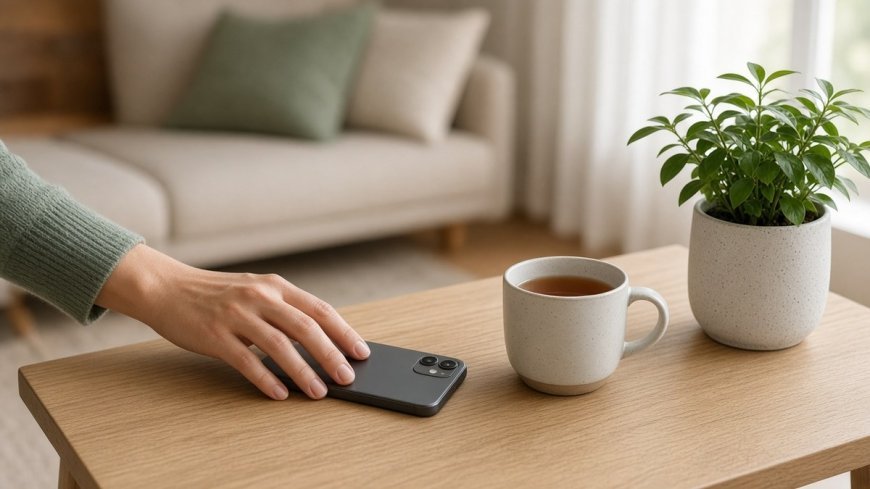
Bright light, especially the blue-toned light from screens, signals your brain to stay alert right when you're trying to do the opposite. Dimming the lights in your space and physically putting the phone in another room, not just face-down on the nightstand, removes the single biggest obstacle to actually winding down. If the phone doubles as an alarm, an inexpensive separate alarm clock solves that in five minutes and pays for itself in better sleep almost immediately.
Minutes 5 to 10: The Herbal Tea Ritual
A warm, caffeine-free tea, chamomile and valerian root are common choices, gives your hands and mouth something to do that isn't scrolling, and the small ritual of making it signals to your body that the day is ending. This doesn't need to be elaborate. The point is the five minutes of quiet, repetitive motion as much as anything in the cup itself.
Minutes 10 to 15: A Journaling Prompt
Racing thoughts at bedtime are usually unfinished business your brain hasn't let go of yet. Writing down three things from the day, one thing that went well, one thing still on your mind, and one thing you're doing tomorrow, gives those thoughts somewhere to land outside your head. This doesn't need to be a diary entry. A few short lines is enough to notice a real difference in how quickly your mind quiets down.
Minutes 15 to 20: Breathing Into Sleep
Close the twenty minutes with a few rounds of slow, extended-exhale breathing, in for four counts, out for six or seven. A longer exhale than inhale activates your parasympathetic nervous system, the part responsible for rest, and is one of the simplest physiological signals you can send your body that it's safe to fully relax.
Worth trying: A caffeine-free herbal tea blend and a simple wind-down light can make this routine easier to stick with on nights when motivation is low.
None of this is about achieving a perfect night's sleep every single time. It's about giving your brain and body a consistent, low-effort signal that the day is actually over, twenty quiet minutes at a time.
What's Your Reaction?
 Like
0
Like
0
 Dislike
0
Dislike
0
 Love
0
Love
0
 Funny
0
Funny
0
 Angry
0
Angry
0
 Sad
0
Sad
0
 Wow
0
Wow
0