



























How to Restart a Habit After a Break Without Starting Over
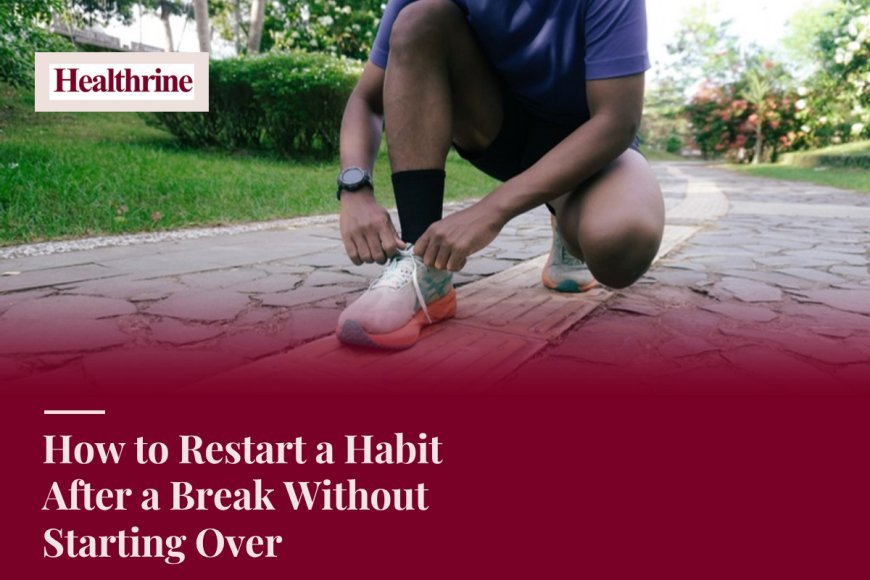
There is a particular kind of guilt that arrives with a dusty yoga mat, a language app untouched since spring, or running shoes that have not left the closet in months. The habit was real once. Then travel, illness, work, family needs, or plain tiredness interrupted it, and now restarting feels like admitting the whole effort failed.
It did not fail. It paused. Those are different things, and the way back is different, too. You do not need to repeat week one, recreate your most ambitious schedule, or wait for a Monday with unusual energy. You need a smaller door back into something your life already knows how to hold.
Read the Break Before You Restart
Start by getting honest about why the break happened, without turning it into a trial. Was the habit tied to a season, a commute, a class time, or another person? Did it stop because the step itself was too big, too early in the day, or too dependent on perfect conditions? A habit that collapsed under a busy season may only need a different time slot, not more discipline.
Notice what survived the break. You may not have walked every morning, but perhaps you still walk to the store on Saturdays. You may not have written daily, but you still keep a notebook by the bed. Those leftovers matter. Restarting from a surviving fragment is easier, and kinder, than pretending you are beginning from an empty field.
Also notice what has changed since you stopped. A new job, a baby, a different school run, or an aging parent can rearrange the day completely. If you rebuild the old habit exactly as it was, you may be fitting it into a life that no longer exists. Keep the intention. Redesign the shape.
Write one sentence that names the real reason you want this back. Not the impressive reason, the real one: I sleep better on days I move. I miss feeling competent at the piano. I like who I am when I read before bed. On low-energy days, that sentence is more useful than a streak counter.
Shrink the First Step Until It Feels Almost Too Small
The most common restart mistake is opening with a comeback performance: the full workout, the hour of study, the complete morning routine. It feels decisive for one day and unsustainable by day three. Instead, choose a first step so modest that you could do it on an ordinary tired day. Ten minutes of walking. One page. Five slow practice scales. Two minutes of tidying the desk.
Small is not a lesser version of your habit. It is the mechanism that makes the habit available again. Each completed small step gives you fresh evidence that you are a person who does this, and evidence is sturdier than motivation. Motivation visits when it likes. Evidence stays for the next decision.
Set a floor and a ceiling for the first two weeks. The floor is the tiny step you do even on a messy day. The ceiling is the most you allow yourself while enthusiasm is running high, so you do not borrow energy from tomorrow. If the floor starts to feel easy most days, raise it slightly. Let ease, not guilt, set the pace of growth.
Attach the small step to something that already happens reliably, like making morning coffee, brushing your teeth, or locking the front door at night. Healthrine has covered habit stacking as its own topic, so keep this simple: one steady anchor, one small action right after it, and no elaborate chain of five new behaviors balanced on top.
Design for the Day You Least Feel Like It
Anyone can restart on a bright Saturday. The restart that lasts is designed for the rainy Wednesday. Decide in advance what the habit looks like on a difficult day. A walk becomes a lap around the block. A workout becomes gentle stretching in the living room. Study becomes reviewing one set of cards while the kettle boils.
Keep the tools visible and almost embarrassingly ready. Shoes by the door, book on the pillow, instrument out of its case, notebook open to a blank page. Every small act of preparation you remove is one less negotiation at the moment of starting. If the habit needs an app, keep it on the home screen rather than buried in a folder of good intentions.
Plan the miss, too. Missing a day does not need a penalty workout or a double session tomorrow. The rule can be simple: never judge the restart by one day, and return at the next regular opportunity. A habit rebuilt with room for ordinary life can survive ordinary life, which is rather the point.
It can help to track only whether you showed up, with a simple mark on a paper calendar. Skip numbers, scores, and detailed logs for now. A row of honest check marks answers the only early question that matters: am I returning? Later, when the rhythm feels steady, you can add distance, time, or difficulty if you want more.
Let the Identity Lead, Gently
Rather than announcing a total life overhaul, speak about the restart in present tense and modest terms. I am walking again. I am practicing again. I am reading at night again. That language describes the habit as something you are resuming, not a costume you are trying on for approval.
Tell one person, if company helps, or keep it private if outside attention makes you perform instead of practice. Neither choice is more serious. The test is which one makes tomorrow's small step more likely. Some people restart better with a friend expecting them at the corner at seven. Others need a quiet week before the habit can bear conversation.
After about two weeks of regular small steps, pause and review three things: the time of day, the size of the step, and the anchor you chose. Keep what worked without debate. Adjust one thing that did not. This short review replaces the old all-or-nothing cycle with something more useful: a habit you are actively fitting to your actual life.
Choose one visible place for the restarted habit to live. A corner of the kitchen counter, a chair by the window, a bag that stays packed by the door. Space sends a message before willpower wakes up. When the mat, book, shoes, or notebook are waiting in the same spot each day, starting feels less like a decision and more like walking into a room that was prepared for you. If the space gets swallowed by clutter, spend the floor-level two minutes clearing only that spot. Protecting the place often restarts the practice all by itself.
Give the first month a gentle theme if that helps you stay curious. Walkers might revisit favorite routes. Readers might return to a beloved author before tackling anything new. Someone learning again might replay pieces or lessons they once enjoyed rather than pushing straight into harder material. Familiar ground is not cheating. It reminds your hands, feet, and attention what the habit feels like from the inside, and that memory can carry you through the awkward early days far better than a brand new level of difficulty.
You are not starting over. Your earlier effort taught you the moves, the preferences, and the pitfalls, and that knowledge came back with you. Start smaller than pride suggests, protect the floor on hard days, and let repetition do its quiet work. One ordinary return, then another, is how a paused habit becomes a living one again.
What's Your Reaction?
 Like
0
 Dislike
0
 Love
0
 Funny
0
 Angry
0
 Sad
0
 Wow
0