






















Mat Pilates at Home: A Beginner's Guide to the Basics
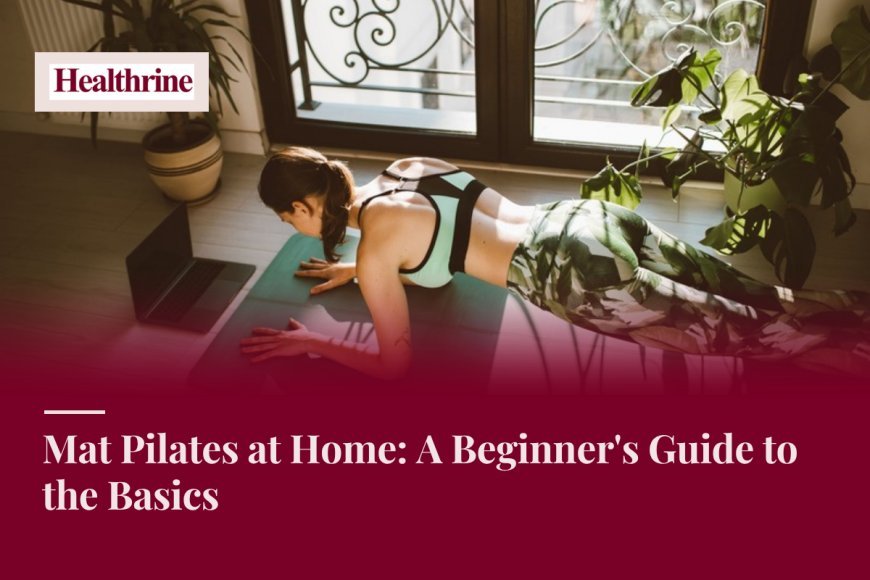
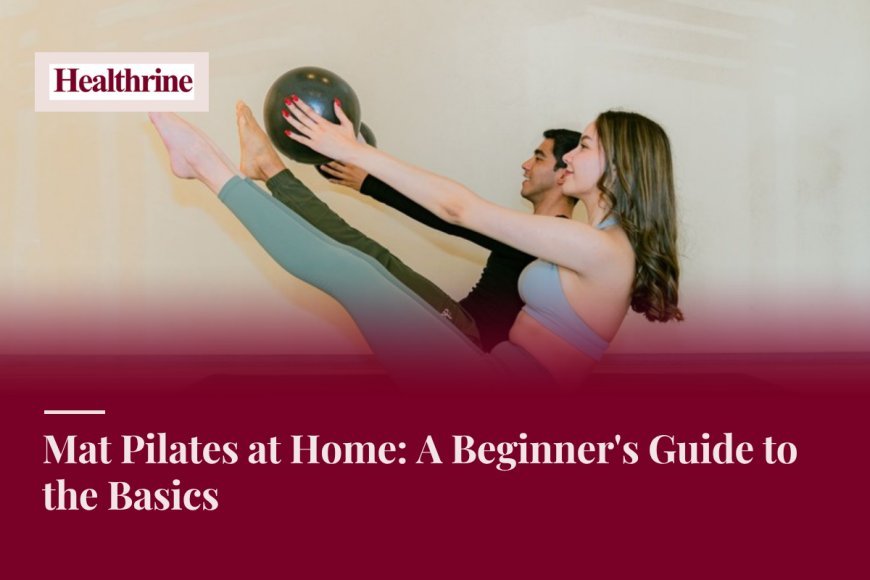
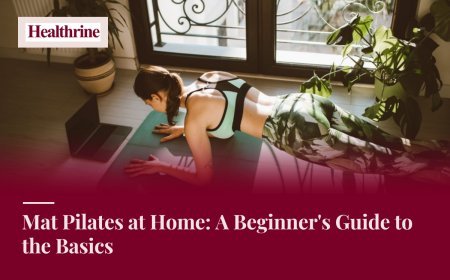
You can start mat Pilates at home with a patch of floor, a mat or a folded blanket, and about fifteen minutes. There is no reformer machine involved, no studio membership, and no special outfit. Mat Pilates is a series of slow, controlled exercises done mostly lying on your back, side, or stomach, with steady breathing and close attention to how each movement is performed. For beginners, the appeal is that it is quiet, compact, and easy to fit between other parts of the day.
It also has a reputation for being harder than it looks, which is fair. The movements are small, but they ask for focus. That is why the friendliest way in is a handful of basics done carefully, rather than a forty-minute video you can barely follow.
Setting Up a Corner That Works
You do not need a dedicated room. You need a spot where you can lie down with your arms stretched overhead and out to the sides without hitting the coffee table. A few things make that spot more comfortable:
- A mat with a little more cushion than a thin yoga mat, since you will spend time lying on your spine (a folded blanket on carpet works while you decide whether you like it)
- Clothes that stay put when you roll onto your back or lift your legs
- Bare feet or grip socks on hard floors
- A small pillow or folded towel under your head if lying flat is uncomfortable for your neck
Time of day is personal. Some people like a short session before work, while the house is still quiet. Others prefer the hour after dinner, when the dishes are done and nothing is rushing them. A floor that is warm enough to lie on comfortably matters more than the clock, so a rug or an extra layer helps on chilly fall mornings.
Props like small balls, rings, and resistance bands are fun later, but they are not required. Keep the mat somewhere visible, rolled in a basket by the couch or tucked beside the bed, so starting a session takes thirty seconds instead of a search through the hall closet.
The Language Instructors Use
Pilates classes and videos use a few phrases that can sound mysterious at first. Knowing them makes almost any beginner routine easier to follow.
Neutral spine means lying on your back with the natural curve of your lower back, so there is a small space between your back and the mat. Imprint means gently pressing that small space toward the mat. Instructors switch between the two depending on the move, and both should feel easy rather than forced.
Engage your center is a cue you will hear constantly. A practical way to picture it is drawing your belly button lightly in, the way you might when zipping up snug jeans, while still breathing normally. It is not sucking in as hard as you can.
Breathing is part of the method. A common pattern is to inhale to prepare and exhale as you move. The main beginner rule is simpler: do not hold your breath. If you notice you are, slow down or make the movement smaller.
Finally, Pilates favors quality over quantity. Five slow, careful repetitions are usually more in the spirit of the practice than twenty fast ones.
Six Beginner Basics
These six moves show up in nearly every beginner mat class. Start with five or six repetitions of each, moving slowly, and rest whenever you need to.
- Pelvic curl. Lie on your back with knees bent and feet flat, hip-width apart. Gently tilt your pelvis so your lower back presses toward the mat, then peel your hips up a few inches, one section of your back at a time. Roll back down the same way.
- Hundred prep. Lie on your back with knees bent, or with legs lifted in a tabletop position if that feels steady. Reach your arms long by your sides and pump them in small, quick beats while you breathe in for five beats and out for five. Beginners can keep their head resting on the mat.
- Single-leg stretch, modified. From your back with legs in tabletop, slowly extend one leg out at a comfortable height while the other knee stays bent, then switch. Keep your head down and your lower back steady.
- Side-lying leg lift. Lie on one side with your head resting on your lower arm and legs stacked. Lift the top leg a few inches and lower it with control. Do one side, then the other.
- Swimming prep. On hands and knees, reach one arm forward and the opposite leg back, hold for a breath, and return. It looks simple, and keeping your hips level is the whole challenge.
- Spine stretch forward. Sit tall with legs apart in front of you, knees bent if needed. Exhale and round forward slowly as if peeling away from a wall behind you, then roll back up to sitting.
Finish with a minute or two in a resting position you like, such as lying on your back with knees hugged in, or sitting back toward your heels with your arms stretched forward.
As you practice, small details start to matter: shoulders relaxed away from your ears, a long neck, movements that are smooth on the way out and on the way back. It is common for legs to wobble or for one side to feel very different from the other. Notice it without judging it. Over a few weeks, many people find the positions start to feel more familiar.
A Three-Week Starter Plan
A loose plan keeps you from doing too much on day one and then nothing for a month. This schedule assumes three sessions a week, on whatever days suit you.
- Week 1: Ten to fifteen minutes. Practice the pelvic curl, single-leg stretch, side-lying leg lift, and spine stretch forward. Focus on learning the positions.
- Week 2: Fifteen minutes. Add the hundred prep and swimming prep. Keep repetitions low and pauses generous.
- Week 3: Fifteen to twenty minutes. Run through all six moves, then try one beginner-level video or a single live class and notice how many of the names you now recognize.
When you are ready for videos, look for ones labeled beginner or foundations, with an instructor who explains the setup and offers easier versions. A good beginner video spends time on the basics instead of rushing through a long sequence. If an instructor moves faster than you can follow, pause the video or choose a different one.
If a week gets busy, repeat it instead of skipping ahead. There is no deadline, and a calm ten minutes on a Tuesday night still counts.
Going Gently and Keeping It Going
Start gently and expect new moves to feel awkward. That is normal, and it usually settles with repetition. Working hard is fine. Sharp pain, pinching, or anything that feels wrong is a signal to stop that move. If your neck feels strained when your head is lifted, keep it on the mat or support it with one hand.
If you have an injury or a health condition, including back or joint problems, or if you are pregnant or recently had a baby, check with your provider before starting. A qualified Pilates instructor can also suggest modifications, and even one in-person or live online session can help you check your form.
What keeps a practice going is usually the same thing that keeps any habit going: a regular time, a visible mat, and a routine short enough that you do not dread it. Some people pair it with an evening show, doing the six basics before the episode starts. Others roll out the mat while the kettle heats in the morning. Pick a slot, try it three times this week, and see how it fits.
What's Your Reaction?
 Like
0
 Dislike
0
 Love
0
 Funny
0
 Angry
0
 Sad
0
 Wow
0