



























Walking on Ice and Snow: Footwear and Technique to Prevent Falls
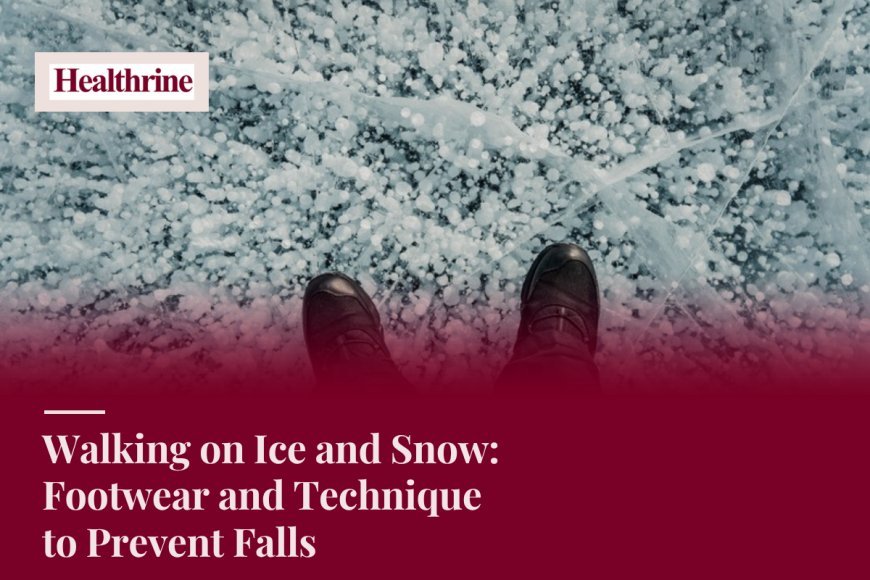
The most dangerous patch of ice on most winter routes is not the dramatic frozen hill. It is the familiar ten steps between your front door and the car, the shady corner by the bus stop, the polished patch outside a shop where everyone else's boots have packed the snow smooth. Familiar ground invites normal strides, and normal strides are exactly what ice punishes.
This is a practical guide to footwear and technique for the days when you cannot simply stay in. Nothing here can remove the risk of a fall altogether, and you should be suspicious of advice that promises otherwise. What careful shoes, cleared paths, and a different way of walking can do is lower that risk, sometimes considerably, and give you time to react when a foot starts to slide.
The CDC puts the first rule plainly: walking on ice is extremely hazardous, many cold-weather injuries come from falls on ice-covered sidewalks, steps, driveways, and porches, and the safest move is to avoid icy surfaces where you can and keep steps and walkways clear using rock salt, another de-icing compound, or sand for grip.
Choose footwear that grips, then check it
Start with the sole, because that is where grip lives. Look for winter boots or shoes with a lugged, textured rubber sole that flexes a little even in the cold, rather than smooth leather, foam, or worn-flat tread. Press a thumbnail into the sole indoors. If it feels like hard plastic and the tread pattern has polished smooth, those shoes are summer shoes now, whatever the label once said.
Fit matters nearly as much. A boot that slips at the heel makes every step tentative, and tentative steps on ice become shuffles in the worst way. Your toes need room for warm socks without being cramped, and the ankle should feel supported without being locked. Walk around the shop, or your hallway, and pay attention to whether the boot bends where your foot bends. Stiff, clompy footwear makes flat-footed walking harder.
Traction aids that strap over boots, with small metal studs or coils, can add grip on packed snow and ice for people who walk regularly in winter conditions. They belong outside only. Take them off at the door, every time, because studs on tile, stone, or polished indoor floors are slippery in their own right. Keep a small mat or tray by the door so removing them becomes automatic rather than a decision.
Look after the grip you have. Tread fills with grit and old leaves, soles harden with age, and a boot that was trustworthy two winters ago may not be now. Clean the soles, dry boots away from direct heat so materials do not crack, and retire footwear that has gone smooth. It is an unglamorous purchase that protects everything else you plan to do all winter.
Set up your own ground first
Your own steps, path, and driveway are the ground you cross most often and the ground you control. Clear snow early, before feet and tires pack it into ice, and spread rock salt on steps and shaded patches, de-icing compound, or sand as the CDC guidance describes. Sand does not melt ice, but it gives shoes something to bite on, which is often what a quick trip to the bin actually needs.
Light your route. Winter falls often happen on familiar steps in the dark, when a black patch of ice is indistinguishable from wet tarmac. A working bulb over the door, a small light by the steps, and a torch kept in a coat pocket for the walk to the car remove the guesswork. If a patch looks wet and dark on a freezing morning, assume it is ice and walk around it.
Use handrails wherever they exist, and consider adding one where they do not, beside the steps you use daily. Test a rail before you trust it with your weight. Keep one hand free for it by using a backpack rather than carrying bags in both hands, wearing gloves so you are willing to grip cold metal, and leaving your phone in your pocket. A message can wait thirty seconds. A rail cannot help you from inside a mitten buried in a bag.
Plan time into winter journeys. Rushing is a technique problem before it is a character flaw: people fall when they hurry, stride out, cut corners across uncleared verges, and check departure boards instead of the pavement. Leaving five minutes earlier buys you the short steps, cleared paths, and patience at crossings that keep a walk ordinary. In winter, ordinary is the goal.
Walk like a penguin, proudly
When a stretch of ice cannot be avoided, change how you walk. The CDC's winter guidance popularized the penguin method: bend slightly, point your feet a little outward, stay flat-footed, take small steps or shuffle, and keep your arms out to your sides for balance, with your center of gravity over your feet rather than leaning forward reaching for the next stride.
Small, flat steps are the heart of it. Landing heel-first with a long stride puts your weight on a narrow edge at an angle, which is how feet shoot forward. Placing the whole foot down, almost under your body, then shifting your weight slowly onto it gives the sole its best chance to hold and gives you a moment to retreat if it does not. Test each step on truly shiny ground. Pride is not a winter virtue.
Keep your hands out of your pockets and your arms slightly away from your body, ready to balance. Carry less where you can, and use a bag that closes and sits on your back or across your body. If you use a cane or walking poles, winter tips or ice attachments exist for many models, and a pharmacist or mobility shop can advise on fitting them, which is worth doing before the first storm rather than after it.
Choose the roughest line available. The edge of a path where snow remains crunchy, a strip of grass verge, a sanded section, or the route everyone has already gritted is usually grippier than the beautiful smooth center. Walk on snow rather than ice where you must choose, face traffic on roads without pavements so you can see what is coming, and cross at cleared, lit places even if it adds a minute.
If the ground wins anyway
Even careful people fall, and knowing the broad shape of a safer fall is worth a sentence or two rather than a promise. If you feel yourself going, try not to throw a straight arm out to catch your full weight, tuck your chin if you can, and aim to land on the fleshier parts of your body rather than on a wrist, hip point, or the back of your head. This is general information only, and local classes exist for people who want to practice movement skills with an instructor.
After any fall, take a moment before standing. Check whether you can move everything comfortably, accept help if it is offered, and get up via a chair, step, or kneeling position rather than in one heroic effort. If you have hit your head, cannot bear weight, have pain that is more than mild, or feel unwell, seek care promptly rather than walking it off. Pride, again, is not a winter virtue.
At home, tell someone where your winter walking route goes if you regularly walk alone in icy conditions, keep your phone charged and reachable, and reconsider any trip that can wait until paths have been salted and the sun, such as it is, has done some work. Avoiding one walk is not defeat. It is the first rule doing its job.
Ice makes confident walkers humble, briefly. Give it that respect: gripping soles checked before the season, your own steps cleared and lit, hands free, short flat steps with your weight over your feet, and no embarrassment about shuffling like a penguin past the bus stop. You will look slightly ridiculous. You will also, far more often than not, arrive upright, which in February counts as style.
What's Your Reaction?
 Like
0
 Dislike
0
 Love
0
 Funny
0
 Angry
0
 Sad
0
 Wow
0