





























Navigating Big Life Transitions With More Calm

When a lot is changing at once, it helps to keep a few things the same. That is the simple idea behind this piece. A new city, a new job, a new baby, a new house with a different person in it: each one alters dozens of small things that were running quietly in the background. Where the coffee is kept, who you say good morning to, which route you drive.
You cannot control most of the big picture during a transition. You can usually choose a few small, steady things to carry across. Think of them as anchors: not a way to stop the movement, just something to hold onto while it settles.
Four Kinds of Anchors
Anchors tend to fall into four groups, and most people find that two or three are enough. You do not need a perfect set. You need a few that feel like yours.
Routines. These are the daily rhythms that give a day its shape. A morning drink at the same time, a short walk after lunch, the same wind-down before bed. In a transition, a routine does something useful: it removes small decisions when your mind is already busy with big ones. If your old routine no longer fits, keep the core of it. Maybe the commute has changed, but a ten-minute walk before work can still happen, wherever work is.
People. Transitions can quietly thin out your usual contacts, because the places where you used to see people are no longer part of your week. A short standing call with a friend, a weekly message to a sibling or a regular dinner with someone who knew you before the change keeps the thread. Familiar voices are a form of steadiness, even when the conversation is about ordinary things.
Places. A favorite bench, a library branch, a coffee shop, a corner of the garden. If you have moved, finding one place that begins to feel like yours is often the first step in feeling at home. If you have not moved but your life has shifted, it can still help to keep returning to a place that was part of your old rhythm.
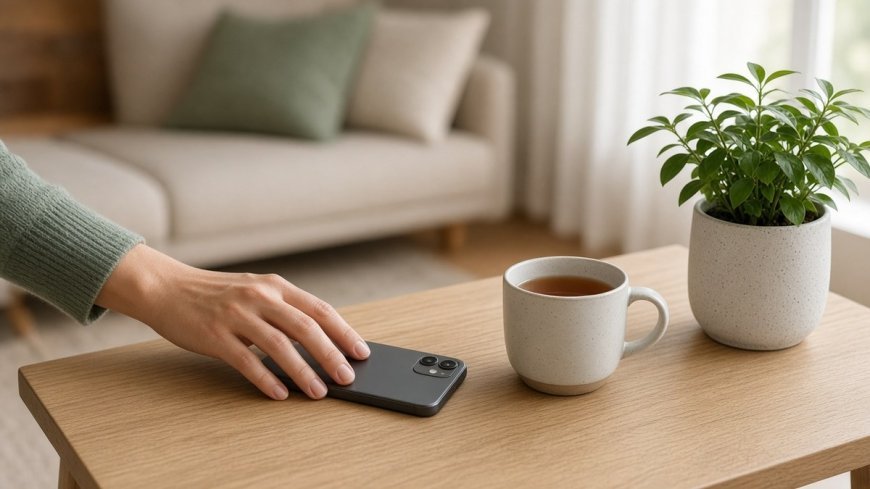
Small rituals. A ritual is a routine with a little meaning attached: lighting a candle at dinner, a Friday playlist, a first-of-the-month walk to a particular spot, a cup of tea you drink slowly on a certain chair. Rituals do not need to be impressive. They simply tell your day, "This part belongs to me."
The mix will look different depending on the change. After a move, places and people may need the most attention. After a new job, routines usually take priority, because the structure of your days has been rearranged. After a new baby or a change in household, small rituals can be a lifeline, since a two-minute tea break may be the only time that is fully yours. And after retirement or a quiet stretch following a busy season, people often find they miss the built-in contact more than the work itself, so keeping a few standing plans with others can matter more than anything else.
A Gentle Four-Week Frame
Instead of a to-do list, it can help to have a loose sense of what each stretch of a transition might hold. Think of the weeks below as a rough guide, not a schedule. Real life will run ahead of some weeks and behind others, and that is fine.
Week one: keep the basics. The first days are usually busy and a little disorienting. Aim for the plain things: regular meals, a reasonable bedtime, some time outdoors and one familiar anchor each day. If the only thing you manage is your morning drink and a message to a friend, that counts. Nothing about week one needs to look productive.
Week two: find one new familiar thing. Once the first rush eases, pick a single new piece of your surroundings to turn into a habit. A different grocery store you visit on the same day each week. A walking loop near your new home. A seat at the office that becomes yours. You are not replacing what you left. You are adding a small, steady fact to the new setting.
Week three: reach out once. Contact one person, new or old. Invite a colleague to lunch, say hello to a neighbor, join one local group, or plan a visit with a friend who lives farther away. A transition can make a week feel lonely even when you are surrounded by people, and a small bit of contact goes a long way.
Week four: look back and adjust. Sit down for ten quiet minutes and notice what has started to feel normal and what still feels rough. Maybe the new commute is settling but dinners feel chaotic. Maybe work is fine but the evenings feel empty. Choose one thing to adjust. It does not have to be big. It may be as simple as moving dinner earlier or setting a standing time to call someone.
After that, continue in the same spirit: one small change at a time, with the anchors kept in place.
When It Feels Bumpy
Even well-planned transitions have rough days. Some thoughts that might help on those days:
- Expect it to take time. Many people find that a new place or role starts to feel familiar gradually, often over months instead of weeks.
- Mixed feelings are normal. You can be excited and sad about the same change, and you can miss what you left while being glad you left it.
- You do not have to feel settled to act settled. Following a small routine, even when you are not in the mood, often helps the mood catch up a bit.
- Tired days are not failures. A major change is a lot of work for body and mind, and rest counts as part of the process.
- Leave room for the unplanned. A weekend with nothing in it, once in a while, can be a relief when everything else is new.
If you are going through something heavy, such as a loss, the end of a relationship or a move you did not choose, the anchors above can still help, but you may want more company than a routine can offer. Leaning on friends and family is a good instinct, and so is mentioning how things feel to your doctor or a counselor if the heaviness lingers. Asking for support is a sensible part of getting through a big change, not a sign that you are handling it badly.
Letting the New Thing Become Ordinary
There is a quiet turning point in most transitions, and you often notice it only afterward. One day you realize you did not think about the old address when you gave directions. You did not have to look up where the mugs are. Someone at work waved at you, and you waved back without thinking about it.
Those small moments do not arrive on a schedule, but they tend to follow steady attention to the ordinary parts of the day. The anchors you chose, the people you kept close and the little places and rituals you made yours add up to a sense of home, wherever you are.
So if you are in the middle of something big, start small. Choose one routine, one person, one place and one ritual. Keep them gentle, and keep them going. The rest of the change will find its own pace.
What's Your Reaction?
 Like
0
Like
0
 Dislike
0
Dislike
0
 Love
0
Love
0
 Funny
0
Funny
0
 Angry
0
Angry
0
 Sad
0
Sad
0
 Wow
0
Wow
0