








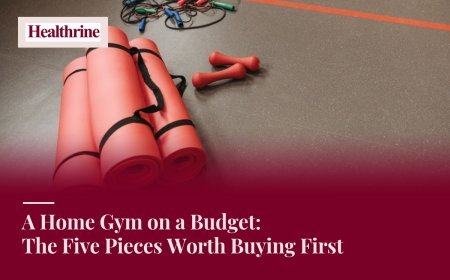
















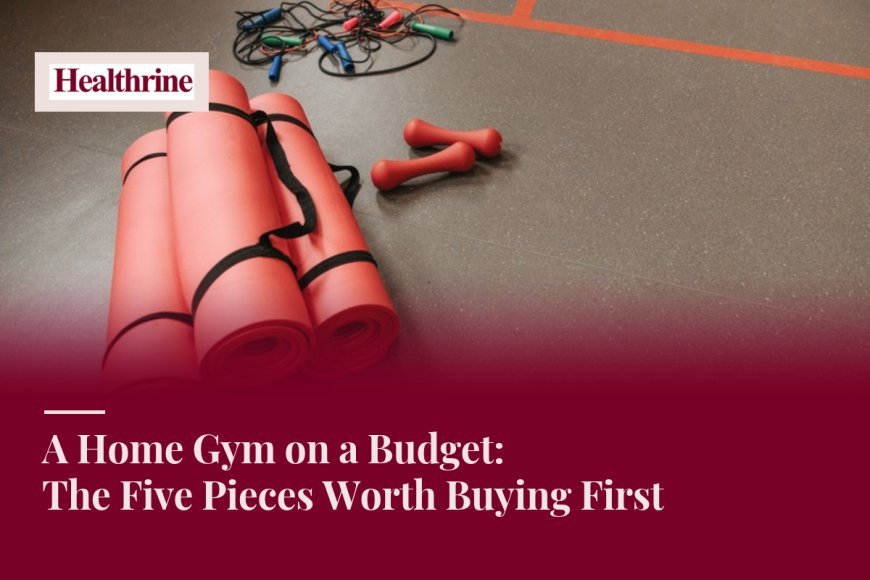
A Home Gym on a Budget: The Five Pieces Worth Buying First
Walk into any big-box sporting goods store in November and you'll see the aisle: gleaming rowing machines, smart mirrors, cable towers, and racks of colorful gadgets promising a full-body workout in ten minutes. It's easy to leave with a cart full of equipment and a credit card statement that makes you wince. It's just as easy to leave with nothing because the choices feel overwhelming.
A home gym doesn't need to look like a showroom. For many people, a corner of the living room, the garage, or a spare bedroom with a small set of versatile basics is enough to train consistently for years. This guide covers the five pieces that tend to give the most variety for the money, the questions worth asking before you buy anything, and how to set up a safe, usable space without remodeling your house.
Start With What You Already Have
Before you spend a dollar, it helps to know what you can already do. Your body weight, a sturdy chair, a staircase, and a backpack you can load with books cover a surprising number of exercises: squats, lunges, step-ups, incline push-ups, glute bridges, and rows with a loaded bag.
Try a couple of weeks of simple workouts with what's on hand. You'll quickly learn which movements you enjoy, where you feel limited, and what kind of equipment would actually make a difference. That way, your first purchases fill real gaps rather than guesses.
The CDC's physical activity guidance suggests that adults do muscle-strengthening activities at least two days a week, and it lists lifting weights, working with resistance bands, and body-weight exercises like push-ups as examples. In other words, many of the tools that count are simple and affordable.
The Five Pieces Worth Buying First
Every home and every budget is different, but these five items show up again and again on beginner lists because each one opens up many exercises.
- A few pairs of dumbbells or one adjustable set. Dumbbells are the backbone of most home strength routines. If you have room and a modest budget, two or three fixed pairs, such as a light, medium, and heavier pair, can cover a lot of ground. If space is tight or you expect to progress, an adjustable set that changes weight with a dial or pin can replace a whole rack. Adjustable sets often cost more up front, so compare the price per pound and the weight increments.
- A set of resistance bands. Loop bands and tube bands with handles are inexpensive, light, and easy to store in a drawer. They're useful for rows, presses, lateral walks, warm-ups, and assisting exercises you're still building toward. Look for a set with several resistance levels and, for tube bands, a door anchor.
- A good exercise mat. A mat makes floor work more comfortable on hardwood, tile, or concrete, and it marks out your training space. A thicker mat feels kinder on knees during planks and bridges. A firmer, thinner one can feel more stable for standing work.
- A sturdy bench or a solid, stable chair. A flat bench opens up chest presses, step-ups, split squats, and supported rows. If a bench isn't in the budget yet, a heavy chair without wheels, placed against a wall, can work for many of the same moves. Check the weight rating on any bench you buy and make sure it doesn't wobble.
- A jump rope or another simple cardio tool. A jump rope is one of the cheapest ways to add heart-pumping work in a small space. If jumping isn't comfortable for your joints or your downstairs neighbors, a step platform or simply brisk marching and stair climbing can fill the same role.
With these five, you can do squats, lunges, presses, rows, hinges, carries, core work, and short cardio intervals. That covers the major muscle groups the CDC mentions: legs, hips, back, chest, abdomen, shoulders, and arms.
Questions to Ask Before You Buy
A few minutes of thinking can save money and closet space. Before checking out, ask yourself:
- Where will this live? Measure your space. Know where the equipment goes when you're not using it, especially if you share the room.
- Will I use it at least weekly? If you can't picture a specific workout using it, it can probably wait.
- Can it grow with me? Light dumbbells may feel too easy within a couple of months. Consider whether you'll need heavier weights soon, and whether an adjustable option makes more sense.
- How is it built? Read the weight limits, check what the handles and grips are made of, and look for reviews that mention durability after months of use, not just first impressions.
- What's the return policy? Heavy items can be expensive to ship back. Buying from a local store or checking return shipping costs first can help.
- Is a used option available? Dumbbells and benches are durable, and many people find good secondhand deals through local listings or used fitness stores. Inspect the item in person when you can, and skip anything with cracked welds, loose bolts, or torn upholstery.
It also helps to set a total budget before you start shopping. Decide, for example, that you'll spend a set amount this season and add one item at a time as your routine grows.
Set Up a Safe, Usable Corner
You don't need a dedicated room. A space about the size of your mat, plus room to extend your arms overhead and to the sides, is enough for most exercises. A few tips for a safe setup:
- Clear the floor of rugs that slide, toys, and cords.
- Make sure you have enough ceiling height for overhead presses and jump rope.
- Store dumbbells low on a sturdy rack or the floor, not on high shelves where they could fall.
- Keep the area well lit, especially in a garage or basement.
- If kids or pets share the space, store weights where they can't be pulled over, and put bands away after use.
- Wear supportive shoes for standing exercises and jumping.
If you train in a garage during winter, a few minutes of warm-up matters even more, since cold muscles and stiff joints can make the first sets feel awkward. Start with marching, arm circles, and a few light practice reps.
What Can Wait Until Later
The equipment that looks most impressive in the store is often the least necessary at the start. Bigger purchases such as a power rack, a barbell with plates, a cardio machine, or a cable system can be great additions once you know you'll train regularly, but they take space and a bigger budget.
Small gadgets can also wait. Many people find they rarely use specialty items that only do one exercise. A good rule is to add equipment when you've outgrown something, not when you've seen an ad.
If you'd like to stretch your budget further, you can:
- Buy one pair of dumbbells at a time as you get stronger.
- Use a backpack loaded with books as an extra-heavy option for squats and carries.
- Watch for seasonal sales after the new year, when fitness equipment often gets discounted.
A Simple Way to Use Your New Setup
Once your five basics are in place, a short routine two or three times a week can cover the essentials. One example:
- Goblet squat with a dumbbell
- Dumbbell row on the bench
- Incline or floor push-up
- Glute bridge on the mat
- Band pull-apart
- Two minutes of jump rope or marching between rounds
Repeat the circuit two or three times, resting as needed. Choose weights that feel challenging for the last couple of repetitions with good form, and progress slowly. If you're new to exercise, are pregnant, have a heart or joint concern, or are returning after an injury, checking in with a health care provider before you start is a sensible step.
A budget home gym isn't about having everything. It's about having the right few things in a spot you'll actually use. Start small, buy thoughtfully, and let your routine tell you what to add next.
What's Your Reaction?
 Like
0
 Dislike
0
 Love
0
 Funny
0
 Angry
0
 Sad
0
 Wow
0