





















Thanksgiving Without Food Guilt: Enjoy the Meal and Skip the 'Making Up for It'
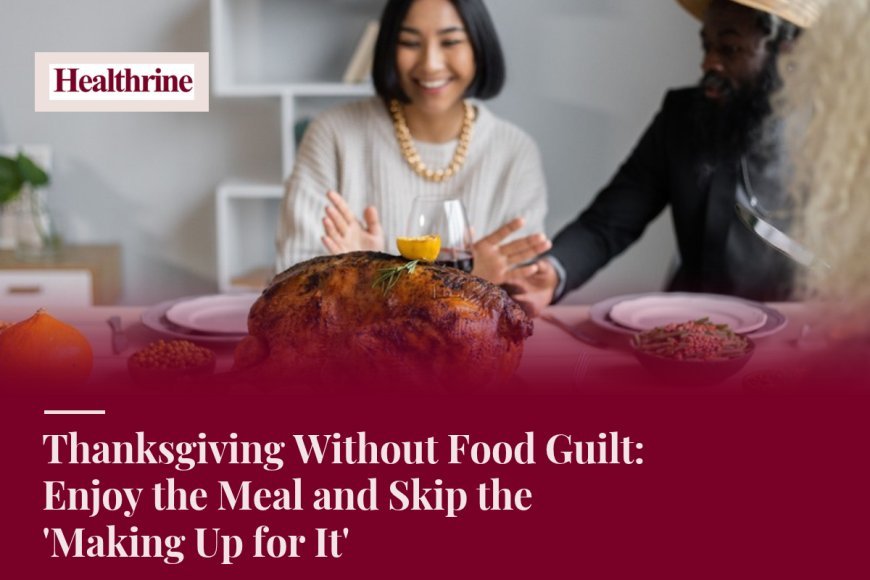
It starts before the turkey is even out of the oven. Someone in the kitchen jokes that they "saved up" for today by skipping lunch all week. At the table, a cousin announces she'll be "good" and pass on the stuffing. By pie, half the room is talking about the run they plan to do tomorrow to make up for it. You came for a holiday meal, and somehow it turned into a group negotiation with food.
If that scene sounds familiar, you are not alone. For a lot of Americans, Thanksgiving carries a strange mix of joy and dread: a day built around a big shared meal, wrapped in a culture that keeps telling us to feel bad about eating it. This article is not about tricks, lighter versions of recipes, or ways to eat less. It is about something simpler: letting the meal be a meal, and letting yourself enjoy it without a plan to pay it back.
Where the Guilt Comes From
Food guilt rarely starts on Thanksgiving. It builds over years of headlines, diet ads, and offhand comments that sort foods into "good" and "bad," and people into "disciplined" and "weak." By the time the holiday arrives, many of us carry a quiet scorecard into the dining room.
Thanksgiving turns the volume up. There is more food than usual, it is food tied to memory and family, and there are more people around to comment on it. The meal stops being about gratitude or tradition and starts feeling like a test.
Noticing that pattern is the first step. The guilt is not a sign that you did something wrong. It is a habit of thinking that you learned, which means it is also something you can gently unlearn.
Try listening for the language that shows up around you, and in your own head, this week. Words like "cheat," "earn," "deserve," "ruined," and "making up for it" turn a family dinner into a transaction. You do not have to police anyone else's vocabulary. Simply noticing those words, and choosing not to repeat them, can make the day feel lighter.
Let the Day Look Like a Normal Day
One of the most common ways people try to "get ready" for Thanksgiving is to skip meals beforehand. It seems logical, but it often backfires. Arriving at the table ravenous makes it harder to slow down, taste the food, and notice when you have had enough. It also tends to make the whole day feel more intense than it needs to be.
Instead, try approaching the morning like any other day off:
- Eat a regular breakfast, the kind you would have on a relaxed Saturday.
- Have a snack if dinner is late, the way you would on any day with a late dinner.
- Drink water through the day, and enjoy your coffee or cider without commentary.
- Go for a walk if you enjoy walking, because it feels good, not as a down payment.
The goal is not to manage the meal. It is to arrive feeling like yourself, hungry enough to enjoy dinner but not so hungry that it feels like a race.
Let the Meal Be the Meal
When you sit down, give yourself permission to actually experience the food. That might sound obvious, but guilt has a way of pulling attention away from the plate and into your head.
A few ideas that help many people stay present:
- Pick what you genuinely want. If you love your aunt's sweet potato dish and only tolerate the green bean casserole, take more of the one you love. There is no prize for eating a little of everything.
- Slow down for the first few bites. Notice the flavors, the textures, the dish someone woke up early to make. Those first bites are often the best part.
- Check in partway through. Ask yourself, without judgment, whether you are still enjoying it. You can stop, keep going, or go back for seconds. All three are fine.
- Have the pie. If dessert is part of your family's tradition, it is part of the meal. You do not need to earn it or explain it.
Feeling very full after a holiday dinner is a normal human experience, not a moral failure. It happens, it passes, and it does not need to be fixed.
Handling Comments at the Table
Even if your own thoughts are kinder this year, other people may not be on the same page. Comments about portions, bodies, or "being bad" can land hard, especially from family.
You do not have to argue or give a lecture. Short, light responses usually work best:
- "I'm just enjoying the food today."
- "This is my favorite dish of the year, so I'm going for it."
- "Let's not talk about diets at the table. How was your trip in?"
You can also simply change the subject, ask someone about their recipe, or get up to refill the water pitcher. If a comment really bothers you, it is fine to step outside for a few minutes of fresh air. Comments about other people's bodies, including kids' bodies, are worth redirecting kindly but firmly. Children pick up on how adults talk about food at holiday tables, and a calm "We don't talk about bodies at dinner" can quietly protect the younger guests too.
If you are the host, you can set the tone by keeping food talk focused on flavor and memory. "Grandma used to make it with extra nutmeg" is a much better table conversation than who is "allowed" to have what.
The Day After: No Penance Required
For many people, the hardest part of Thanksgiving is not the meal itself. It is Friday morning, when the guilt shows up with a to-do list: skip breakfast, add an extra workout, swear off sweets until New Year's.
You do not owe your body an apology for a holiday dinner. Your body is well equipped to handle one large meal, or even a few days of leftovers, without any special plan from you. The most helpful thing you can do the next day is usually the most ordinary: wake up, eat breakfast when you are hungry, drink some water, and do whatever movement you would normally enjoy.
If you love a Black Friday walk around the neighborhood or a Turkey Trot with friends, wonderful. Do it because it is fun, social, or part of your family's tradition. Just notice if the voice in your head frames it as punishment, and try a kinder sentence instead: "I'm going because I like how it feels to be outside."
Leftover turkey sandwiches are not a problem to solve. They are one of the best parts of the whole weekend. Pile one high with cranberry sauce, eat it on the couch during the parade replay or the afternoon football game, and let that be the whole story. Nobody needs a report on what you ate, including the voice in your own head.
A Kinder Way to Remember the Holiday
Years from now, you probably will not remember exactly what you ate this Thanksgiving. You are much more likely to remember who made you laugh, which kid spilled the cranberry sauce, and the story your uncle told for the fifth time that somehow still got a laugh.
Food guilt has a way of shrinking the holiday down to a single plate. Letting go of it, even a little, makes room for everything else the day is about: people, tradition, gratitude, and a meal worth enjoying. If food worries tend to take over far beyond the holidays, a registered dietitian or a mental health professional can be a supportive person to talk with. For this one Thursday in November, though, you have permission to simply sit down, pass the rolls, and enjoy it.
What's Your Reaction?
 Like
0
 Dislike
0
 Love
0
 Funny
0
 Angry
0
 Sad
0
 Wow
0