




























Building a Home First-Aid Kit That Actually Gets Used
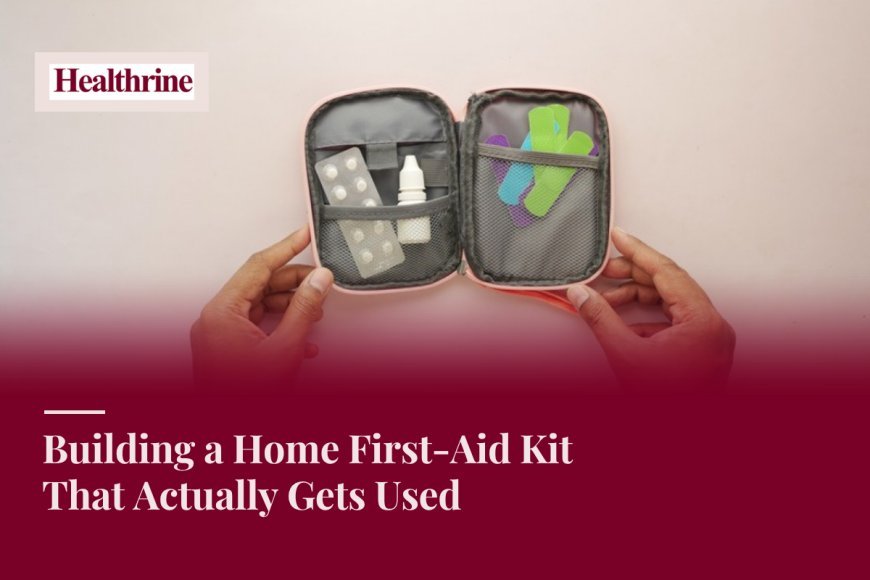
Most households have a first-aid kit somewhere. The harder question is whether anyone can find it in under a minute, and whether what is inside is still usable. A kit that lives at the back of a hall closet, with a few loose bandages and a tube that expired two years ago, is better than nothing, but it is not the kit you want at the moment you need it.
A simple setup, a sensible home for it and a twice-a-year check can turn a forgotten box into something your household actually uses. Here is a way to do it.
What Goes in the Box
The American Red Cross publishes a suggested list for a family of four and notes that you can buy a ready-made kit or put one together yourself. Use the list below as a starting point, then adjust it for your household. Group things by category so that, in a hurry, you know which pocket to open.
Bandages and dressings:
- Adhesive bandages in assorted sizes
- Sterile gauze pads, in a couple of sizes
- Roller bandage or gauze roll
- Adhesive cloth tape
- Absorbent compress dressings
- Triangular bandages
Cleaning and care:
- Antiseptic wipe packets
- Antibiotic ointment packets
- Hydrocortisone ointment packets
Tools:
- Tweezers
- Scissors
- Non-latex gloves
- A breathing barrier with a one-way valve for CPR
Comfort and support:
- Instant cold compress
- Emergency blanket
- A non-glass thermometer
Information:
- A printed first-aid guide or instructions
- A card with emergency contacts, your doctor's number and the Poison Control number
- A short note listing any allergies in your household
The Red Cross list also includes packets of aspirin. Medicines are a personal topic, so it is worth asking your pharmacist or doctor what makes sense to keep on hand for your household. The Red Cross suggests including personal items such as any prescription medicines and anything else your health care provider recommends. If you have young children, older relatives or pets, ask about what is suitable for them, since a general list cannot cover everyone.
You do not need to buy everything at once. A basic kit with bandages, gauze, tape, wipes, tweezers and gloves covers many everyday situations, and you can add pieces over time.
Where to Keep It
Location is half the battle. A good home for your kit is easy to reach and easy to remember, and it keeps the contents in good shape.
- Choose a spot that everyone old enough to help knows about, such as a hall closet shelf, a kitchen cabinet or the top of a linen closet.
- Keep it somewhere cool and dry, away from direct sunlight and steamy rooms. A bathroom cabinet is convenient but often humid, which can wear down packaging.
- Store it up high enough that small children cannot open it, but low enough that adults can reach it without a ladder.
- Pick a container that is clearly marked. A bright box with a cross on the lid, or a clear bin with a label, is easy to spot in a hurry.
- Tell every adult, teen and regular visitor, such as a babysitter or relative, where it lives.
The Red Cross recommends keeping a kit in your car as well as in your home, and the Ready.gov preparedness guidance suggests keeping supplies in more than one place. A small kit in the car, a few essentials in a sports bag and a compact one in a travel bag mean the right items are near wherever you are.
Checking Dates Twice a Year
A kit goes out of date quietly. Ointments, wipes and medicines carry dates, and packaging can get damaged by heat, damp or being squashed in a drawer. The Red Cross says to check expiration dates and replace anything used or out of date, and notes that you should replace items with damaged or discolored packaging, even if the date has not passed.
The Ready.gov guidance suggests rechecking emergency supplies about every six months, which makes a twice-a-year check an easy rhythm. Many people attach it to something that already happens twice a year, such as the days the clocks change, or the start of spring and fall.
A ten-minute check goes like this:
- Tip the whole kit out onto a table.
- Read the date on every item. If there is no date, look at the packaging and the condition. Anything torn, wet, stained or sticky goes.
- Replace what is expired or used up, and write what you need on a list.
- Wipe out the container and put things back in a way that makes sense, with the most-used items on top.
- Update the contact card and the notes about allergies if anything has changed.
- Write the date of the check on a slip of paper inside the lid.
The Red Cross also suggests keeping a short log of when you reviewed the kit. A line on a sticky note is plenty.
Throw out expired medicines and ointments the way your pharmacist or local guidance suggests. If you are not sure how, many pharmacies can tell you about disposal options.
Making It Actually Get Used
A kit that is easy to use will be used, and a few small habits make that more likely.
Restock right away. When you use the last of something, add it to a list on the inside of the lid or a note on your phone. The easiest time to remember is the moment you notice.
Keep the basics easy to reach. If you find you reach for adhesive bandages ten times for every once you reach for triangular bandages, put the common ones on top or in a small pouch of their own.
Look through it together. Go through the kit once with the people who live with you, and show them what each item is for. A quick tour can build confidence, particularly for teens and older children who might one day be home alone.
Add what your household actually needs. A family that hikes might add blister pads and a small whistle. A home with a keen cook might keep a few extra bandages in the kitchen. Someone who works at a desk all day may have no need for a lot of what is on the standard list.
Know What a Kit Can and Cannot Do
A home kit is for everyday cuts, scrapes and small mishaps, and for having the right items nearby while you decide what to do next. It is not a replacement for professional care. If you are worried about someone's condition, call your doctor, a nurse line or your local emergency number. For poison concerns, the number to keep handy in the United States is Poison Control at 1-800-222-1222.
If you would like to feel more confident, consider taking a first-aid or CPR class. The Red Cross and many community centers, employers and fire departments offer them, and they are a good way to learn how to use what is in the kit.
This week's job is small. Find the kit, or pick a box and start one. Put it somewhere you can reach it, write the date on a note inside the lid and set a reminder for six months from now. The next time you need a bandage in a hurry, you will know exactly where to look.
What's Your Reaction?
 Like
0
Like
0
 Dislike
0
Dislike
0
 Love
0
Love
0
 Funny
0
Funny
0
 Angry
0
Angry
0
 Sad
0
Sad
0
 Wow
0
Wow
0