

























Notification Batching: 3 Check Windows That Protect Focus

Your phone does not need to be a fire alarm for every app that misses you. Most alerts are not emergencies. They are unfinished loops dressed as urgency—and they shred focus in tiny cuts you barely notice until the afternoon feels shredded.
Notification batching is a digital wellness habit, not a personality transplant. You pick three check windows, park everything else behind Focus mode with a short allow-list, and stop letting random badges set the tempo of your day. No clinical claims here—just a practical way to protect attention on a normal workday.
What batching is (and what it is not)
Batching means notifications arrive on your schedule, not on theirs. You still respond. You just respond in clusters instead of in a hundred micro-reactions.
It is not “ignore your life.” It is not a weekend detox that collapses by Tuesday. It is three predictable doors when messages, email, and social can knock—and quiet hallways between them.
If your job truly requires instant response, batching still helps: shrink the allow-list to the humans and tools that matter, and batch the rest. Clarity beats vague always-on anxiety.
The three windows (steal this template)
Pick times that match your real day. A common pattern:
• Morning window (10–15 minutes): after you have started one real task, not before
• Midday window (10–15 minutes): after lunch or at a natural break
• Late-afternoon window (10–20 minutes): before you shut down, so nothing important sleeps in the badge overnight
Put the windows on your calendar like meetings with yourself. If you skip the calendar, you will “just peek” and accidentally live in the old pattern.
Parents and caregivers: shift the windows around school pickup or bedtime, but keep the count at three. More windows becomes continuous checking with nicer branding.
Focus mode + allow-list: the quiet infrastructure
Batching fails when every app can still buzz. Use Focus / Do Not Disturb as the default during deep work and evenings.
Build a ruthless allow-list:
• People who can break through (partner, kid’s school, one work lead—not the whole company directory)
• Tools that are truly time-sensitive for your role (a specific work chat, maybe calendar alerts)
• Everything else: silenced, delivered quietly, or off
Turn off badge counts on social and shopping apps. Badges are unfinished loops with a red costume. You can open those apps in a window without letting them stare at you from the home screen.
On a computer, mirror the idea: pause Slack/email pop-ups outside the windows. Digital wellness focus is cross-device, or the quiet phone just trains you to twitch toward the laptop.
How to run a check window without falling in
When a window opens, work a simple order so you do not wander:
1) Calendar and time-sensitive work chat
2) Email—triage, do not explore
3) Texts
4) Optional: one social or news pass with a timer
Set a five-minute timer the first week. When it rings, close the apps even if the inbox is not “at zero.” Zero is a feeling, not a requirement. Batching protects focus by ending the session on purpose.
If something urgent arrives mid-window, handle it. Then return to the list. Urgency is allowed; sprawl is not.
Talk to humans so the rule does not create drama
Tell the people who need to know: “I check messages at roughly X, Y, and Z. Call if it cannot wait.” One calm sentence prevents others from inventing a story that you disappeared.
At work, match the culture you are in. Some teams need a visible status message. Some just need you to keep the allow-list honest. Digital wellness that secretly punishes your coworkers will not last.
Troubleshooting the usual snags
“I feel anxious in the quiet.” That is often withdrawal from novelty, not a crisis. Keep the three windows sacred for two weeks before you judge the experiment.
“My job will explode.” Shrink the batching to personal apps first. Or allow-list the work channel 24/7 and batch only social, promos, and secondary email.
“I cheat with peeks.” Move social apps off the home screen, log out of the tempting one, or use grayscale. Make peeking slightly annoying.
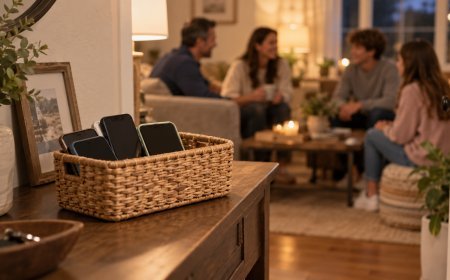
“Nights fall apart.” Pair batching with a phone parking spot after the last window. The last check should not become a doom scroll with a nicer name.
A two-week starter plan
Week one: three windows, Focus on by default, allow-list of five or fewer breakthrough contacts. No self-scolding—just reps.
Week two: remove one more noisy app from push alerts, add a timer to each window, and notice whether deep work blocks feel longer. Keep what works. Drop what feels theatrical.
Make the home screen match the policy
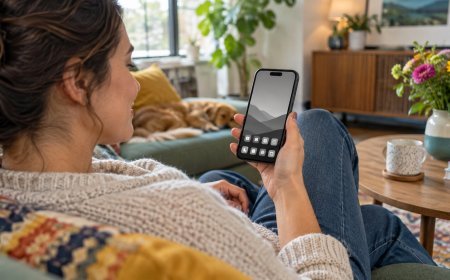
Settings alone will not save you if every icon is still a slot machine. During week one, move the noisiest apps into a folder on the second page. Keep calendar, maps, and the camera easy to reach. The point is friction in the right direction: checking during a window should be easy; checking out of boredom should take an extra tap.
Optional but useful: a wallpaper that is calm and empty of widgets that show live unread counts. Out of sight is not out of mind forever—but it is out of the reflexive thumb path.
What success feels like (without a productivity cult)
After a week of notification batching, look for ordinary signals: longer stretches on one task, fewer “what was I doing?” resets, and less dread when you open the phone because you already know when you will open it again. If you feel behind, widen one window by five minutes—do not abandon the structure. Digital wellness focus is a rhythm, not a streak you get punished for breaking.
Bottom line
Notification batching is how you stop renting your attention by the minute. Three check windows, a Focus mode allow-list, and a habit of ending the session on purpose will protect digital wellness focus better than another app that promises to save you from apps. Start tomorrow morning—after one real task, not before.
What's Your Reaction?
 Like
0
Like
0
 Dislike
0
Dislike
0
 Love
0
Love
0
 Funny
0
Funny
0
 Angry
0
Angry
0
 Sad
0
Sad
0
 Wow
0
Wow
0