



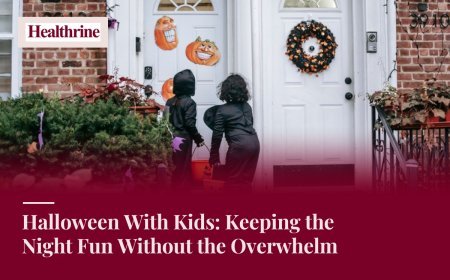

















Halloween With Kids: Keeping the Night Fun Without the Overwhelm
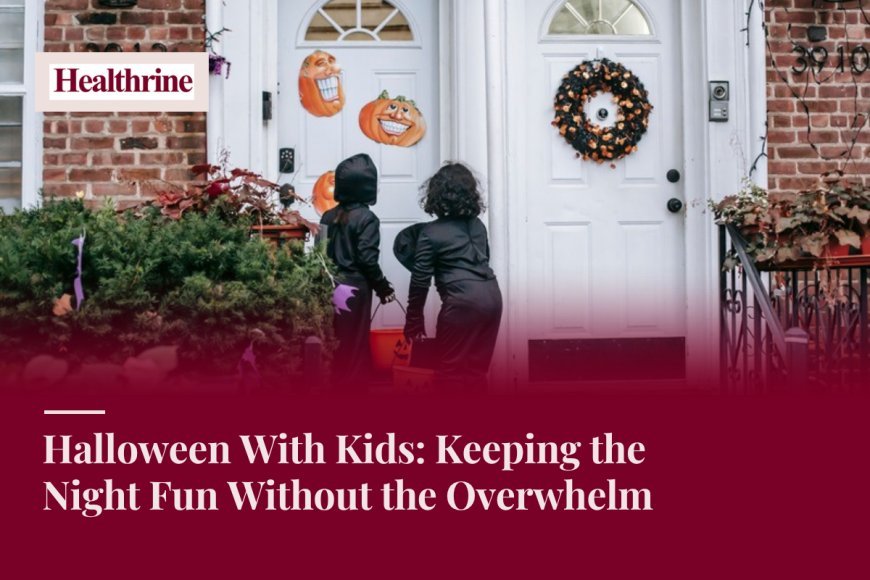
It is 4:45 on Halloween afternoon. One child is half inside a dinosaur costume, another has announced that they are starving, and the flashlight batteries are nowhere to be found. If this scene feels familiar, you are not alone. The night is exciting for kids and a little hectic for the adults in charge.
A loose plan can help you enjoy it more. This guide walks through the evening in three parts, before, during, and after, with simple routines for each. The goal is a night that feels fun and calm, with safety built in quietly, not a long list of rules.
Before: The Hour Before You Leave
A little preparation at home saves a lot of scrambling at the door.
Feed everyone a real meal or snack. The FDA and the American Academy of Pediatrics both suggest giving children a light meal or snack before they head out so they are not tempted to snack on candy as they go. It also helps with mood. A hungry, excited child is often a wobbly one. Something simple like a quesadilla, pasta, or soup works well.
Check the costume. Costumes and shoes should fit well, and costumes should be short enough that kids will not trip. Look for "flame resistant" on costume, wig, and accessory labels. Non-toxic makeup and hats that do not slide over the eyes are safer than masks that can block vision, and it helps to test makeup on a small patch of skin ahead of time. Avoid long, sharp props like swords or sticks, since a fall with one can cause injury.
Make everyone easy to see. Bright colors and reflective tape or glow-in-the-dark elements on costumes and treat bags help drivers notice kids after dark. Give each child a flashlight or glow stick. If your child's costume is dark, a glow-stick bracelet or reflective strip does the job.
Agree on the plan. Sit down for two minutes and settle three things: the route, who is going with whom, and what time everyone returns home. The National Safety Council suggests that older children going out without an adult should have a route and return time agreed in advance. Add a simple ground rule: stay with the group, and never go inside a home or car for a treat.
Do a quick home check. Clear tripping hazards from your porch and path, such as hoses, bikes, and toys. Sweep away wet leaves and make sure the porch light works. Put pets in a safe, quiet room.
During: Keeping the Night Fun
Once you are out the door, the night mostly runs itself. A few habits keep it comfortable:
- Go with young children. The American Academy of Pediatrics advises always accompanying young children on their rounds, and the National Safety Council says a responsible adult should go with them. Many sources suggest that children under 12 should not be out alone at night.
- Stay on sidewalks and well-lit streets. Visit homes with a porch light on. If there is no sidewalk, walk at the edge of the road facing traffic.
- Cross together at crosswalks. Avoid crossing between parked cars or out of driveways. Child pedestrian injuries are more likely on Halloween than any other night of the year, according to AAP, so this is a good moment to slow down and take a breath.
- Put the phones away. Distracted walking, whether texting or listening to music with headphones, is easy to overlook. Adults count too.
- Set the pace, not a quota. Decide ahead of time that the evening ends after an hour or when the group is ready. Kids often tire before the candy runs out, and it is perfectly fine to head home early.
- Build in a pause. Crowds, noise, and scary decorations can be a lot for some children. A short break on a quiet curb with water and a hug can reset the evening.
Keep an eye on what little ones have in their mouths. The AAP notes that babies and toddlers should not have hard candy, gum, popcorn, small or gummy candies, or anything with whole nuts. If you have a child with a food allergy, make sure they carry the emergency medicine their doctor prescribed and that every adult with them knows what to do.
After: Sorting, Sharing, and Winding Down
The trip home is the second half of the evening, and it has its own rhythm.
Wait until you are home to eat. The FDA suggests having children wait until you can look over their treats together. Sort the candy on the kitchen table. Set aside anything unwrapped, homemade, or looking odd, such as a torn wrapper or tiny holes, and discard it. If a child has allergies, check the labels, since ingredients can vary. For very young children, remove hard candy, gum, and other small items that could be choking hazards.
Let them enjoy some now. There is no need to make the first night a stern one. Many families let each child choose a handful of favorites to eat tonight, then put the rest away. A small, predictable rule, such as "pick five tonight," is easy for kids to follow, and it avoids a nightly negotiation.
Make a plan together, without the lecture. The AAP suggests keeping candy rules realistic, consistent, and positive, and spreading treats over the days and weeks after Halloween. That works best when the plan is explained once and then simply followed. Skip labels like "good" and "bad." Plain language like "candy is for after dinner" or "one piece with lunch" keeps the tone neutral.
Try a trade or a share. Some families let children swap a portion for a small toy or an outing, or donate part of the haul. Others invite siblings to trade favorites at the table. The point is to give children a say. Letting kids sort their own piles into "keep," "trade," and "share" is part of the fun.
Wind down gently. Wash off makeup before bed, since the National Safety Council notes that leftover makeup can irritate skin and eyes. Then run a normal bedtime routine, with a bath or a story, and a quiet moment to talk about the favorite house, the best costume, and the funniest moment of the night.
Making Room for Every Kid
If you are handing out goodies at your own door, a small choice can make Halloween easier for families who are managing food allergies. The AAP suggests considering non-edible treats such as glow sticks, stickers, bubbles, bookmarks, pencils, or spider rings. They are inexpensive, easy to stock, and popular with kids who are eager to keep something that lasts past the weekend.
If your child finds the night loud or overwhelming, you do not have to do the whole route. A quick trip to a few familiar houses, a costume parade at a community event, or a pumpkin-decorating night at home can be just as memorable. Children can draw faces on pumpkins with markers, and adults can handle the carving. A flameless candle or glow stick is a simple alternative to an open flame inside a jack-o'-lantern. The point is the shared fun, not how many doors you knock on.
A Simple Timeline to Keep
If you like a cheat sheet, here is a rough shape for the evening:
- Early evening: a real meal, costume check, flashlights and reflective gear, and a two-minute plan for route and return time.
- Out and about: adults with young kids, sidewalks, porch lights, crosswalks, a pace the kids set.
- Home again: candy sorted at the table, a few favorites enjoyed, the rest stashed, and a calm bedtime routine.
Adjust it to fit your neighborhood and your kids. Some families stay in for a costume dinner and a movie. Others join an early community event, which can be a good option if after-dark trick-or-treating is not your style. A good Halloween is one where everyone feels safe, has fun, and goes to bed happy.
What's Your Reaction?
 Like
0
Like
0
 Dislike
0
Dislike
0
 Love
0
Love
0
 Funny
0
Funny
0
 Angry
0
Angry
0
 Sad
0
Sad
0
 Wow
0
Wow
0