
























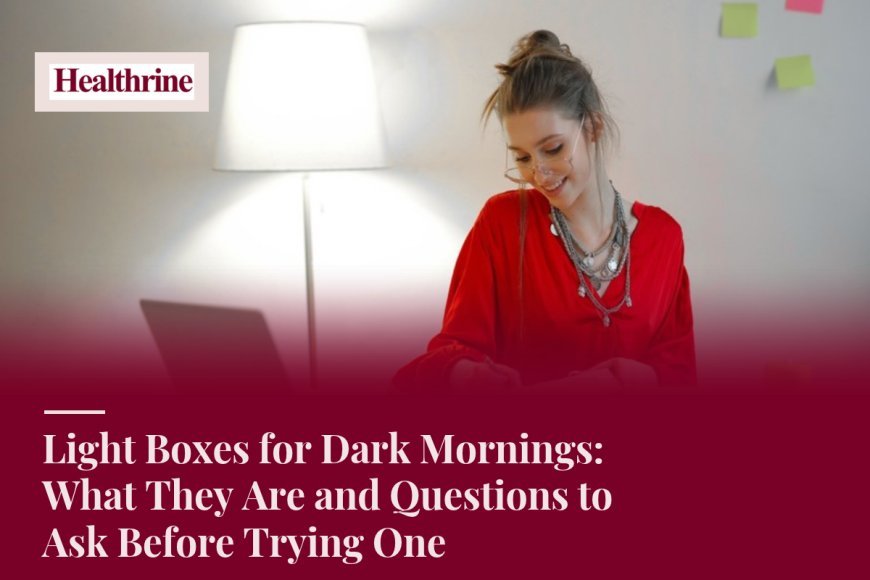
Light Boxes for Dark Mornings: What They Are and Questions to Ask Before Trying One
It is 6:45 on a weekday morning in December, and the window over the kitchen sink is still black. The coffee maker is the brightest thing in the room. For a lot of people across the northern half of the U.S., this is what mornings look like for a good stretch of the year, and it is one reason light boxes start showing up in online ads, pharmacy aisles, and friends' kitchens around this time.
If you have been curious about one, this guide covers the basics: what a light box is, how it differs from other light gadgets, what to look at on the box before you buy, how people typically fit one into a morning, and who should talk with a clinician first. It is meant as plain, practical background, not a recommendation to use one.
What a light box is, and what it isn't
A light box is a lamp, usually a flat panel or a small upright screen, designed to give off much brighter light than ordinary household bulbs. People typically sit near it for a set amount of time in the morning while they eat breakfast, read, or check email. The light is meant to reach the eyes indirectly; you do not stare into it.
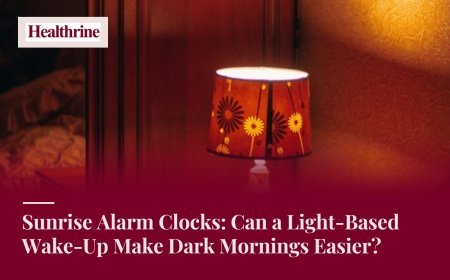
It is different from a sunrise alarm clock, which gradually brightens a bedside light before your alarm goes off. A sunrise clock is about how you wake up. A light box is a separate, much brighter panel you sit beside after you are already up.
It is also different from tanning lamps and from lamps sold for skin care. Mayo Clinic notes that some lamps designed for skin conditions mainly give off ultraviolet light and could harm the eyes if used the wrong way. A light box intended for mornings should filter out most or all ultraviolet light.
Keeping expectations realistic
You will see plenty of confident marketing for light boxes. Light boxes are designed mainly for a specific seasonal use that is best discussed with a health care provider, and this article makes no claims about what one will or won't do for you. Experiences vary from person to person. Some people say they like the routine and how their mornings feel. Others notice little change, or find the light uncomfortable.
Mayo Clinic also points out that light boxes are not regulated by the U.S. Food and Drug Administration for the uses they are commonly marketed for, so labels and claims can vary widely between brands. That is one more reason to read the specifications carefully and to be skeptical of any product that promises specific results.
Because of all this, it makes sense to think of a light box as one possible part of a winter routine, not a fix for anything. If you are dealing with low mood, low energy, or sleep changes that are lasting, getting worse, or affecting work or relationships, the most useful first step is a conversation with your primary care provider or a mental health professional, rather than a device.
Who should check with a clinician first
You do not need a prescription to buy a light box, but Mayo Clinic recommends talking with a health care provider about choosing and using one. That advice matters most for certain groups. Ask your clinician first if any of these apply to you:
- You have an eye condition such as glaucoma, cataracts, macular degeneration, or eye damage related to diabetes. Mayo Clinic suggests getting advice from your eye specialist before starting, and an ophthalmologist or optometrist can tell you whether bright light is a good idea for your eyes.
- You take any medicine or supplement that makes you more sensitive to light. Some antibiotics, anti-inflammatory pain relievers, acne medicines, and other drugs can increase light sensitivity. The FDA advises checking with your pharmacist or doctor about whether any medicine you take does this.
- You have a personal history of bipolar illness or mania. Mayo Clinic notes that bright light exposure, especially increasing it too fast or using it too long, can be risky for people with bipolar illness, so the decision and timing should be planned with your provider.
- You have a skin condition that reacts to light, or you have been told to avoid bright light for any reason.
- You are pregnant, are buying for a child or teen, or have another ongoing health condition.
Bringing the product's specification sheet to the appointment can make that conversation quicker and more concrete.
What to check on the box before you buy
If you and your provider decide a light box is worth trying, a few details on the packaging or product page are worth reading closely.
- Brightness in lux, and at what distance. Mayo Clinic lists 10,000 lux as the usual recommended intensity. The key detail is the distance at which that brightness is measured. A product rated at 10,000 lux at 6 inches will be much dimmer at 2 feet, so look for both numbers.
- UV filtering. Look for a clear statement that the lamp filters out ultraviolet light. If the listing is vague, contact the manufacturer.
- Size of the light surface. Larger panels tend to give more room to move without leaving the bright zone. Very small travel models usually have to sit closer.
- Glare and angle. Many people find a panel that can tilt down slightly, toward the eyes from above, more comfortable than one shining straight across.
- Clear instructions. A good manufacturer will spell out recommended distance and session length. If the instructions are missing or unclear, that is a reason to choose another product.
- Return policy. Because people respond differently, a generous return window can make it easier to try one without a big commitment.
Many health insurance plans do not cover light boxes, according to Mayo Clinic, so it is worth comparing prices and specifications across a few models.
Practicalities: fitting one into a morning
People who use a light box usually build it into a morning routine. Mayo Clinic describes typical use as within the first hour after waking, for about 20 to 30 minutes, at roughly 16 to 24 inches from the face, with eyes open but not looking directly at the light. The same page emphasizes following the manufacturer's instructions on distance and timing, and your clinician may suggest something different for you.
A few practical tips can make the routine easier:
- Pick a spot you already use. The breakfast table, a desk, or the arm of a reading chair works better than a corner you would have to go out of your way to visit.
- Plan what you will do during the session. Eating breakfast, reading the news, answering messages, or journaling all fit naturally.
- Keep the timing consistent. Many people find it easier to remember when the light box goes on at the same point every morning, such as right after the coffee starts.
- Avoid evening use unless your clinician suggests it. Bright light late in the day may interfere with winding down for sleep.
- Notice how you feel. Headaches, eye strain, feeling jittery, or trouble sleeping are reasons to stop and check in with your provider.
Pairing it with other bright-morning habits
Whatever you decide about a light box, simple daylight habits can be worth building in on their own. Opening the blinds as soon as you are up, eating breakfast near a window, stepping outside for a few minutes on your way to the car or the bus stop, and taking a short walk at lunch when the sun is highest are all easy ways to bring more light into short days.
Many people also find that a steady wake-up time, regular movement, and time with friends help winter feel more manageable. None of these require buying anything.
And if low mood is lasting, or you are struggling, please reach out to your doctor or a mental health professional. If you are ever in crisis or thinking about harming yourself, call or text 988 to reach the 988 Suicide and Crisis Lifeline any time, day or night.
What's Your Reaction?
 Like
0
 Dislike
0
 Love
0
 Funny
0
 Angry
0
 Sad
0
 Wow
0