




























Staying Well at Work in Winter: Shared Kitchens, Meetings, and Sick-Day Etiquette
Winter at work has its own small rituals. The office kitchen fills with holiday cookies, meetings stretch into the dark late afternoon, and someone two desks over is quietly sniffling into a tissue. Shared spaces get busier just as many of us are spending more time indoors.
This guide is about the everyday etiquette and logistics of sharing a workplace in winter. It covers the office kitchen, meetings, and what to do when you or a colleague feels unwell. It is not medical advice. Instead, it focuses on simple courtesies that can make a shared workplace feel more comfortable and considerate for everyone through the colder months.
Every workplace is different, so check your employer's policies on sick leave, remote work, and shared spaces. Where this guide mentions official guidance, it points to the CDC, which publishes general advice on staying home when sick with a respiratory virus.
The shared kitchen: small habits, big difference
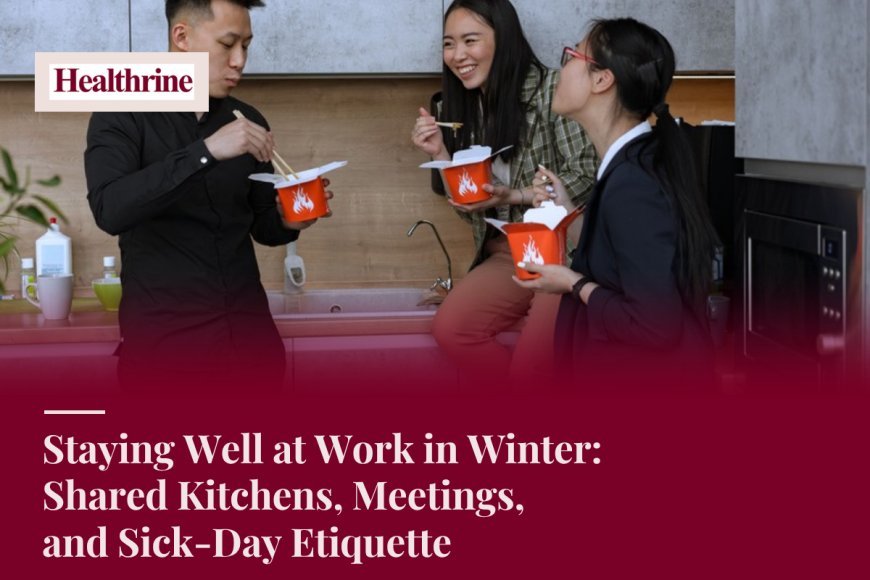
The office kitchen is one of the busiest shared spaces at work, and a few simple habits go a long way. Wash your hands before preparing food or handling shared items, and use your own mug and utensils where possible. If you use a shared sponge or dish towel, consider switching to paper towels or bringing your own cloth from home and taking it home to wash.
Wipe down the counter, microwave handle, and kettle after you use them, especially in busy periods. Many offices keep disinfecting wipes in the kitchen for exactly this purpose. It takes a few seconds and helps keep the space pleasant for the next person.
Shared food is part of office culture in winter, from holiday baking to birthday cakes. When bringing something to share, consider individually wrapped items or provide serving utensils so people do not need to reach in with their hands. Label anything containing common allergens if you can, since colleagues will appreciate knowing.
Keep the fridge tidy. Label your containers with your name and date, and take home leftovers before the weekend. A monthly fridge clear-out, announced in advance, is a simple way to stop forgotten lunches from lingering. USDA guidance is to keep refrigerators at 40°F or below and to refrigerate perishable food within two hours.
Meetings in close quarters
Winter often means more meetings in smaller rooms with the windows shut. Where possible, choose a larger room for bigger groups, or ask facilities whether ventilation can be improved. Opening a window for a few minutes before or after a meeting, if the building allows, can help freshen the air.
Consider whether a meeting needs to be in person at all. A video call can be a sensible choice for quick updates or when some participants are feeling under the weather. Many teams find that a mix of in-person and remote meetings works well in winter.
Offer flexibility to colleagues. If someone prefers to join remotely or to sit a little further away, accept that without question. A simple line in the meeting invite, such as "Feel free to join by video if you prefer," makes it easy for everyone.
Timing matters as well. Late-afternoon meetings in winter often run into the darkest, most tired part of the day. Where you can, schedule longer discussions earlier, keep agendas tight, and end on time so people can get home before the evening rush. Short, well-run meetings are a courtesy in any season.
Keep shared items in mind. Pens, remote controls, and shared keyboards in meeting rooms are touched by many hands. Bringing your own pen or giving shared items a quick wipe at the start is a small, considerate step.
Sick-day etiquette: when to stay home
One of the kindest things you can do for colleagues is to stay home when you feel unwell. CDC guidance for respiratory viruses is to stay home and away from others until, for at least 24 hours, your overall condition is getting better and you have not had a fever without using fever-reducing medicine. After that, CDC suggests taking added precautions for the next five days, such as practicing good hygiene, taking steps for cleaner air, wearing a well-fitted mask, or keeping more distance when around others.
Tell your manager or team as early as possible. A brief message is enough: "I'm feeling unwell and will be taking a sick day today. I'll check messages at noon for anything urgent." There is no need to share details about how you feel unless you want to.
If you are well enough to work and your job allows remote work, check whether working from home is an option. If you need rest, take it. Logging in from bed while feeling rough often helps nobody, and a proper day off may get you back to your usual self sooner.
Before you go, if you can, leave a short handover note for urgent tasks. A shared document listing key deadlines and who can cover what makes sick days less stressful for everyone.
When you return, a quick catch-up with your team helps you pick up where things stand. It also gives you a chance to thank whoever covered for you, which keeps goodwill flowing for the next time someone else needs a day off.
When a colleague seems unwell
If a coworker comes in looking unwell, approach the situation with kindness. A gentle, private comment such as "You seem a bit under the weather. Do you need anything, or would it help if I covered that meeting?" can open the door without embarrassing them.
Avoid public comments or jokes that could make someone feel singled out. People come to work while unwell for many reasons, including workload pressure, limited sick leave, or worry about letting the team down. Understanding those pressures helps you respond with empathy.
Managers can set the tone. Clearly encouraging people to stay home when unwell, offering remote options where possible, and modeling that behavior themselves makes it easier for everyone to make considerate choices.
Building a considerate winter workplace
Small changes to the workplace can make winter easier for everyone. Keeping tissues, hand sanitizer, and wipes stocked in common areas, putting a lidded bin near desks, and making sure soap dispensers are refilled are simple steps facilities teams or office managers can take.
Our guide to handwashing moments most people skip in winter covers the when and how of handwashing, so here it is enough to say that a sink with soap and paper towels in reach makes the habit easy.
Flexible policies help too. Clear guidance on sick days, remote work, and how to cover for colleagues reduces uncertainty. When people know what to do, they are more likely to make choices that keep shared spaces pleasant.
Small courtesies, shared comfort
Staying well at work in winter is less about strict rules and more about everyday consideration. Tidy kitchens, flexible meetings, clear communication, and kindness when someone is unwell all contribute to a workplace where people feel looked after.
This season, try picking one or two habits to focus on, such as wiping down the kitchen counter after use or adding a video option to your meeting invites. Small courtesies like these, multiplied across a team, can make the darker months feel a little brighter for everyone.
What's Your Reaction?
 Like
0
 Dislike
0
 Love
0
 Funny
0
 Angry
0
 Sad
0
 Wow
0