



























Squash 101: Cooking Butternut, Acorn, and Spaghetti Squash Without Fuss
Winter squash has a reputation problem. It sits in big, beautiful piles at the grocery store and farmers market, and then it sits on kitchen counters for weeks because nobody wants to wrestle with it. The rind is tough, the shape is awkward, and the instructions online seem to range from "just roast it" to elaborate multi-step projects.
Here's the truth: once you know a few techniques, butternut, acorn, and spaghetti squash are some of the easiest, most forgiving vegetables of the cold months. They keep for weeks, they're inexpensive in season, and they turn into soups, sides, and main dishes with very little effort. Winter squash also counts toward the red and orange vegetable group on USDA's MyPlate, which makes it a handy way to add color to winter plates.
Meet the Three Squashes
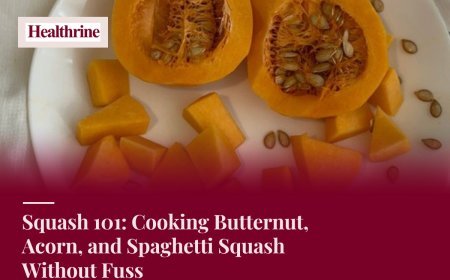
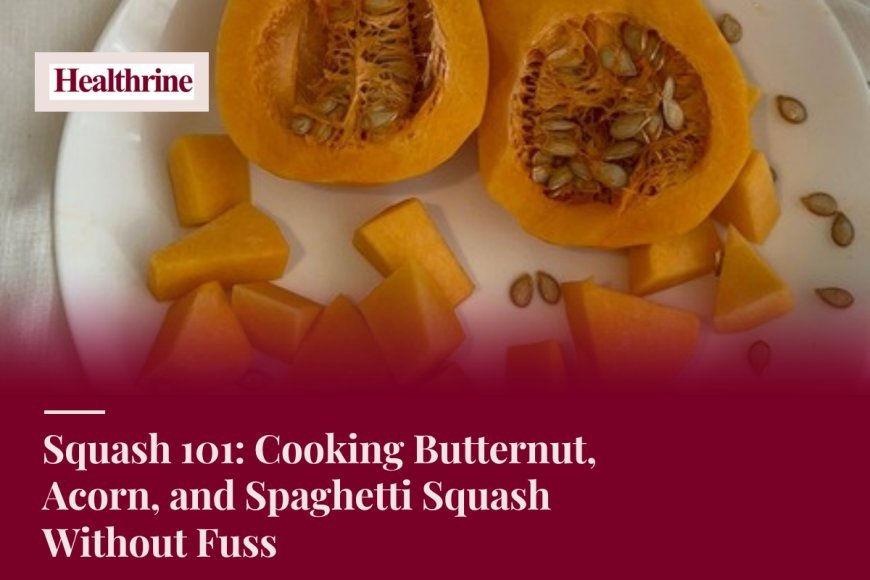
Butternut squash is the long, tan one with a bulb at the bottom. Its flesh is deep orange, smooth, and sweet, and it has fewer seeds than most varieties because the seeds sit only in the bulb. It's the most versatile of the three and the go-to for soups and cubed roasting.
Acorn squash is small, round, and ridged, usually dark green with a patch of orange. Its flesh is milder and a little less sweet than butternut. Because of its shape, it's best halved or cut into wedges rather than peeled and cubed.
Spaghetti squash is oval and pale yellow. When cooked, its flesh pulls apart into long, mild strands that look like noodles. It's less sweet than the other two and works well as a base for sauces.
Once you're comfortable with these three, a few cousins are worth a look. Delicata squash is small and striped, with skin thin enough to eat, so you can slice it into rings and roast it without peeling. Kabocha, a squat green Japanese squash, has dense, chestnut-like flesh that is lovely in curries and stews. Red kuri and buttercup squash behave much like butternut in the kitchen. The techniques below work for all of them, with small adjustments to cooking time based on size and thickness.
Choosing and Storing Without Waste
Look for squash that feels heavy for its size, with a firm, dull rind and no soft spots, cracks, or mold. A bit of stem still attached is a good sign. Shiny skin can mean it was picked early.
University extension services note that whole, uncut winter squash keeps best in a cool, dry, dark spot, like a pantry or a cool corner of the counter, away from direct sun. Stored this way, many winter squashes last one to three months, which makes them a great buy-ahead vegetable. Once you cut a squash, wrap the pieces and refrigerate them, and use them within about a week.
Pre-cut butternut cubes and frozen squash are both perfectly good options. They cost a bit more or less depending on the store, but they skip the hardest step entirely.
The Safe Way to Cut a Hard Squash
The biggest barrier to cooking squash is cutting it. A few steps make it much safer:
- Use a large, sharp chef's knife. Dull knives slip.
- Put a damp towel under your cutting board so it doesn't slide.
- Slice a thin piece off one side to create a flat base, so the squash doesn't roll.
- For butternut, cut off the top and bottom ends, then separate the neck from the bulb before peeling or halving each piece.
- For acorn and spaghetti squash, stand the squash on its flat end and cut down through the middle, working the knife slowly.
If a squash is very hard, pierce it a few times with a fork and microwave it for two to three minutes. The rind softens just enough to make cutting easier. Let it cool slightly before handling. Hot spots inside the squash can surprise you, so use a kitchen towel to hold it steady while you cut.
To peel butternut, a sturdy Y-shaped vegetable peeler usually works better than a knife. Acorn squash doesn't need peeling at all; the skin softens when roasted and can be scooped away from the flesh at the table.
Three Reliable Cooking Methods
Most squash recipes come down to one of three methods.
Roasting cubes. Peel and cube butternut into one-inch pieces, toss with oil and salt, and spread on a sheet pan with space between pieces. Roast at 425°F for about 25 to 35 minutes, flipping once, until the edges brown. Crowding the pan leads to steaming, so use two pans if you need to.
Roasting halves. Halve acorn or spaghetti squash, scoop out the seeds, brush the cut sides with a little oil, and season. Place cut side down on a lined sheet pan and roast at 400°F until a fork slides in easily, often 35 to 50 minutes depending on size. For spaghetti squash, let it cool for a few minutes, then rake a fork lengthwise across the flesh to pull out the strands.
Microwave or steam. For a fast weeknight shortcut, place a halved squash cut side down in a microwave-safe dish with a little water, cover, and microwave in several-minute bursts until tender. Times vary by microwave and squash size, so check often. It won't brown, but it works well for mashing, soup, or spaghetti squash bowls.
Save the seeds too. Rinse them, pat them dry, toss with oil and salt, and roast at around 325°F until golden for a crunchy snack.
Easy Ways to Serve Each One
Butternut squash ideas:
- Blend roasted cubes with sautéed onion, garlic, and broth for a simple soup
- Toss roasted cubes into a grain bowl with greens, chickpeas, and a lemony dressing
- Stir into risotto or mac and cheese for extra color
- Mash with a little butter, salt, and a pinch of nutmeg
Acorn squash ideas:
- Serve roasted halves as edible bowls filled with wild rice, sausage, or beans and herbs
- Roast wedges with a drizzle of maple syrup and a sprinkle of chili flakes
- Brush with miso butter before roasting for a savory twist
Spaghetti squash ideas:
- Top strands with marinara and meatballs or a simple tomato sauce
- Toss with olive oil, garlic, parmesan, and spinach
- Bake into a casserole with ricotta and sauce
Seasoning matters more than you might think. Squash loves salt, a bit of acid like lemon or vinegar, and something with a kick, such as chili flakes, smoked paprika, or curry powder. Sage, thyme, and rosemary are classic partners for fall.
Making Squash a Weeknight Habit
The easiest way to actually cook more squash is to make it part of a routine. Roast one on Sunday while something else is in the oven. Keep a container of roasted cubes in the fridge and add them to eggs, salads, and pasta through the week. Freeze extra mashed or puréed squash in flat bags for soups later in the season.
If you live with picky eaters, start with familiar formats. Squash blended into mac and cheese, stirred into chili, or roasted with a little maple and cinnamon often wins over people who think they don't like it.
Most of all, don't let a squash intimidate you. Even a slightly uneven cut or an overcooked half usually turns out fine, especially once it's mashed, blended, or tossed with a good sauce. By the middle of winter, you may find yourself buying two at a time.
What's Your Reaction?
 Like
0
 Dislike
0
 Love
0
 Funny
0
 Angry
0
 Sad
0
 Wow
0