



























Is Your Sleep Score Stressing You Out? A Calmer Way to Use Sleep Tracking

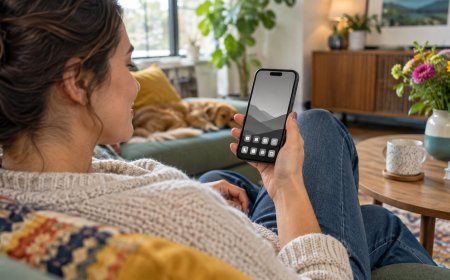
You wake up, reach for your phone or watch, and before your feet touch the floor a number has already graded your night. Seventy-two. Sixty-eight. Fair. Poor. Some mornings that score feels useful. Other mornings it lands like a small verdict, and you find yourself feeling tired mainly because a screen told you that you should.
If that sounds familiar, the problem may not be your sleep. It may be the way a single score has started to speak louder than your own morning. There is a calmer way to keep the useful parts of sleep tracking without handing it the final word.
What a Score Can and Cannot Tell You
Consumer sleep trackers estimate sleep rather than measuring it directly. Johns Hopkins Medicine explains that wearable devices infer sleep from signals such as movement and heart rate, instead of recording brain activity the way a sleep study in a lab does. That makes them reasonable tools for spotting broad patterns and much shakier tools for judging one night in detail.
A tracker can usefully show whether you are getting to bed at wildly different times, whether your sleep window is shrinking during busy weeks, or whether you consistently sleep longer when you stop work earlier. Those are trend questions, and trends are where the data earns its keep.
What a score cannot do is tell you, by itself, how restorative last night truly was or how you must feel today. Stage estimates, readiness grades, and efficiency figures from a wrist device should be read as informed guesses. If you woke up feeling clear and steady, a low score has not proved you wrong. If you woke up foggy under a cheerful score, your own report still counts.
The CDC notes that adults aged eighteen to sixty need seven or more hours of sleep a night. Even that guidance is about a regular pattern over time, not a pass or fail mark stamped on a single Tuesday. One short night in an otherwise steady week is information, not a character flaw.
Let Your Morning Have the First Word
Try a simple order change for a week. Before you look at any score, take sixty seconds and rate the night yourself. Ask three plain questions. How do I feel waking up? How easily did I get going? How sleepy do I expect to feel by mid-afternoon, based on how I feel now?
Write the answers somewhere unglamorous: a notes app, a paper diary, the back of a receipt on the kitchen counter. Only then, if you want to, look at the tracker. Comparing your own rating first keeps the device in its proper job, which is supplying extra information rather than issuing the headline.
Patterns in that comparison are interesting. Maybe your own ratings and the score mostly agree, and the score is harmless background. Maybe you notice the score changes your mood more than it changes your choices. Or maybe you discover that the mornings you dread by score are often fine by lunchtime. All three findings tell you how much authority to give the number.
Pay special attention to cause and effect at bedtime. Checking a disappointing score late in the evening, or reviewing sleep stages while already in bed, can turn the last ten minutes of the day into a performance review. If tracking is going to live anywhere, let it live in the morning or at a weekly review, not in the dark beside your pillow.
Use Trends, Windows, and Very Few Numbers
A calmer tracking habit looks at less data, less often. Pick one weekly moment, perhaps Sunday coffee, and look at just three things across the week: average time in bed, how consistent your wake time was, and your own morning ratings. Leave the nightly stage charts alone unless you enjoy them without believing them too much.
Keep the questions practical. Did the evenings when screens ended earlier line up with easier mornings? Did late caffeine show up in your own ratings, whatever the score said? Did a regular wake time, even after a short night, make the next evening's sleepiness arrive at a sensible hour? Those answers can change a routine. A mysterious nightly grade mostly changes a mood.
Consider hiding or de-emphasizing the composite score if your device allows it, and keeping duration and timing visible instead. Hours in bed and bedtime consistency are the parts you can actually act on. You cannot directly act on a readiness grade. You can only go to bed, in a cool dark room, at a regular time, and let the night be what it is.
If you share a bed, a schedule, or early mornings with someone else, compare routines rather than scores. Two people can sleep the same hours and receive very different grades from very different devices. Arguing whose number is right misses the shared question that matters: does this household's evening routine give everyone a fair chance at enough sleep?
When to Put the Tracker in a Drawer
Some people do better with a complete break. If you notice that you check the score during the night, feel anxious about ruining a streak, change daytime plans around a grade, or lie awake replaying last night's chart, try two weeks without wearing the device to bed. Keep the morning self-rating. Many people are surprised by how quickly the night becomes quieter when it is no longer being marked.
A break is also sensible before a demanding week. Travel, a work deadline, a newborn, or a house full of guests will disturb sleep for ordinary reasons. Watching a score record those ordinary reasons, night after night, adds commentary without adding help. You can pick the tracker up again when life steadies, if you still want it.
None of this is an argument against paying attention to sleep. Regular difficulty falling asleep, loud snoring, waking unrefreshed most mornings, or sleepiness that interferes with driving or work deserves a conversation with a doctor, whatever a wearable says. A consumer score, high or low, is not a substitute for that conversation, and a reassuring score should not postpone it.
Let the tracker be a notebook, not a judge. Rate the night in your own words first, review simple trends once a week, and act only on the levers you control: a regular wake time, a wind-down that ends work and bright screens, and enough hours in bed. Wake up tomorrow and ask yourself how you feel before you ask your wrist. The morning may sound more trustworthy than you remembered.
Try one practical experiment drawn from ordinary mornings rather than equipment. For five days, keep your wake time steady and get outside or to a bright window soon after rising, then note only whether the following evening felt sleepy at a reasonable hour. Many people discover a plain relationship there that no score needed to announce. The point is not to collect more proof. It is to reconnect cause and effect in your own routine, so bedtime decisions come from lived patterns instead of from a grade that arrived before breakfast and colored everything after it.
Keep daytime evidence in the picture, too. A score is about the night, but your day supplies the review that matters: whether you could concentrate at ten, whether the afternoon dip was brief or heavy, whether driving home felt alert and ordinary. Jot one word at midday for a week, like clear, flat, or foggy. Compared side by side, those words plus your wake times often explain more than a detailed stage chart, and they never ask you to feel worse about a night that actually served you well.
What's Your Reaction?
 Like
0
 Dislike
0
 Love
0
 Funny
0
 Angry
0
 Sad
0
 Wow
0