







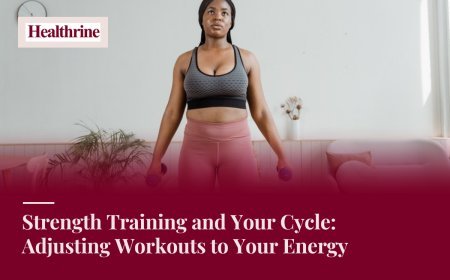


















Strength Training and Your Cycle: Adjusting Workouts to Your Energy
Scroll through fitness social media for five minutes and you'll likely find someone explaining exactly how to "sync" your workouts to your menstrual cycle. Heavy lifting this week, only yoga next week, never a personal best during your period. It sounds tidy and scientific.
The reality is messier, and in a way more freeing. Many people do notice their energy, mood, sleep, and comfort shift across the month. But the research on whether cycle phase changes strength or training results is mixed, and there's no single schedule that fits everyone. The most practical approach is to pay attention to how you feel and adjust your training to match your energy on the day. Here's how to do that.
What the Research Actually Says
Researchers have studied this question for years, and the findings don't line up neatly. A 2023 review in Frontiers in Sports and Active Living concluded that current evidence didn't show a clear influence of cycle phase on acute strength performance or on gains from resistance training. Some other analyses have reported small differences in certain strength measures between phases, but with low confidence in the results.
Part of the challenge is that many studies are small, measure cycle phases in different ways, and include people whose cycles vary a great deal. The takeaway for most of us: there's no strong reason to plan your entire program around a calendar app. There's every reason to notice your own patterns.
Everyone's cycle is different. Some people feel almost no change from week to week. Others notice clear dips in energy or comfort at predictable times. Both are normal. Your own pattern may also change over the years, so what you notice at 25 might look different at 40.
Use Your Energy as the Guide
Instead of following a rigid phase-based plan, try a simple daily check-in before you train. Ask yourself:
- How did I sleep?
- How's my energy right now, on a scale of 1 to 10?
- Do I feel any cramping, bloating, or discomfort that would make certain moves unpleasant?
- How did my last workout feel?
Then pick from three versions of your planned session:
- Full session. Energy is good. Do the workout as written and, if it feels great, push a little on your main lifts.
- Trimmed session. Energy is okay but not great. Keep the same exercises, but drop a set from each or use slightly lighter weights.
- Gentle session. Energy is low or you feel uncomfortable. Do a short mobility routine, a walk, or a few bodyweight moves, and call it a win.
This approach works across your whole month, not just on period days. A rough night of sleep, a stressful week at work, or a cold can all affect your energy too.
Here's how that might look in a real week. Say your plan is three full-body sessions: Monday, Wednesday, and Friday. On Monday you slept well and feel like an 8, so you do the full workout and add a little weight to your squats. Wednesday you're at a 5 after a late night, so you do the same exercises with one fewer set each. Friday your period starts and you feel crampy, so you take a 20-minute walk and do some gentle hip and back stretches. You still trained three times. You just met yourself where you were.
Having these three versions decided in advance matters. When you're tired, making decisions is harder, so it helps to know your fallback plan before you walk into the gym.
Tracking Patterns Without Obsessing
If you're curious whether your cycle affects your training, a few months of simple notes can tell you more than any article.
Keep a short log, either in a notebook or the notes app on your phone. After each workout, jot down:
- Day of your cycle, if you track it
- What you did and roughly how heavy
- Energy level from 1 to 10
- One word about how it felt, like "strong," "sluggish," or "fine"
After two or three cycles, look back. You may notice that you tend to feel strongest at certain times, or that the few days before your period are when you're more likely to want a lighter session. Or you may find no real pattern at all. Either way, you'll have information that's specific to you.
Keep it light. The goal is curiosity, not another thing to grade yourself on. If tracking starts to feel stressful, step back from it.
Cycle-tracking apps can make this easier, and many fitness apps let you add notes. Just remember that app predictions are estimates, and their suggestions about what workouts suit each phase aren't settled science.
Practical Tweaks for Days You Feel Off
On days when cramps, bloating, or fatigue show up, small adjustments can make strength training more comfortable:
- Swap exercises that press on your belly, like lying face-down moves, for standing or seated options.
- Choose machines or dumbbells over heavy barbell lifts if your focus feels scattered.
- Lengthen your warm-up. Five extra minutes of easy movement can help you settle into the session.
- Take longer rests between sets.
- Wear clothes you feel comfortable in, and have period products handy so you're not distracted.
- Stay hydrated and have a snack beforehand if you tend to feel lightheaded.
Many people find that gentle movement on these days feels better than sitting still, while others prefer a full rest. Both are reasonable choices. If you usually train with a partner or class, it's fine to let them know you're taking it easier today. Most experienced lifters have had plenty of off days themselves and won't think twice about it.
Keep the Big Picture in View
Whatever your cycle is doing, the fundamentals of strength training stay the same. The CDC recommends that adults do muscle-strengthening activities that work all major muscle groups on at least two days a week. Consistency over months matters much more than any single workout.
That's actually reassuring. If you have a lighter week, skip a session, or take a few days easy, you haven't lost your progress. You can pick right back up.
Some other tips that tend to serve people well regardless of cycle phase:
- Focus on good form before adding weight.
- Increase load gradually over weeks, not days.
- Prioritize sleep and regular meals, since both affect how you feel in the gym.
- Include rest days in your weekly plan.
When to Check In With a Provider
Cycles naturally vary, but some changes are worth a conversation with a health care provider. If your periods are very painful, unusually heavy, suddenly irregular, or stop for several months, or if fatigue is getting in the way of your daily life, it's a good idea to get it checked. That's especially true for people training hard or eating less than usual, since intense training paired with too little food can affect the cycle.
Bring your training log along. Notes about your energy, workouts, and cycle dates can make the conversation more productive.
The bottom line: your body isn't a calendar, and you don't need a perfect phase-by-phase plan to train well. Notice how you feel, have a full, trimmed, and gentle version of each workout ready, and keep showing up most weeks. Over time, that flexible, responsive approach can help you build strength while respecting the natural ups and downs of your month.
What's Your Reaction?
 Like
0
 Dislike
0
 Love
0
 Funny
0
 Angry
0
 Sad
0
 Wow
0