























A 20-Minute Screen-Free Wind-Down That Actually Protects Your Sleep

Most of us do not lose the evening in one dramatic scroll. We lose it in small sips: one more reel, one more email “just to clear it,” one more dim-blue glow that somehow lasts forty minutes. By the time the phone hits the nightstand, your brain is still half at work and half at a party it never RSVP’d to.
This is a digital wellness habit piece—not a medical guide. No diagnosis talk, no miracle claims. Just a practical 20-minute screen-free wind-down you can actually repeat on a normal weeknight, built around light, temperature, a quick mental offload, and parking the phone somewhere that is not your pillow’s roommate.
Why a short ritual beats a heroic “digital detox”
All-or-nothing detox weekends sound pure and usually collapse by Tuesday. Sleep-friendly evenings work better as a small, boring bridge: a repeatable handoff from “day brain” to “night brain.”
Twenty minutes is long enough to change the sensory inputs your nervous system has been chewing on—bright light, novelty, unfinished loops—and short enough that you will still do it when you are tired. Think of it as closing the browser tabs in your head, not becoming a different person.
The goal is simple: make the last stretch before bed feel predictable. Predictability is underrated. When your evening ends the same way most nights, your body gets fewer mixed signals about whether it is still showtime.
The 20-minute map (overview)
Use this as a flexible template, not a stopwatch audition:
• Minutes 0–3 — Park the phone and set the room
• Minutes 3–8 — Light and temperature shift
• Minutes 8–14 — Mental offload (paper, not pixels)
• Minutes 14–20 — Soft landing (body ease + one low-stimulus cue)
If you only have twelve minutes, keep the phone park, the light shift, and a three-line offload. Consistency outruns perfection.
Minutes 0–3: Phone parking is the whole game
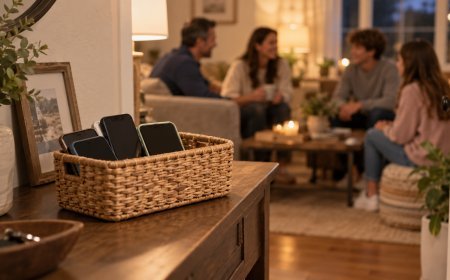
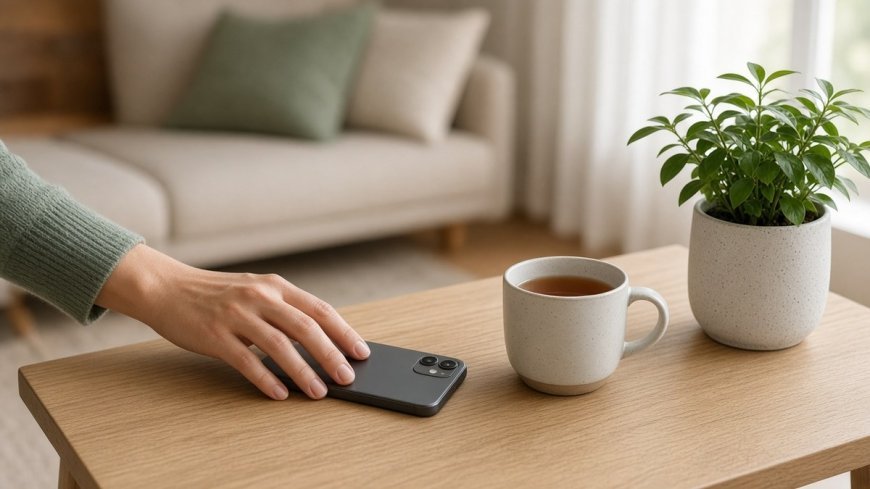
Put the phone to bed before you do. Choose a charging spot outside arm’s reach of your pillow—hallway table, kitchen counter, dresser across the room. Same place every night. Decision fatigue loves renegotiation; a fixed “phone home” removes the debate.
If you use the phone as an alarm, buy a cheap alarm clock or use a wearable’s alarm and leave the phone in its parking spot. That one swap prevents the classic loop: check the time → see a notification → vanish for fifteen minutes.
Optional but powerful: flip on Do Not Disturb / Sleep Focus as you plug it in, with a short allowlist for people who truly need to break through. Everyone else can wait until morning. You are not being rude; you are choosing a boundary your future self can feel.
Tell anyone you live with the new habit in one sentence: “I’m doing a screen-free wind-down starting around X.” Social friction drops when the rule is visible and calm, not secretly resentful.
Minutes 3–8: Light and temperature—the quiet levers
Screens are only part of the evening story. Overhead LEDs that feel like an office will keep your brain in daytime mode even if the phone is gone. Dim the environment on purpose.
Practical moves that take almost no money:
• Switch from ceiling lights to a lamp, salt lamp, or warm bulb in the corner
• If you have smart bulbs, save a “Wind-Down” scene at a warm color temperature and low brightness
• Close bright kitchen lights once dishes are done; finish remaining chores under softer light
• Face away from any leftover TV glow if someone else is still watching in another room
Temperature is the other quiet lever. Many people sleep better in a cooler room than a cozy-warm cave. You do not need a lab setting—just a small nudge: lower the thermostat a degree or two if that is comfortable for your household, crack a window briefly if the air feels stale, or swap a heavy duvet for layers you can kick off. The point is a gentle “day is done” signal through the skin, not an extreme challenge.
Clothes matter more than they get credit for. Change into sleep clothes during this window even if you are not climbing into bed yet. It is a costume change for your brain: different fabric, different role.
Minutes 8–14: Mental offload on paper
Open loops love midnight. The fix is not “think positive.” The fix is externalize.
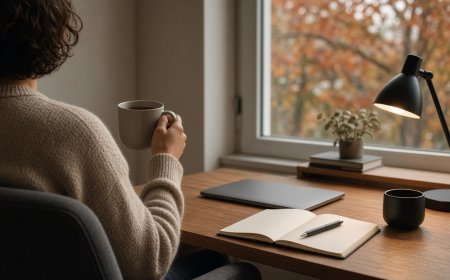
Keep a dedicated notebook or a stack of scrap paper by the lamp—not in a notes app. Writing by hand keeps you off the device you just parked and slows the thought just enough to sort it.
Try a three-line offload:
1) Done: one thing you finished today (even tiny)
2) Tomorrow: the single first action for the most important task
3) Parking lot: anything else buzzing—dump it in bullets without solving it
If your mind is spicy, add a fourth line: “Not mine to solve at 10:40 p.m.” It sounds cheesy. It works surprisingly often.
Skip journaling prompts that ask you to excavate your childhood or rewrite your personality. This is a wind-down, not a workshop. Two to six minutes of capture is enough. When the page holds the open loops, your head does not have to.
Minutes 14–20: Soft landing without a screen plot
Fill the last stretch with one low-stimulus cue you actually like. Rotate among a short list so it does not get stale:
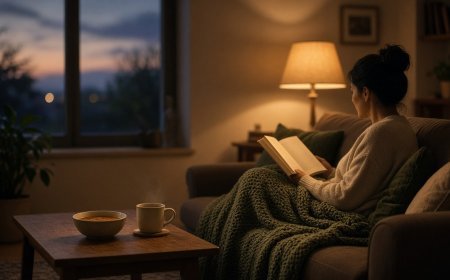
• A few pages of a paper book (fiction or something gentle—save sharp nonfiction for daylight)
• Slow stretching or a simple mobility sequence on the floor
• Breathing you already know: longer exhale than inhale, no fancy branding required
• Herbal tea or warm water if that is part of your comfort toolkit
• A tidy two-minute reset: shoes to the rack, bag packed, tomorrow’s clothes on a chair
Audio is a gray area. If a calm playlist or spoken word helps you settle and you can run it from a non-phone speaker already in the room, fine. If “just hitting play” becomes a portal back into apps, skip audio during wind-down week one. Earn the privilege back later.
What to avoid in this window: news, work email, argument-by-text, shopping tabs, and anything that creates a next action. Your wind-down should not invent new homework.
Make the ritual stick without turning it into a personality
Habits fail when they require a perfect evening. Build guardrails instead of guilt.
Anchor it. Attach the 20 minutes to something that already happens—after you lock the door, after you wash your face, after the kids’ lights-out. Anchors beat willpower.
Same start time most nights. Not because the clock is magic, but because a rough rhythm trains expectation. If your schedule shifts, keep the sequence even when the start time slides.
Prepare the stage once. Charging spot, notebook, pen, lamp, book. If the tools are hunting expeditions, you will default to the phone.
Allow a “minimum viable wind-down.” On chaotic nights: park phone, dim one light, write three lines, breathe for one minute. That still counts. Identity is built on reps, not on Instagram-ready routines.
Track lightly for two weeks. A calendar checkmark is enough. You are looking for “I did some version of this,” not sleep-score obsession. If a sleep tracker helps you notice patterns, use it in the morning—not as a midnight referee.
Household and roommate reality checks
Shared spaces complicate digital wellness. Negotiate the easy pieces first:
• Agree on a phone parking zone that does not shame anyone
• Use headphones for late TV in common areas so your wind-down light stays dim
• If partners have different bedtimes, protect the earlier person’s dark-and-quiet without turning it into a moral contest
• Kids’ evenings benefit from the same idea in shorter form: device dock, softer light, paper book—modeled, not lectured
You cannot control every blue pixel in the building. You can control the last twenty minutes of your own runway.
Troubleshooting the usual snags
“I get bored.” Boredom is often withdrawal from novelty. Keep a short list of wind-down options and pick one like a menu, not a sentence.
“I remember something urgent.” Write it in the parking lot list. Urgent and important still survive until breakfast almost every time.
“My job expects late messages.” Set a narrower window: screens allowed until a hard cutoff, then wind-down. Or park the phone but keep a dumb-phone / work pager exception only if your role truly requires it. Clarity beats vague always-on anxiety.
“I wind down and still feel wired.” Check caffeine timing, late workouts, and whether your “book” is actually work email in disguise. Adjust inputs earlier in the evening; do not punish yourself with a longer ritual.
“I fall asleep on the couch.” Move the soft landing closer to the bed. The ritual should end where you want to wake up.
A sample weeknight you can steal
9:40 — Plug phone in the hallway. Sleep Focus on.
9:42 — Kitchen light off; bedroom lamp on warm and low. Thermostat nudged cooler. Sleep clothes on.
9:47 — Three-line notebook offload. Close the cover.
9:52 — Two pages of a novel or five minutes of easy stretching.
10:00 — Lights out when sleepy, not when a show ends.
Shift the clock to match your life. Keep the order.
What this is—and what it is not
This is everyday digital wellness: a screen-free bedtime routine that protects the conditions good sleep habits usually like—dimmer light, cooler comfort, fewer open loops, and a phone that is not the last face you see.
It is not a treatment plan, a diagnosis tool, or a promise that every night will feel magical. Some nights will be messy. The win is returning to the same short bridge tomorrow without drama.
Protecting your sleep, in the lifestyle sense, is less about buying a new gadget and more about ending the day on purpose. Twenty minutes. Phone parked. Soft light. Thoughts on paper. One gentle cue. Repeat until it feels ordinary—and ordinary is exactly when it starts working.
What's Your Reaction?
 Like
0
Like
0
 Dislike
0
Dislike
0
 Love
0
Love
0
 Funny
0
Funny
0
 Angry
0
Angry
0
 Sad
0
Sad
0
 Wow
0
Wow
0