




























Indoor Walking Workouts for Rainy, Snowy, and Dark Days

Rain against the window. Sleet on the sidewalk. A sky that's already dark by the time you finish work. Some days, the outdoor walk you planned just isn't happening.
You can still walk. You don't need a treadmill, a walking pad, or a mall membership. A hallway, a living room, or even the space between your couch and kitchen is enough for a surprisingly good session. Below are four indoor walking routines that need no equipment, plus tips for making them feel less like pacing and more like a workout you look forward to.
Why Indoor Walking Still Counts
The CDC recommends that adults aim for at least 150 minutes a week of moderate-intensity activity, such as brisk walking, plus muscle-strengthening activity on at least two days. Those minutes can be spread across the week in whatever way works for you, and shorter sessions add up.
That's where indoor walking shines. A 10- or 15-minute routine before breakfast or after dinner is easy to fit in, and on bad-weather days it keeps your rhythm going so you don't lose momentum until the sun comes back.
To check that you're working at a moderate level, the CDC suggests a simple talk test. During moderate activity you can talk but not sing. If you can belt out a song, pick up the pace. If you can barely get out a few words, ease off.
Before you start, a little setup makes indoor walking much more pleasant.
- Clear a path. Move the laundry basket, the dog toys, and the rug that likes to bunch up.
- Wear supportive shoes, even indoors. Socks on a hardwood floor are slippery.
- Open a window for a minute or turn on a fan if the room gets stuffy.
- Queue up music with a steady beat, a podcast, or a show you only let yourself watch while walking.
- Keep water nearby.
If you live in an apartment, consider neighbors below and choose softer marching over heavy stomping, or walk on a rug.
Posture matters indoors just as much as outside. Stand tall, relax your shoulders down and away from your ears, and let your arms swing from the shoulder with elbows bent. Look ahead rather than at your feet. Land lightly and roll through your foot. Indoor walking involves more turns than a sidewalk does, so slow down slightly at each end of a lap and turn with small steps rather than pivoting sharply on one foot. That keeps your knees and ankles happier, especially on hard floors.
Routine 1: The 15-Minute Living Room Loop
This one is great for beginners or days when energy is low.
- Minutes 0 to 3: March in place at an easy pace, swinging your arms naturally.
- Minutes 3 to 6: Walk laps around your room or down a hallway, turning at each end.
- Minutes 6 to 9: Add side steps. Step right, bring the left foot to meet it, and repeat across the room, then go back the other way.
- Minutes 9 to 12: Return to marching, lifting your knees a little higher.
- Minutes 12 to 15: Slow walk in place, then gentle calf and hamstring stretches.
By the end you should feel warm and slightly breathless, but not wiped out. If 15 minutes feels like too much at first, do the first three blocks and call it a win. You can build up from there over a week or two, adding a block at a time as it starts to feel comfortable.
Routine 2: Hallway Intervals
Intervals alternate easier and harder efforts. They can make a short session feel more interesting and challenging.
Warm up with three minutes of easy marching. Then repeat this pattern five times:
- One minute of brisk walking or fast marching with strong arm swings
- One minute of easy walking to catch your breath
Finish with two to three minutes of slow walking. That's about 15 minutes total. When it starts to feel easy, stretch the brisk portion to 90 seconds, or add a sixth round.
During the brisk minutes, you can make the effort harder by pumping your arms higher, taking quicker steps, or lifting your knees.
Routine 3: Stairs and Steps
If you have a staircase at home, it can add a strength element to walking. Hold the railing and go at your own pace.
- Warm up with two minutes of marching.
- Walk up and down the stairs at a steady pace for one minute.
- March in place for one minute to recover.
- Repeat the stair and marching rounds four to six times.
- Cool down with a slow walk and stretches.
No staircase? Use a single sturdy step or the bottom stair for step-ups: step up with the right foot, bring the left up, step down right, then left. Switch the leading foot every minute.
Stair work raises your heart rate quickly, so pace yourself and use the marching rounds to fully catch your breath. Take extra care on stairs. Keep them clear of clutter, make sure they're well lit, and skip this routine if you have balance concerns or your knees protest.
Routine 4: The 20-Minute Mix
For days when you want a fuller session, combine walking with a few bodyweight moves, which also nudge you toward the CDC's muscle-strengthening goal.
Do each block for the time listed, then move to the next:
- 3 minutes: easy marching warm-up
- 3 minutes: brisk walking laps
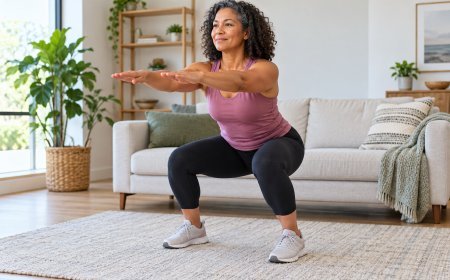
- 1 minute: bodyweight squats, or sit-to-stands from a chair
- 3 minutes: brisk walking with side steps
- 1 minute: wall push-ups
- 3 minutes: brisk walking with high knees
- 1 minute: standing calf raises
- 3 minutes: brisk walking laps
- 2 minutes: slow walk and stretches
This routine pairs nicely with a playlist. Many songs run about three to four minutes, so you can change blocks when the track changes.
Making It Stick on Dark Days
The hardest part of indoor walking usually isn't the workout. It's starting. A few small tricks:
Attach it to something you already do. Walk during a phone call with a friend, while the coffee brews, or right after you close your laptop.
Count steps or minutes, not miles. A phone or watch can keep track of your walking time. Seeing those numbers add up over a week can be surprisingly motivating.
Invite company. Kids often love marching to music, and partners or roommates may join for a few laps. Video calls work too.
Mix up your scenery. Walk a different route through your home, or try a walking video for variety.
Plan for the week, not just the day. Glance at the forecast on Sunday and pencil in which days look like indoor days. Having the routine already chosen means fewer decisions when the rain starts.
Keep it flexible. Two 10-minute sessions count just as much toward your weekly total as one 20-minute session.
Some people do find a treadmill or walking pad helpful for indoor days, and if you already have one, by all means use it. But you don't need any equipment to stay active when the weather turns. A little floor space, a good playlist, and a plan are enough.
As always, if you're new to exercise, are pregnant, or have a health condition, check with your doctor about what level of activity is right for you. Then lace up, press play, and take the long way around the coffee table.
What's Your Reaction?
 Like
0
 Dislike
0
 Love
0
 Funny
0
 Angry
0
 Sad
0
 Wow
0