





























Making Your Home Feel Brighter in Winter: Light, Color, and Layout

There is a particular moment in late October when you switch on a lamp at four in the afternoon and the room still feels flat. The windows are not dirty, exactly, and nothing is broken. The light has simply changed. Days are shorter, the sun sits lower, and many homes that felt airy in September can feel a little cave-like by dinner time.
This article is about daytime brightness, not evening wind-down lighting. The aim is practical: help the rooms you live in during the day feel clearer and more cheerful, using light, color, and layout you already mostly own. No renovation, no promise about mood or health, just small changes that make a space easier to be in while winter does its thing outside.
Start by noticing how a room is actually used between breakfast and late afternoon. Where do you read, work, fold laundry, or help with homework? Those spots deserve the best daylight you have. A chair that migrated into a dark corner in summer may be worth moving six feet toward a window now, even if the new arrangement looks slightly less tidy on paper.
Let daylight do more of the work
Clean glass is the least glamorous suggestion and often the most effective. Dust, summer pollen film, and fingerprints scatter light before it reaches the room. A simple wash inside and out, where you can reach safely, can make a noticeable difference. Do the same for lampshades and bulbs, which collect a fine layer of dust that quietly dims them.
Next, look at what is blocking light at the window itself. Heavy drapes that cover part of the glass even when open, tall plants crowding the sill, and stacks of books on a deep windowsill all take a share. You do not need bare windows. Pulling fabric fully clear of the glass during the day, moving one plant to a side table, or clearing the sill can let the available light travel farther.
Mirrors and other pale, slightly reflective surfaces can help bounce daylight around, especially opposite or beside a window. A mirror hung where it catches the sky, rather than a dark hallway, works hardest. Glossy picture frames, a light-colored throw over a dark sofa arm, or a pale rug in the middle of the room can have a similar, smaller effect. Think bounce, not sparkle.
If a room has only one small window, borrow light from its neighbors. Leaving internal doors open during the day, choosing a lighter paint color on the wall facing the window, or swapping a solid door curtain for a sheer one can soften the contrast between a bright kitchen and a dim hallway. The goal is to even things out so your eyes are not constantly adjusting.
Daylight outside, even on a gray day, is usually much brighter than typical indoor lighting. That is one reason a short step outside at midday can make coming back indoors feel easier, and why working near a window often feels different from working under a ceiling light alone. If you can place a desk or reading chair within a few feet of a window, the light you get is the strongest the house can offer for free.
Color choices that lift a room
You do not need to repaint a whole room to change how light behaves in it. Large, dark surfaces absorb light. A deep navy sofa, charcoal rug, and dark wood bookcase together can make even a south-facing room feel heavy. Breaking that up with lighter textiles is faster and cheaper: cream or soft white cushion covers, a pale throw, or a light table runner can lift the visual weight without replacing furniture.
Warm whites and soft, light neutrals tend to reflect daylight in a flattering way, while very stark blue-white can feel cold in winter. If you are testing paint, try a sample on the wall that receives the least light, not the brightest one, and look at it morning and late afternoon. Colors change with the hour, and the dull hour is the one you are designing for.
Small hits of clear color help too. A bowl of oranges on a table, a green plant with healthy leaves, a red notebook left out on purpose: these give the eye somewhere cheerful to land. Keep it to a few intentional spots so the room feels awake rather than busy. If everything is bright, nothing stands out, and the space can feel restless instead of welcoming.
Layout tweaks that open up the light
Furniture can quietly wall off a room from its own windows. A tall bookcase placed perpendicular to a window, a sofa back facing the glass, or a large screen angled across a corner will cast long shadows for much of the day. Turning a bookcase flat against a side wall, floating a sofa so daylight passes behind it, or moving a screen to the darker side of the room can reopen the path light takes.
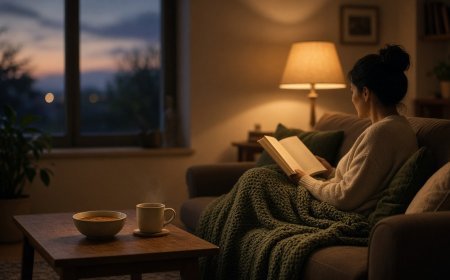
Create one deliberately bright seat. It might be an armchair angled toward the window with a small table for tea and a lamp for late afternoon. Making a single inviting spot is more useful than trying to brighten every corner equally, and it gives you a natural place to sit with a book, a laptop, or a phone call while the light lasts.
Keep sightlines low near windows. Low sills, low-backed chairs, and tables that sit below window height let light and the view travel over them. Tall stacks, storage boxes, and drying racks parked in front of glass undo that. If storage has to live near a window, choose the side that gets the least direct light and keep the pile below the sill where you can.
Electric light that supports the day
Daytime electric light works best in layers rather than as one bright ceiling blast. A ceiling light gives general cover, a table or floor lamp near where you sit gives focus, and a small lamp in a dark corner stops that corner pulling the whole room down. Turning on two softer sources often feels brighter and kinder than one harsh one at full power.
Bulb tone matters. Very warm bulbs can make a daytime room feel sleepy and yellow, while very cool bulbs can feel like an office. Many people find a middle, daylight-leaning tone easiest for daytime tasks, reserving warmer bulbs for evening lamps. Whatever you choose, consistency helps: mixed tones in one room can make whites look oddly different from each other.
Put lamps where people actually are. A beautiful lamp on a sideboard nobody sits near is decoration. The same lamp beside the chair where you read the post is useful light. If a socket is in the wrong place, a longer cord run safely along a wall, not across a walkway, or swapping which lamp lives where can solve it without an electrician.
A one-hour brightness reset
If the whole house feels dim, do not try to fix every room. Pick the room you spend most daylight hours in and give it one focused hour. Wash the windows, clear the sills, dust the bulbs and shades, move one dark piece of furniture or textile, and place one chair well. Stop there. Living with that change for a few days tells you more than a whole weekend of rearranging.
Invite a second pair of eyes, literally. Sit in your usual spot and ask someone to stand at the door and describe where the room looks darkest and where their eye goes first. We stop seeing our own clutter and shadow patterns. A fresh description often points to one obvious move, like the plant that has grown into a small tree across the top of the glass.
Keep a short note of what worked, room by room, on your phone or a card in a drawer. Winter returns, furniture drifts, plants grow. Next October you will not remember that moving the bookcase six inches and washing the kitchen glass made the biggest difference, but a two-line note will. Brightness, in most homes, is maintenance rather than a makeover.
Finally, be patient with the season itself. No arrangement of mirrors and cushions changes the fact that December afternoons are short. What these changes can do is make the light you have go further, make daytime rooms pleasanter to work and rest in, and give you one or two genuinely cheerful corners. For many households, that is enough to make winter at home feel noticeably kinder.
What's Your Reaction?
 Like
0
 Dislike
0
 Love
0
 Funny
0
 Angry
0
 Sad
0
 Wow
0