





























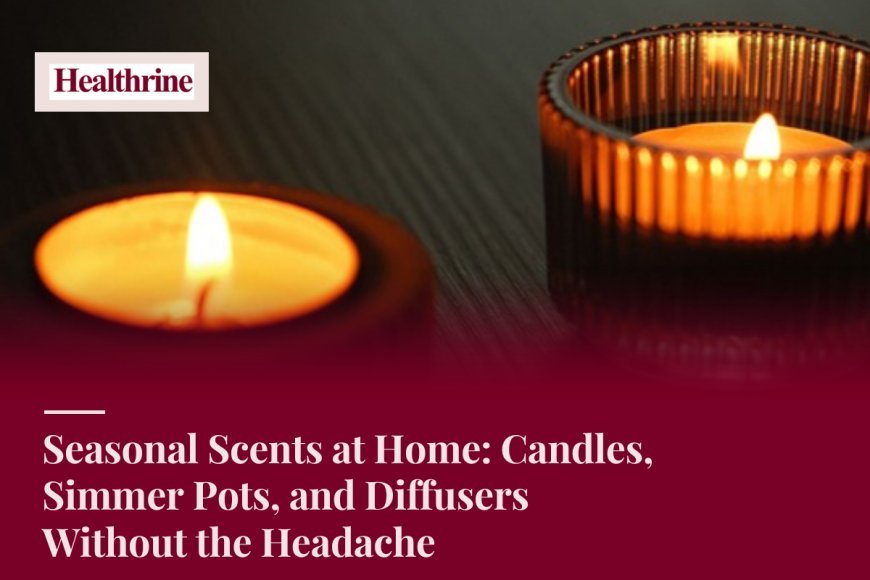
Seasonal Scents at Home: Candles, Simmer Pots, and Diffusers Without the Headache
Few things signal the change of season quite like scent. A pot of orange peel and cinnamon on the stove. A candle that smells faintly of pine. The first whiff of cloves when someone opens a box of holiday decorations. For many people, these smells are part of what makes a home feel warm and settled in late fall.
They can also be a lot. Anyone who has walked into a room with three competing candles and a plug-in air freshener knows that strong fragrance can feel heavy fast. Some people are simply more sensitive to scent than others, and what smells cozy to one person can feel overwhelming to the guest on the couch.
This guide is about enjoying seasonal scents in a gentle, considerate way. It focuses on comfort and atmosphere, plus the safety basics for flames, heat, kids, and pets. It isn't about using fragrance for any health purpose.
Start With Less Than You Think
The most useful rule for scenting a home is to aim for a hint, not a cloud. A good test is that you notice the scent when you walk into the room and then mostly stop noticing it after a few minutes. If you can still smell it strongly from the hallway, it's probably too much.
A few ways to keep things light:
- Use one scent source per room rather than layering several
- Choose small candles or short diffuser sessions instead of running something all day
- Pick simple, single-note fragrances like vanilla, orange, or cedar over complex blends
- Give your nose a break by turning things off for a few hours, since we tend to stop noticing familiar smells and turn them up without realizing it
If you're sharing space with roommates, a partner, or guests, it's kind to ask how they feel about fragrance. Some people find strong scents bothersome, and an unscented home is a perfectly cozy choice too.
When you're shopping, it can help to read labels and product descriptions with a skeptical eye. Words like "natural" or "clean" don't tell you much about how strong a fragrance will be. Smelling a product in the store, or buying a small size first, is a low-cost way to find out whether you actually enjoy it in a closed room at home. If a scent starts to feel heavy after an hour, that's useful information for the next purchase.
Simmer Pots: The Gentlest Option
A simmer pot is just water and a few aromatic ingredients warmed on the stove. It's one of the softest ways to add seasonal scent, and you probably already have what you need.
Classic combinations:
- Orange slices, a cinnamon stick, and a few whole cloves
- Apple peels, a slice of fresh ginger, and a pinch of nutmeg
- Lemon, a sprig of rosemary, and a splash of vanilla extract
- Cranberries, orange peel, and a few sprigs of pine or fir from the yard
Fill a small pot about two-thirds with water, add your ingredients, bring it to a gentle simmer, then turn the heat to low. Check it every 20 to 30 minutes and top up with water so it never runs dry, which can scorch the pan. Turn it off when you leave the kitchen or the house, and never leave a pot on the stove overnight.
A slow cooker on low with the lid slightly ajar is another option many people like, since it doesn't need as much watching. The same rule applies: keep an eye on the water level and switch it off when you head out.
Candles Without the Worry
Candles add soft light as well as fragrance, which is a big part of their winter appeal. The National Fire Protection Association (NFPA) offers a few clear safety basics worth following every time:
- Keep candles at least one foot away from anything that can catch fire, including curtains, books, and holiday decorations
- Never leave a lit candle unattended; blow it out when you leave the room or go to sleep
- Avoid candles in bedrooms and other places where people may fall asleep
- Use sturdy holders on a stable, uncluttered surface
- Keep candles out of reach of children and pets
Trimming the wick to about a quarter inch before each use can help reduce smoke and soot. If you love the glow but not the flame, battery-operated candles look surprisingly real now, and NFPA suggests them as a safer alternative. Some people pair a flameless candle with a very light scent source elsewhere in the room.
Diffusers, Kids, and Pets
Reed diffusers and plug-in or ultrasonic oil diffusers are popular because they run without a flame. They still deserve some care.
Keep diffusers and oil bottles well out of reach of young children, and store refill bottles closed and up high. Concentrated oils aren't meant for skin contact or swallowing, so a curious toddler and an open bottle are not a good mix.
Pets need special attention. The ASPCA notes that concentrated essential oils can be harmful to cats and dogs, and that cats are especially sensitive. Its guidance suggests that if you do use a diffuser, it should be used briefly in an area your pet can't reach and can leave. Homes with pet birds should skip diffusers altogether, according to the ASPCA. If your pet has breathing trouble, ask your veterinarian before using any scented product. And if a pet seems unwell after being around a scent, such as drooling, vomiting, wobbling, or coughing, move them to fresh air and call your vet.
When in doubt, a simmer pot of plain fruit peels or a bowl of fresh greenery is a pet-friendlier way to bring the season indoors.
Fresh Air Makes Everything Smell Better
Ventilation is the quiet partner to any scent plan. Even in cold weather, cracking a window for a few minutes or running the kitchen exhaust fan can keep fragrance from building up and leave a room feeling lighter. It also helps clear cooking smells, which means you may need less scent to begin with.
A few other tricks keep a home smelling fresh without adding fragrance at all:
- Empty kitchen trash daily during busy cooking weeks
- Wash throw blankets and pillow covers that sit near the couch
- Leave a small open box of baking soda in the fridge and near the trash can
- Bring in natural textures like a bowl of clementines, a pine bough, or a few cinnamon sticks tied with string; they add a faint, natural scent and look festive
These steps often make more difference than another candle.
Building Your Own Seasonal Scent Ritual
Scent works best when it's tied to a moment rather than running in the background all day. A few ideas:
Light a candle for dinner and blow it out when the dishes are done. Start a simmer pot on Sunday afternoon while you plan the week. Run a diffuser for half an hour while you read, then turn it off.
Rituals like these let you enjoy the fragrance fully, then let the house return to neutral. That contrast is part of the pleasure. It also keeps guests and family members comfortable and makes it easier to stick to the safety basics, since you're paying attention while the scent is on.
Seasonal scents can be a simple, inexpensive way to make a home feel warm during the darker months. Keep the amount small, give the room some air, watch the flame, and be mindful of the little ones and the four-legged ones. That's a recipe for cozy without the headache.
What's Your Reaction?
 Like
0
 Dislike
0
 Love
0
 Funny
0
 Angry
0
 Sad
0
 Wow
0