


















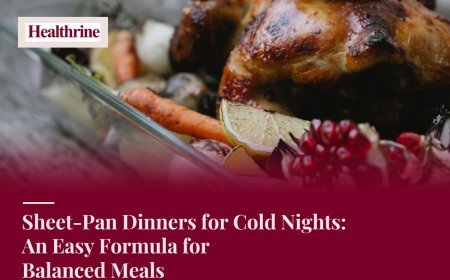










Sheet-Pan Dinners for Cold Nights: An Easy Formula for Balanced Meals
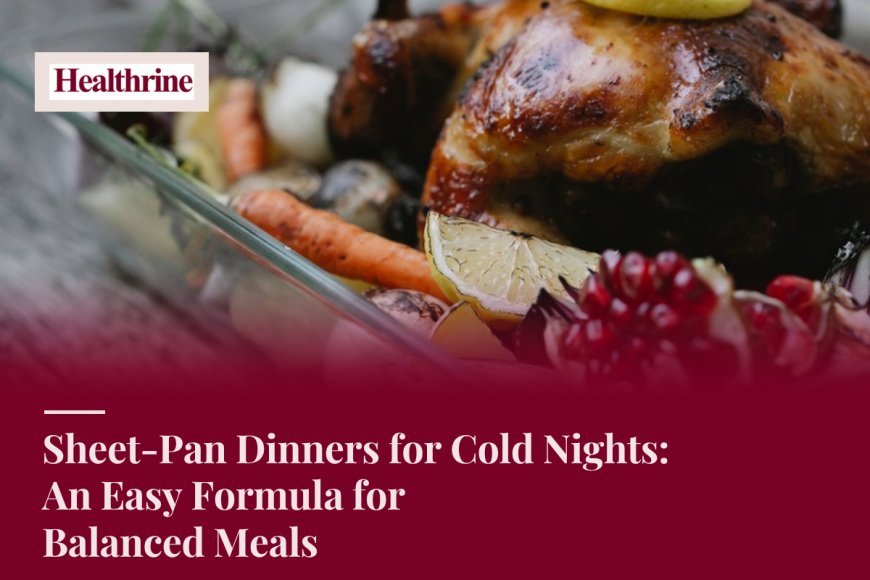
The sheet pan is winter cooking's most forgiving tool. One sturdy tray, a hot oven, ingredients cut to sensible sizes, and dinner largely looks after itself while you change out of work clothes, supervise homework, or simply sit down for the first time all day. No piles of pans, no last-minute juggling of four stove rings, no recipe that requires your full attention at the exact moment the house is at its loudest.
What follows is a formula rather than a set of fixed recipes, because formulas survive real kitchens. Once you know the proportions and the order in which things go into the oven, you can build a balanced tray from whatever the shop had, whatever the freezer is holding, and whatever your household will actually eat. That flexibility is the whole value of the method in the darker months.
By balanced, we mean the ordinary plate idea most of us learned in some form: plenty of vegetables, a sensible portion of protein, and a starchy element to make it a meal. The United States Department of Agriculture's MyPlate guidance suggests filling half the plate with vegetables and fruits, with vegetables the larger share, a quarter with protein foods, and a quarter with grains. A sheet pan can be built to roughly that shape, then served straight from the tray.
The formula, in tray-sized proportions
For a standard large sheet pan feeding about four, think in handfuls and rows rather than grams. Choose one protein, roughly a pound to a pound and a half of chicken pieces, sausages, firm fish, chickpeas, or extra-firm tofu. Choose two or three vegetables in a generous pile, more than looks polite, because they shrink. Choose one starchy element, such as potato wedges, sweet potato chunks, or parboiled grains added later, unless bread on the side is doing that job.
Season in one big bowl where you can. Oil, salt, pepper, and one clear flavor direction is enough: smoked paprika and garlic, lemon and herbs, curry powder and a pinch of cinnamon, mustard and thyme. Toss everything with your hands so each piece is filmed with oil, which helps browning and stops sticking. Two flavor directions on one tray is a crowd. Pick the one your household votes for and write the loser on next week's list.
Space is an ingredient. Vegetables crowded shoulder to shoulder steam in their own juices and emerge pale and soft, which is fine for soup and sad on a tray. Use the largest pan you own, spread everything in a single layer with small gaps, and use two pans rather than one heaped one. Swap their oven positions halfway if they are on different shelves, so both get their turn near the heat.
Heat the oven properly before the tray goes in. Most sheet-pan dinners like a genuinely hot oven, around four hundred to four hundred and twenty-five degrees Fahrenheit for roasting vegetables and chicken pieces, though your oven and ingredients have the final say. A pan that goes into a still-climbing oven spends its first ten minutes steaming. Preheat fully, and warm the empty tray in the oven if you want the undersides to start sizzling on contact.
Timing is the only real skill
Different ingredients finish at different times, and the entire technique of sheet-pan cooking is respecting that. Hard, dense vegetables such as potatoes, carrots, parsnips, winter squash, and beetroot need the longest. Chicken pieces and sausages sit in the middle. Quicker vegetables, peppers, zucchini, green beans, cherry tomatoes, and leafy greens at the very end, need the least. Cut size is your adjustment dial: smaller pieces cook faster.
Work backwards from serving time. Put potatoes and root vegetables in first, in their seasoning, for fifteen to twenty minutes alone. Add chicken or sausages and the mid-speed vegetables, roast another twenty minutes or so, then add anything quick or delicate for the final stretch. Fish usually joins late and briefly. Cooked chickpeas can go in with the middle group to crisp at the edges, while tofu benefits from space and a full share of the heat.
Use a food thermometer for meat and poultry rather than color and optimism. Guidance from the United States Department of Agriculture's Food Safety and Inspection Service gives a safe minimum internal temperature of one hundred and sixty-five degrees Fahrenheit for all poultry, measured in the thickest part away from bone, one hundred and forty-five degrees with a rest for steaks, chops, and fish, and one hundred and sixty degrees for ground meats. Check the largest piece, and check more than one if sizes vary.
Rest the tray for a few minutes before serving, loosely covered if you like. Juices settle, vegetables finish steaming in their own heat, and you gain exactly the pause you need to put plates out, make a quick sauce, and call people. A squeeze of lemon, a spoonful of yogurt with herbs, a drizzle of a good oil, or a handful of something green and fresh on top can lift a whole tray at the table for almost no effort.
Combinations that respect the season
A chicken, potato, and carrot tray with thyme and lemon is the version to learn first, because it teaches the timings and pleases nearly everyone. Chicken thighs, skin on if you like, wedges of potato, chunks of carrot, and wedges of onion, with halved lemon squeezed over at the end. Serve with a green vegetable cooked quickly on the stove, or a bag of leaves dressed simply, and dinner has both comfort and freshness in it.
A sausage, squash, and apple tray leans into autumn. Good sausages, wedges of butternut or other winter squash, red onion, and apple pieces added for the last stretch so they soften without collapsing. Mustard on the side, or whisked with a little honey and vinegar as a warm dressing, suits the sweetness of the vegetables. Choose sausages your household already likes rather than experimenting on a tired Tuesday.
A chickpea, cauliflower, and sweet potato tray with curry spices serves anyone avoiding meat without feeling like a side dish promoted beyond its abilities. Chickpeas drained and dried well, cauliflower in generous florets, sweet potato in smaller chunks so it keeps pace, red onion throughout, and a sauce of yogurt, lemon, and herbs at the table. Warm flatbreads turn it toward the MyPlate grains quarter if you want them.
Whatever combination you choose, make a note of it on the fridge in one line: what went in, roughly when, and whether it worked. Sheet-pan cooking improves by household data, not by theory. After a month you will own four or five trays your family asks for by name, each adapted to your oven, your pan, and your people, which is more valuable than a folder of other people's recipes.
Cold-night habits that make it easy
Keep a short standing list of sheet-pan-friendly supplies: potatoes and onions that store well, carrots, a winter squash, lemons, garlic, frozen peas or green beans for a late addition, chickpeas in cans, and the spices your household actually uses. With protein bought fresh or thawed in time, that cupboard makes dinner possible on the day the plan fails, the train is late, or the weather argues against another trip out.
Prep in the order the oven needs things, and clean as the first tray roasts. The cook who starts potatoes, then chops the quicker vegetables into their bowl, then washes the board and knife while heat does the work, finishes the evening with a nearly clean kitchen. Line pans with parchment or foil on nights when energy is short, accepting slightly less browning underneath as a fair trade for a two-minute wash-up.
That, in the end, is the case for the sheet pan on cold nights. Not novelty, not virtue, just a hot tray that feeds people well, respects the cook's evening, and adapts to what the season and the shop provide. Learn the proportions, respect the timings, check temperatures where it matters, and write down what worked. Dinner is handled. The rest of the evening is yours.
What's Your Reaction?
 Like
0
 Dislike
0
 Love
0
 Funny
0
 Angry
0
 Sad
0
 Wow
0