


























Focus Mode Setup: Automate Quiet Hours Without Going Offline

Going offline sounds pure. It also collapses the first time a partner texts about pickup, a lead pings about a client, or you need maps on the way out the door. The useful middle is quieter than a detox and sharper than “I’ll just be better about my phone.”
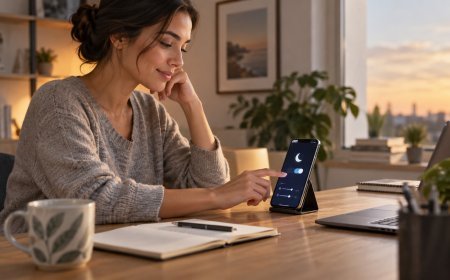
Focus Mode setup is how you automate quiet hours without disappearing. You build named Focus profiles on the phone and laptop you already own, give each one a short allow-list, schedule them like calendar blocks, and let the OS enforce the boundary while you stay reachable to the few people and tools that matter. This is digital wellness infrastructure—not a home-screen makeover, not a phone parked on a couch, not another morning without a device. Those are different habits. This one is automation.
What Focus Mode is for (and what it is not)
Focus Mode (and Do Not Disturb cousins on other platforms) is a switch that says: most notifications wait; a short list may break through. Quiet hours are the windows when that switch is on by default—deep work, dinner, evenings, sleep—without requiring you to remember to mute yourself every time.
It is not going offline. Calls and messages from allow-listed people still land. Alarms still ring. You can still open an app on purpose. You are changing who gets to interrupt you, not whether you own a phone.
It is also not notification batching, though the two play well together. Batching is about when you check. Focus Mode is about what is allowed to tap your shoulder between checks. You can run both. This article is the shoulder rules.
And it is not a declutter project. You do not need a new wallpaper, a emptied dock, or a basket by the sofa to make Quiet Hours work. Those can be bonuses later. The core is schedules, allow-lists, and filters.
Build named Focus profiles (not one vague “Do Not Disturb”)
One catch-all mute fails because life has chapters. Name three or four profiles you will actually use:
• Work Focus — deep blocks and meeting-heavy stretches
• Personal / Family Focus — evenings and weekends when work should wait
• Sleep / Night Focus — overnight quiet with a tiny breakthrough list
• Optional: Driving or Fitness if your OS offers them and you will keep them
Naming matters. “Work Focus” reminds you what the allow-list is for. A nameless DND becomes a guilt button you never trust.
On iPhone and iPad, create Focus modes in Settings and customize who and which apps can notify. On Android, use modes / Do Not Disturb schedules and exception contacts. On Mac and Windows, mirror the idea with Focus or Focus Assist so the laptop does not undo the quiet phone. Digital wellness that only lives on one device trains you to twitch toward the other.
The allow-list: ruthless and short
Quiet hours live or die on the breakthrough list. Keep it small enough that you still feel the quiet.
A working allow-list usually looks like this:
• People: partner, kid’s school or caregiver, one work lead—not the whole company directory
• Apps: calendar alerts if you need them, one time-sensitive work chat if your role requires it
• Everything else: silenced, delivered quietly, or held until you open it
Write the list once on paper before you tap Settings. Renegotiating mid-scroll is how the whole team ends up on “VIP.” Clarity beats vague always-on anxiety.
If your job truly requires instant response on one channel, allow-list that channel in Work Focus and still silence social, shopping, news, and secondary email. Focus Mode is not all-or-nothing. It is preferential interruption.
Repeaters and VIP contacts are features, not loopholes—use them for the humans who should break through. Do not VIP every group chat that feels loud.
Schedule quiet hours like meetings you keep
Manual Focus that depends on memory fails on busy Tuesdays. Automate.
Steal a default week, then edit to your life:
• Work Focus: weekdays 9:00–12:00 and 13:30–16:30 (or your real deep blocks)
• Personal Focus: weekdays 18:00–21:00; weekends mid-morning if you want a soft start
• Sleep Focus: nightly from your wind-down time until morning alarm
Put the same windows on your calendar for a week so you see them. If Focus is invisible, you will “just leave it off for this one meeting” and forget to turn it back on.
Parents and caregivers: shift Personal Focus around pickup and bedtime. Keep Sleep Focus sacred. Work Focus can pause for school emergencies if those contacts are allow-listed—that is the point of the list, not a reason to abandon schedules.
Travel days: keep Sleep Focus and one shorter Work Focus. Perfect automation on a perfect home week is less useful than a thinner schedule that still fires in a hotel.
Filters that make quiet hours feel quieter
Allow-lists stop buzzes. Filters stop the visual noise that still pulls your thumb.
Useful OS-level moves (names vary by platform; the jobs are the same):
• Hide or mute lock-screen previews for non-allowed apps during Focus
• Dim or hide notification badges on social and shopping during Work and Sleep Focus
• Silence Time Sensitive exceptions except for the few you truly need
• On desktop: pause banner pop-ups for email and chat outside Work Focus windows
• Share Focus status with coworkers if your tools support it, so silence does not look like a disappearance
Optional: different home screens or Lock Screens tied to a Focus, if your OS offers that—only if it helps you, not as a redesign project. The article is quiet hours, not interior design for icons.
Cross-device: phone and laptop must agree
A quiet phone next to a laptop that still throws Slack toast is not quiet hours. It is a relocation of the fire alarm.
Mirror the profiles:
• Same Work Focus hours on computer Focus / Focus Assist
• Same allow-listed people for calls and texts where the OS syncs
• Email client: notifications off outside windows, or only VIP
• Browser: no site notifications for news and shopping—turn those off once, forever
If you use a watch, decide whether it inherits Focus. A buzzing wrist during Sleep Focus is a policy leak. Most people sleep better when the watch follows the phone’s night schedule.
Work culture without drama
Tell the people who need to know in one calm sentence: “I run Focus during deep work and evenings; call if it cannot wait.” Status messages help on teams that live in chat. Match the culture you are in—secret rules create stories; visible rules create trust.
Managers: model the schedule. If leadership expects instant reply at 9:40 p.m., quiet hours become a privilege for people without power. Digital wellness that only works for some roles will not stick as a team habit.
If a client relationship requires true always-on, shrink the scope: Personal and Sleep Focus still silence everything except that client thread and family. You are not failing Focus Mode. You are sizing it to the paycheck.
A setup afternoon that does not become a hobby
Block forty-five minutes once. Do not redesign your life.
1) Name three Focus profiles
2) Write the allow-list on paper (five or fewer breakthrough contacts to start)
3) Schedule Work, Personal, and Sleep windows
4) Turn on the same idea on the laptop
5) Send the one-sentence note to partner / key coworker
6) Live with it for a week before you tweak
Skip buying a new app that promises to save you from apps. The OS already has the switches. Configuration beats collection.
Troubleshooting the usual snags
“I feel anxious in the quiet.” That is often withdrawal from novelty, not a crisis. Keep the schedules for two weeks before you judge the experiment. Peeking during a scheduled Focus is data—note which app you reached for, then silence that one harder.
“Important things will miss me.” Put those humans on the allow-list. Ask them to call for true emergencies. Most “important” things can wait ninety minutes; the ones that cannot should ring.
“Focus turns off and I forget.” Prefer automation over manual toggles. Add a calendar reminder for the first week. On desktop, set Focus to turn on with the same hours so the phone is not the only adult in the room.
“Group chats explode.” Mute the thread; allow-list people, not channels, when you can. Or allow the chat in Work Focus only.
“Nights still feel loud.” Tighten Sleep Focus: fewer apps, fewer people, earlier start time. Quiet hours for sleep are a different profile from Work Focus—do not make one blunt tool do both jobs.
“This feels like another productivity cult.” Then simplify. One Sleep Focus and one Work Focus with tiny allow-lists beat four theatrical profiles you never enable.
How this differs from habits you may already use
If you already batch notifications into check windows, Focus Mode is the wall between windows. Batching decides when you visit the inbox; Focus decides whether the inbox can visit you.
If you already keep an analog first hour, keep it. Morning offline is a human-paced start. Focus Mode is the daytime and evening automation that continues after you pick the phone back up. They stack; they are not clones.
If you already park the phone before bed, keep that too. Parking is environment. Sleep Focus is the software layer that still protects quiet if someone hands you the phone or you pick it up for the alarm. Environment plus automation is sturdier than either alone.
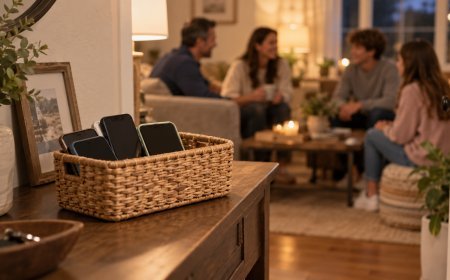
What this article is not: a home-screen declutter, a couch basket ritual, or a challenge to hide every icon. Those can be separate experiments. Quiet hours work even on a messy home screen if the schedules and allow-lists are honest.
A two-week experiment without scoreboards
Week one: three profiles, schedules on, allow-list of five or fewer. No self-scolding—just reps. Notice where you override Focus and why.
Week two: remove one noisy app from breakthroughs, align laptop with phone, and keep only the overrides that were real (school, on-call, travel). Drop theatrical profiles.
Ask only ordinary questions after two weeks:
• Did deep work blocks get fewer shoulder taps?
• Did evenings feel less like a second shift of badges?
• Did the allow-list stay short, or did it quietly grow?
Keep what works. Automation that survives October is worth more than a perfect Settings screenshot in September.
Optional upgrades once the basic quiet hours stick
Only after two steady weeks, consider light upgrades: Focus filters that hide work apps in Personal mode, a Driving Focus that silences everything except navigation and your partner, or a shared family calendar note that evenings run Personal Focus. Upgrades are rewards for a working system, not prerequisites.
Skip anything that requires a third-party “focus coach” subscription to unlock silence. The point of OS Focus Mode is that quiet hours should not need another login.
Bottom line
Focus Mode setup is how you automate quiet hours without going offline: named profiles, a short allow-list, scheduled windows, and the same rules on phone and laptop. You stay reachable to the few people who should break through. Everyone else waits.
Start with Sleep Focus tonight and Work Focus tomorrow morning. Write five breakthrough contacts or fewer. Let the OS enforce the boundary so willpower is not the product. That is ordinary digital wellness—and ordinary is exactly when quiet hours start to hold.
What's Your Reaction?
 Like
0
Like
0
 Dislike
0
Dislike
0
 Love
0
Love
0
 Funny
0
Funny
0
 Angry
0
Angry
0
 Sad
0
Sad
0
 Wow
0
Wow
0