


























5 Simple Daily Habits to Help You Downshift Stress

Most of the day's tension does not arrive as a crisis. It arrives as a shoulder that never dropped after the third video call, a tab bar that never went quiet, a walk to the kitchen that still had the phone in it. By late afternoon your body is still half in the inbox.
This is a digital wellness habit piece-not a clinical guide. No diagnosis talk, no treatment claims, no products in a bottle. Just five small resets you can attach to moments you already have: after you hit send, when a meeting ends, when you stand up, when a notification cluster hits. The word "neurowellness" gets used like a brand. Here it only means this: give your head a few boring, repeatable off-ramps from screen pace, and see if the evening feels less clenched.
Why micro-habits beat a heroic "reset weekend"
All-or-nothing detox days sound pure and usually collapse by Tuesday. Downshifting works better as tiny handoffs: ten breaths, a posture change, a short walk, a sensory swap, one notification boundary. Pick a version you will still do on a messy Wednesday. If a habit needs a special room or a special app, it will lose to the next ping.
1) A longer exhale at the desk (60-90 seconds)
You do not need a branded method. Sit back. Unclench the jaw. Breathe in through the nose on a comfortable count. Make the exhale a little longer than the inhale. Repeat for a minute. That is the whole drill.
Anchor it to a digital moment you already have: after you send a tense email, after you leave a call, before you open the next tab cluster. The point is a seam between two screen tasks. If counting feels fussy, skip the numbers and make the out-breath unhurried. This is a pace change, not a personality upgrade.
2) A 20-second posture and gaze reset
Screens fold people forward. The micro-habit is not a perfect desk setup. It is a frequent unfolding.
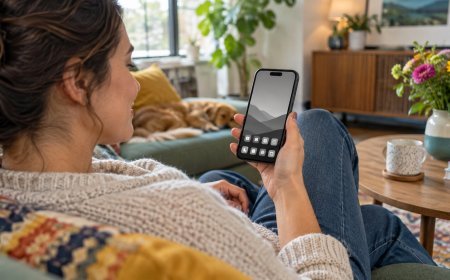
Every time you finish a message or a meeting, do one pass: feet on the floor, sit bones back, screen up so your chin is not hunting the laptop, shoulders dropped like you put down a bag. Look farther than the monitor-a window or the far wall-for a slow blink. If you work on a phone, bring it up instead of dropping your head, then park it so the gaze can leave the glass. Do this often and badly rather than once with perfect gear.
3) An 8-minute walk with the phone in a pocket
Not a workout. Not a podcast-and-stride productivity loop unless that already relaxes you. A short loop around the block, down the hall and back, or to a mailbox you do not need to check.
The rule that makes it a stress reset instead of another screen: phone stays in a pocket or on the desk. If you need it for safety, fine-screen dark, no "just checking." Park the walk after a hard call, after lunch, or at the first afternoon slump. Bad weather version: stairs or a window. The point is leaving the rectangle, not hitting a step count.
4) A 90-second sensory swap
When the day feels loud, change one channel on purpose. Not all of them. One.
- Cold water on the wrists or a splash on the face
- Step outside or crack a window and name three sounds that are not your devices
- Switch the room from overhead glare to a lamp
- Hold something ordinary with texture-a mug, a sweater cuff, the desk edge-and notice it for ten seconds
- Mute the extra tab audio you forgot was playing
Screen days are oddly narrow: bright, close, noisy in a thin way. A different temperature, distance, or sound is a downshift even when the to-do list does not move. A $12 lamp you already own beats a cart of "wellness" hardware.
5) One notification seam you keep every day
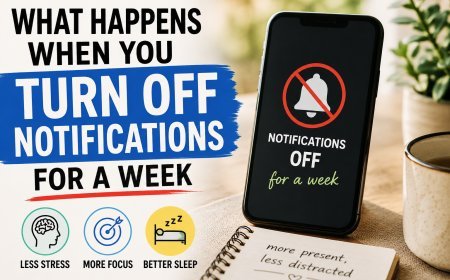
The fifth habit is digital on purpose. Choose one daily seam where the phone stops being a roommate.
- First 20 minutes after you wake: no inbox, no headlines (alarm only)
- The walk above: screen dark
- Dinner, or the first 15 minutes after you get home: phone on a shelf
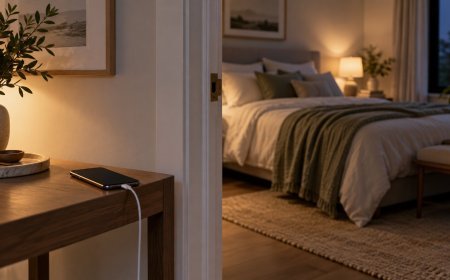
- The last stretch before bed: charging spot that is not the pillow
Pick one seam this week, not four. Tell anyone you live with in one calm sentence so it does not look like a mood. If your job is actually on-call, make the seam narrower, not fake. A 15-minute allowlist window is still a seam. A vague "I should use my phone less" is not.
How to attach all five without building a new religion
You will not do a perfect set every day. Minimum version: after a call, longer exhale plus posture/gaze (about two minutes); once in the afternoon, the walk or the indoor stand-in; when the day spikes, one sensory swap; one notification seam that does not move. Stack onto things that already happen-end of meeting, kettle on, closing the laptop. Kids copy the boring version: a parent who stands up, looks out the window, and leaves the phone on the counter teaches more than a lecture.
When a habit feels silly-and when to shrink it
If breathing at your desk feels ridiculous, do it with your eyes on the window. If you only remember at 9 p.m., attach the posture reset to dishes and move the walk to tomorrow's first gap. If the day is still a lot, shrink to the two-minute pair (exhale + gaze) and the one notification seam. These habits change the texture of a screen-heavy day. They are not a promise that the day gets small.
What this is-and what it is not
This is everyday digital wellness: breath, posture, a short walk, a sensory swap, and one honest phone seam. Ways to downshift the pace a screen day puts in your shoulders.
It is not a treatment plan, a diagnosis tool, or a substitute for care if you want that kind of support. It is not a supplement stack and not a challenge with a leaderboard. Some days will be messy. The win is returning to the same small off-ramps tomorrow without drama.
Start with the two-minute pair after your next call, and one notification seam tonight. Keep the ones that still happen when you are tired. Ordinary is the goal. Ordinary is when a stress reset stops being content and starts being how you leave a rectangle.
What's Your Reaction?
 Like
0
Like
0
 Dislike
0
Dislike
0
 Love
0
Love
0
 Funny
0
Funny
0
 Angry
0
Angry
0
 Sad
0
Sad
0
 Wow
0
Wow
0