


























The Analog First Hour: Start the Day Without Your Phone

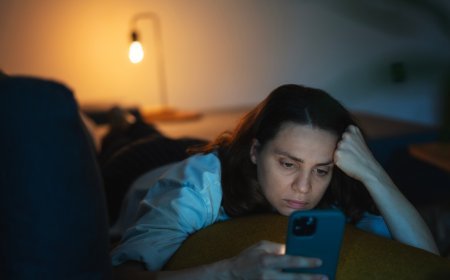
Most mornings do not begin. They boot up. The phone lights the room before your feet hit the floor, and suddenly you are hosting everyone else’s priorities in your head—news, group chats, a sale you did not ask for—before you have hosted yourself.
The analog first hour is a digital wellness routine with one clear rule: no phone for the first stretch of the day. Not a forever vow. Not a clinic. Just sixty minutes (or a shorter starter version) where your hands hold coffee, keys, a notebook, a kid’s lunchbox—anything but a glowing rectangle. Replacement habits matter as much as the ban, because an empty hour without a plan is just a waiting room for willpower failure.
Why the first hour is leveraged
Morning attention is clean. Whatever you pour into it spreads. If you pour in urgency and comparison, the day inherits that mood. If you pour in a body that is awake, a short plan on paper, and one human-paced task, the day inherits that instead.
You do not need mystical language. You need fewer unfinished loops before breakfast. A phone-free morning is simply a delay on those loops until you are standing upright and less suggestible.
This is lifestyle hygiene. It will not diagnose or fix anything medical. It will give your digital wellness routine a front door that is not an app icon.
The rule, stated so you cannot negotiate it half-asleep
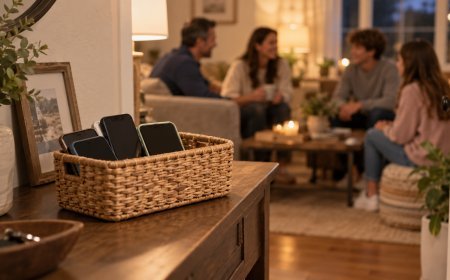
Phone stays in its overnight parking spot until the analog hour ends. Charging in the kitchen, hallway, or a dresser across the room beats charging under your pillow. If the phone is within arm’s reach, you will “check the time” and wake up inside someone else’s agenda.
Alarm solution: cheap alarm clock, wearable alarm, or phone parked far enough that walking to it counts as getting up—then you still do not open apps until the hour is done. The alarm’s only job is noise, not a portal.
Hard exceptions you decide at night, not in the fog:
• You are on-call with a real breakthrough contact already allow-listed
• You need maps for an early departure—download offline directions the night before when you can
• A family logistics text that truly cannot wait (rare; most can wait forty-five minutes)
Write the exception list once. Renegotiating every morning is how the phone wins.
Replacement habits: fill the hour on purpose
Removing the phone without a substitute creates itchy boredom. Build a short menu and pick from it like a cafeteria tray, not a moral exam.
Body (5–20 minutes): stretch on the floor, a short walk around the block, light mobility, shower with no podcast if that feels like a reset. Keep it gentle enough that you will still do it on low-energy days.
Fuel: make coffee or breakfast with your hands. Notice the sequence. It sounds small. It is a ritual that does not ping.
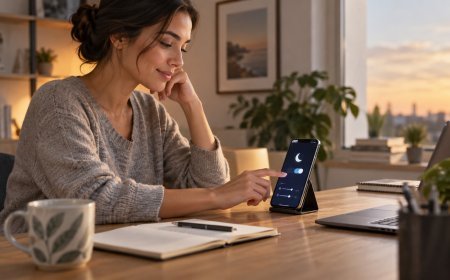
Paper plan (3–5 minutes): one notebook page—top three for the day, first next action on the hardest one, anything buzzing dumped into a parking lot list. No journaling workshop. Just externalize.
Household open: lunches, bag by the door, dishwasher nudge, laundry move. Analog mornings love tasks with a visible finish.
Quiet input: paper book, stretch of silence, or music from a non-phone speaker already in the room. Save intense news for later windows.
Rotate so the hour does not get stale. The point is a phone-free morning you look forward to slightly, not a punishment you endure.
A sample analog first hour you can steal
0:00 — Alarm across the room. Feet down. Phone stays put.
0:05 — Water, bathroom, open blinds. Light before likes.
0:15 — Coffee or tea. Three-line paper plan.
0:25 — Movement: walk, stretch, or tidy the launch pad by the door.
0:40 — Breakfast or shower.
0:55 — Bags packed, clothes decided, notebook closed.
1:00 — Phone unlock allowed. Start with calendar, not social.
Shift the clock to your life. Keep the order: body and paper before feed.
If sixty minutes feels theatrical, start with twenty. A short analog block that happens beats a heroic hour that lasts two days.
Set the stage the night before
Morning-you is not a strategist. Night-you has to stage the props:
• Phone parking spot + charger
• Notebook and pen where your hand will find them
• Clothes chosen or at least not buried
• Coffee setup ready
• Optional: book on the table, shoes by the door for a short walk
If you share space, announce the experiment without making it a household religion: “I’m keeping the first hour offline on weekdays.” Partners and kids adapt faster to visible routines than to resentful silence.
Focus tools that support the hour (without becoming the hour)
Use Sleep Focus / Do Not Disturb overnight with the same allow-list you trust for evenings. The analog hour should inherit that quiet, not invent a new settings project at 6:12 a.m.
Leave social apps off the first home screen so even after the hour, the first unlock is less sticky. The digital wellness routine continues after minute sixty; the first hour is only the opening move.
Skip buying a stack of analog gadgets on day one. A pen and a mug beat a shopping spree that becomes its own distraction.
Workdays, school days, and messy reality
Early meetings happen. Kids wake up sideways. Travel days scramble kitchens. Keep a minimum viable analog morning:
• No phone until you have stood up, drunk water, and written one line for the day
• Or: no phone until you leave the bedroom
• Or: phone only for maps after the bag is packed
On chaotic days, that minimum still counts. Identity sticks to reps, not to perfect sunrise photography.
If your job expects pre-dawn Slack, negotiate a narrower rule: work chat allow-listed, everything else batched until after the hour. Protect the spirit—delay the optional feed—even when the inbox is part of your paycheck.
What to do when you fail (you will)
You will wake up and somehow be twelve minutes into email. Do not scrap the week. Close the phone, restart the remaining analog minutes, and note what triggered the slip—boredom, fear of missing a message, habit hand-reach.
Change the environment, not your character: move the charger farther, put a paperback on the pillow, ask someone you live with to tease you lightly if you appear scrolling at 6:40.
Shame is a terrible digital wellness coach. Restart speed is the skill.
How this pairs with the rest of the day
An analog first hour works even better beside notification batching later on: three check windows, Focus mode by default, allow-list for real breakthroughs. Morning sets the tone; batching keeps the tone from dissolving at 10:15.
Evenings can mirror the idea in shorter form—park the phone before bed—but do not try to reform your entire life in one Sunday. Install the morning brick first.
A two-week experiment without scoreboards
Track with calendar checkmarks, not a sleep-score obsession. After two weeks, ask only:
• Did mornings feel less hijacked?
• Did the first work block start faster?
• Which replacement habits actually stuck?
Keep the sticky parts. Drop the theatrical ones. A digital wellness routine that survives October is worth more than a perfect September morning.
Travel, hotels, and other hostile mornings
Hotel nights are where phone-free morning plans go to die—unless you pack a tiny kit: earbuds case used as a phone stand across the room, a folded notebook page in your toiletry bag, and a decision that the first coffee happens before the first inbox. You will not get a perfect hour on every trip. You can still get a phone-free first coffee and a three-line plan written on hotel stationery.
Early flights change the math. Keep the spirit: delay social and news until you are through security. Maps and boarding passes are tools. Feeds are optional weather for your mood—check them later.
Kids, partners, and modeling without preaching
If children are part of the morning, the analog hour can look like presence: breakfast table without a second screen face, backpacks checked with hands, one song from a speaker instead of a YouTube rabbit hole. You do not need a speech about digital wellness. Kids notice what gets your eyes first.
Partners on different schedules can still support the rule by not handing you a phone “just to see this” during your block. A sticky note on the charging spot—“after the hour”—is corny and effective.
Optional upgrades once the basic hour sticks
Only after two steady weeks, consider light upgrades: a sunrise alarm lamp, a kettle you like, a dedicated morning playlist on a dumb speaker, or stretching cards on the fridge. Upgrades are rewards for a working digital wellness routine, not prerequisites. Buying gear first is how people collect props and skip the play.
Skip anything that requires an app to “unlock” your morning. The whole point of an analog first hour is that your attention does not need a login.
Bottom line
The analog first hour is a phone-free morning with a job description: wake your body, park your open loops on paper, and do one human-paced thing before you invite the internet in. Stage it the night before, start with twenty minutes if sixty feels heavy, and treat slips as data.
You are not becoming a different person. You are delaying the feed until you have met yourself. That is ordinary digital wellness—and ordinary is exactly when it starts to hold.
What's Your Reaction?
 Like
0
Like
0
 Dislike
0
Dislike
0
 Love
0
Love
0
 Funny
0
Funny
0
 Angry
0
Angry
0
 Sad
0
Sad
0
 Wow
0
Wow
0