




























A Gentle Fall Mobility Routine for Cold, Stiff Mornings
Cool mornings can make the first movements of the day feel less comfortable. You may notice tight shoulders, slower steps, or a strong desire to remain under the blankets. A gentle mobility routine can help you transition from rest to ordinary activity without turning the morning into a demanding workout.
The purpose is comfortable movement, not forcing a deeper stretch. Move slowly, stay within a pain-free range, and use a chair or wall for support. If you have an injury, balance concern, or medical condition that affects movement, follow guidance from a qualified professional.
Warm the room and yourself first
Cold muscles rarely appreciate sudden, intense stretching. Put on a layer, take several easy breaths, and walk around the room for a minute. Swing the arms naturally and let the body warm before asking it to move farther.
Begin with breathing and posture
Sit or stand tall without becoming rigid. Inhale comfortably through the nose and exhale slowly. Let the shoulders soften. Repeat for five breaths. This short pause helps you notice how the body feels today instead of automatically copying yesterday's range.
Gentle neck turns
Keep the chin level and slowly look toward one side, return to center, then look toward the other. Repeat several times without circling the neck or pushing with a hand. The movement should feel smooth and easy, not like a competition to see behind you.
Shoulder rolls and arm reaches
Roll the shoulders up, back, and down five times, then reverse direction. Reach one arm forward and the other back as if moving through water. Keep the ribs relaxed. These motions can be useful after sleeping in one position or hunching over a phone early in the day.
Open the upper back
Interlace the fingers or hold the hands apart in front of you. Gently reach forward while letting the upper back widen, then release. Next, place the hands on the hips and lift the chest slightly without throwing the head back. Alternate the two positions slowly.
Wake up the wrists and ankles
Make soft fists, open the fingers wide, and circle the wrists. While seated or holding a support, lift one foot and draw small ankle circles in both directions. These smaller joints do a surprising amount of work during typing, walking, and household tasks.
Try a supported side bend
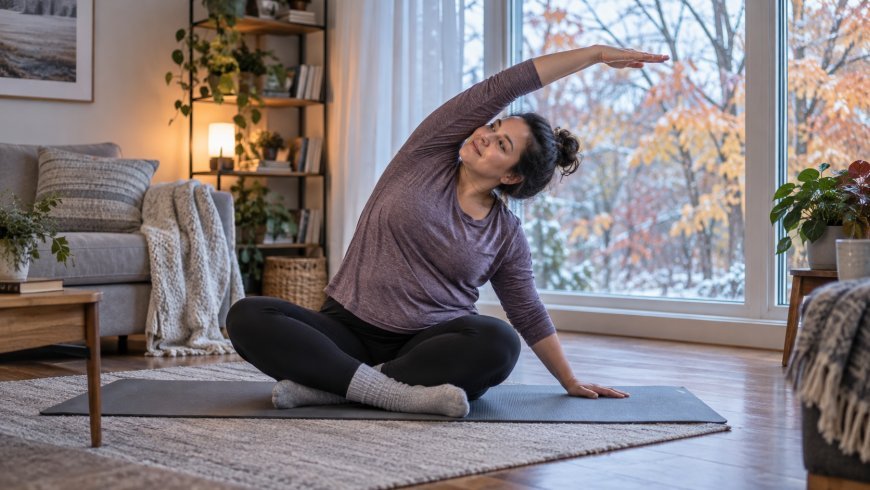
Stand with feet comfortable apart and one hand on a chair. Reach the other arm upward and lean slightly away, keeping both feet grounded. Return to center and change sides. Think about creating length rather than collapsing toward the floor.
Use gentle hip circles
With hands on the hips or a stable support, make small circles through the pelvis. Keep the knees soft. Start with a range that feels almost too easy and enlarge it only if the movement remains comfortable.
Practice a chair-assisted squat
Stand in front of a sturdy chair with feet at a natural width. Send the hips back and bend the knees as if beginning to sit, then return to standing. You may touch the chair or complete a full sit-to-stand. Keep the movement controlled and use hands for support if needed.
Finish with an easy march
March gently place for thirty to sixty seconds, lifting the feet only as high as comfortable. Let the arms move naturally. This connects the separate mobility exercises to the rhythm of walking and leaves the body ready for the next part of the morning.
How long should the routine take?
Seven to ten minutes is enough for many mornings. On a busy day, choose three movements and complete them carefully. On a slower day, repeat the sequence. Consistency matters more than duration, and the routine should leave you feeling prepared rather than exhausted.
Adjust it to the day
Some mornings will feel looser than others. Reduce the range after poor sleep, hard exercise, or long travel. Stop if you feel sharp pain, dizziness, numbness, or unusual shortness of breath. Gentle mobility should support the day; it should never require pushing through warning signs.
The bottom line
A fall mobility routine can turn a stiff transition into a calmer start. Warm up first, move the major joints gradually, use support, and finish with light walking. The best routine is not the most impressive one—it is the one you can repeat comfortably through the colder season.
What's Your Reaction?
 Like
0
Like
0
 Dislike
0
Dislike
0
 Love
0
Love
0
 Funny
0
Funny
0
 Angry
0
Angry
0
 Sad
0
Sad
0
 Wow
0
Wow
0