





















Simple Fiber Habits for Steadier Everyday Energy
Afternoons do not usually fail because you are lazy. They fail because breakfast was coffee, lunch was something fast you ate standing up, and nothing on the plate had enough bulk to last. By 3 p.m. you are hunting the cabinet like it owes you an apology.
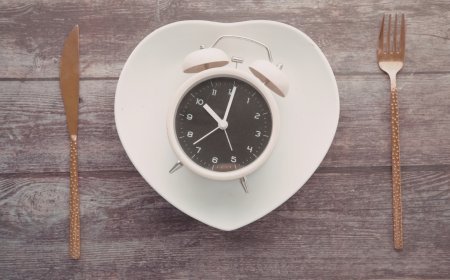
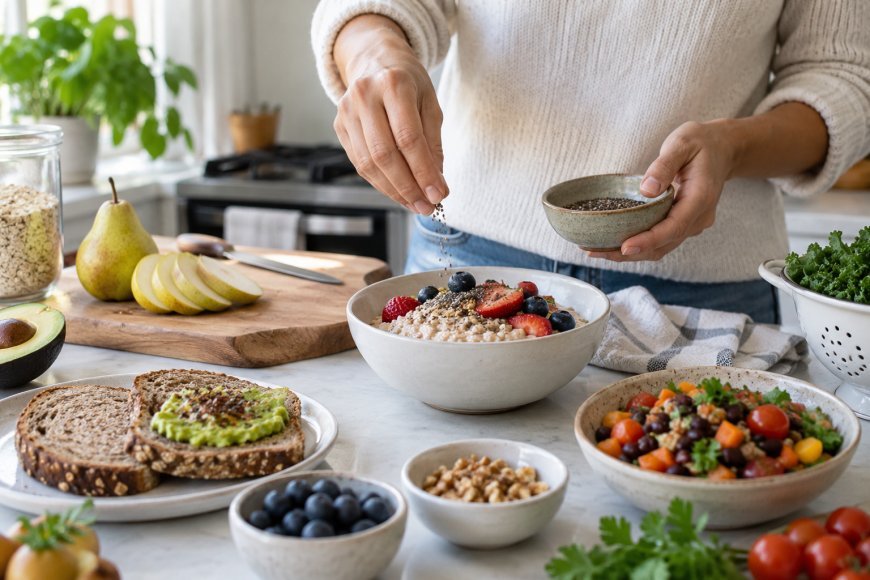
Fiber habits are everyday nutrition with a clock. You put beans, oats, fruit, vegetables, and the bread you will actually finish on meals you already eat—especially at breakfast and lunch—so the day has a few landings instead of a long fade. This is not a clinic. It is not a supplement protocol. It is not a story about invisible biology you need to “fix.” It is grocery-store food, placed on purpose, on a Tuesday.
What a fiber habit is (and what it is not)
A fiber habit is a placement, not a personality. You can point to it: oats in the bowl, beans on the plate, an apple next to the sandwich, leftover roasted vegetables taking up space. If you cannot point to it, it is a wish.
It is not a cleanse. It is not a powder that replaces dinner. It is not a reason to throw out foods you like. Pasta nights stay. So do tacos. The move is to put a fiber you can see on the same table—beans under the taco, fruit after the pasta, a heap of slaw next to whatever landed.
Everyday nutrition works when it is boring enough to repeat. Fancy “fiber recipes” you will cook once are not a habit. A can of chickpeas you already own is.
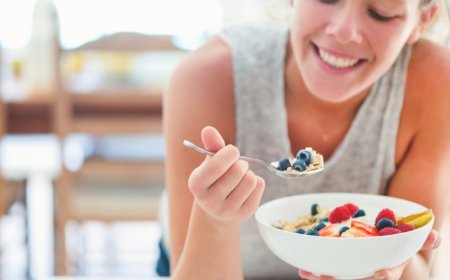
Breakfast: give the morning a landing
Coffee is a start. It is not a meal. If the first thing with calories is a pastry at 10:40, the morning had no landing and the afternoon inherits that debt.
Build breakfast in two parts: something with fiber you can name, plus whatever makes you actually eat it.
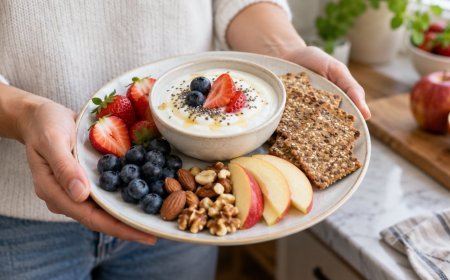
• Oats with fruit and yogurt or milk you like
• Toast you will finish—plus an apple, peanut butter, or leftover beans if that is your house
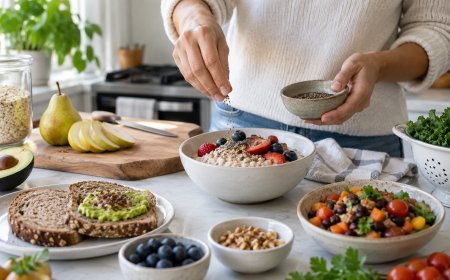
• Overnight oats you assembled while the kettle boiled last night
• A banana and a handful of cereal that is not air, if that is the honest floor
You do not need a beautiful bowl—just a first meal that is not only caffeine. If mornings are chaos, stage oats or fruit the night before. Not a breakfast person? Ten bites of yogurt and berries, or toast and fruit on the way out, still counts. The habit is “fiber showed up before noon.”
Lunch: the 2 p.m. insurance policy
Lunch is where fiber habits earn their keep. A sandwich that is only bread and a slice of something will taste fine and leave you empty by the second meeting. Add the part you can point to.
Easy lunch placements:
• Leftover dinner plus a piece of fruit
• A salad kit that is actually a meal once you add beans, leftover chicken, or a scoop of hummus and crackers
• Rice or grain leftover with canned beans, salsa, and whatever vegetables are still alive
• The usual deli order, plus an apple or a side that is not only chips
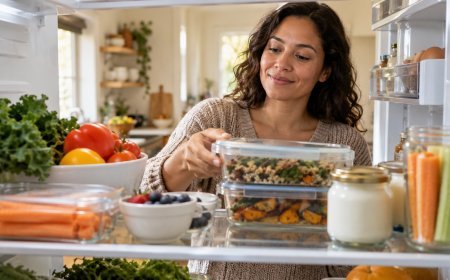
If you eat at a desk, pack the fiber in the morning in a container you will open. “I will grab something” is how lunch becomes crackers from a drawer. Everyday nutrition fails in the gap between intention and a lid.
The point of lunch fiber is not a perfect macro. It is a quieter 3 p.m. You still might want a snack. You will want it less like an emergency.
Dinner: fiber that still tastes like your house
Dinner does not need a lecture. It needs a pile.
Keep the meal you already cook. Add one of these without inventing a new cuisine:
• A bag of frozen vegetables in the same pan
• A can of beans warmed with the taco meat or the pasta sauce
• A bagged slaw or salad kit on the table so people can take it
• Fruit as the default “something sweet” after, not a speech about dessert
Households with mixed preferences can deconstruct: beans in a bowl, vegetables in another, tortillas in a towel. People build what they will eat. You still put fiber on the table.
If a night explodes, use the minimum: leftover grain or toast, a can of beans or fruit, and the protein you already had. Minimum still follows the habit.
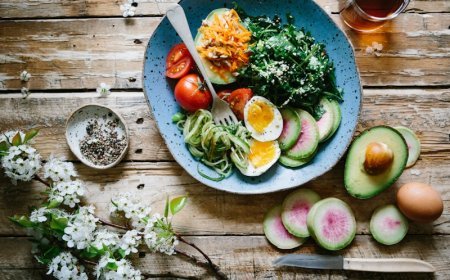
A grocery-store fiber kit (no specialty aisle)
Shop once so weekdays are assembly—placements, not seven unique recipes:
• Oats you will finish
• Two sturdy fruits (apples, bananas, oranges, frozen berries)
• Two cans or pouches of beans or lentils you like
• Two bags of frozen vegetables
• One fresh crunch: slaw, cucumber, salad kit
• A grain or bread you will use
• Two sauces that make plants taste like dinner
Skip novelty “fiber products” with a tutorial on the label. A second bag of frozen broccoli beats a gadgety snack you will not open. Everyday nutrition lives in the middle of the store.
Timing beats a heroic smoothie
One giant fiber project at 9 p.m. does not make up for a day of air. Place a little at meals that already happen: morning oats or fruit, midday beans or vegetables, evening plants on the table you were setting anyway.
Fiber habits are a calendar, not a blender. If you love a smoothie, put fruit and oats in it and call it breakfast—then still keep the lunch placement. Two placements that happen beat a Sunday plan that dies on Monday.
A week of small placements
Treat these as sketches. Swap what you have. Keep the clock.
Monday — oats at breakfast; apple in the bag if lunch looks thin.
Tuesday — beans on whatever lunch already is (rice, burrito, salad kit).
Wednesday — a bag of frozen vegetables in the dinner pan.
Thursday — fruit after the usual lunch, even if lunch is takeout.
Friday — slaw or a salad kit on the table; people take some.
Weekend — restock beans, oats, fruit, frozen vegetables; remix leftovers with a can and a new sauce.
If a day explodes, keep one placement: fruit with breakfast or beans with lunch. Identity sticks to reps, not to a perfect week.
What this is not
It is not a medical protocol, a labs promise, or a powder that replaces a plate. You do not need a theory of your insides to put oats in a bowl. If you already follow a plan from a professional, this does not replace that—it is a kitchen habit for ordinary weeks.
Bottom line
Fiber habits are everyday nutrition with timing: a landing at breakfast, insurance at lunch, a pile at dinner. Use grocery-store food you will repeat—oats, fruit, beans, frozen vegetables—and stop waiting for a heroic smoothie to save a snacky day.
Start with one placement tomorrow. Name it in a word: oats, apple, beans, slaw. If you still want a snack later, fine. The goal is a first meal that holds, not a personality makeover in the kitchen.
What's Your Reaction?
 Like
0
Like
0
 Dislike
0
Dislike
0
 Love
0
Love
0
 Funny
0
Funny
0
 Angry
0
Angry
0
 Sad
0
Sad
0
 Wow
0
Wow
0